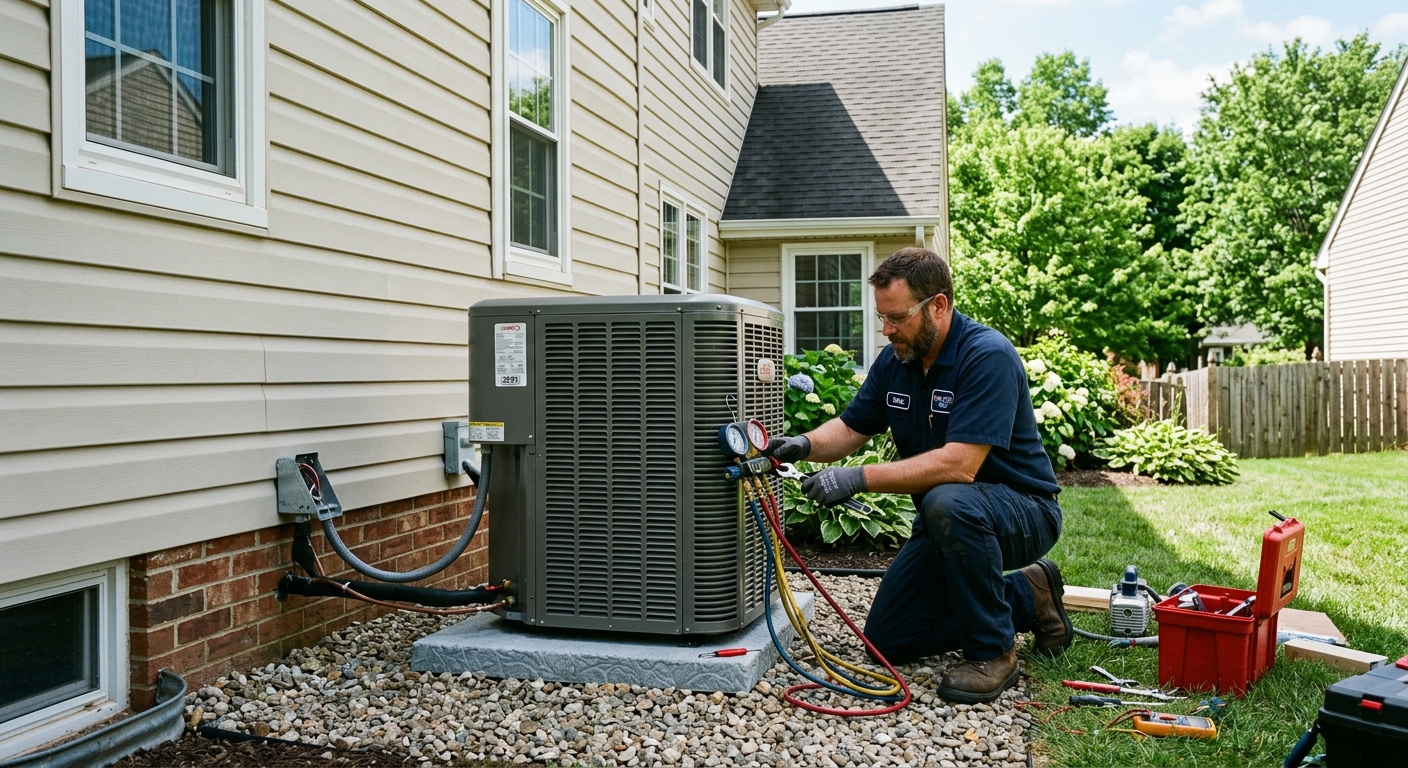
Oil City heating and cooling prices by system type — 2026
Oil City is a market defined by older homes and steady owner-occupancy, with 61.6% homeownership and nearly 92% of homes built before 1980 (U.S. Census Bureau, ACS 2024). For most homeowners, this means replacing or upgrading existing systems, not installing HVAC in new builds. A big piece of your install cost will depend on whether your house has sound, usable ductwork. Those oil-boom era structures common here often need custom duct fabrications or major electrical upgrades to get modern HVAC systems to code.
Northwestern Pennsylvania racks up around 6,200 heating degree days and just 800 cooling degree days per year, marking it solidly as a heating-dominated climate. That changes priorities: furnace and heat pump sizing, as well as duct condition, come first—cooling is important, but if you’re budgeting, think heat first, AC second. For replacement, extra travel surcharges apply in much of Venango County, as most firms are based out of Erie or Meadville.
Here’s what a typical HVAC install or replacement runs in Oil City for 2026:
| System |
Best for |
Efficiency |
Price range (installed) |
| Central AC replacement (existing ducts) |
homes with sound ductwork |
16–20 SEER2 |
$4,400–$10,500 |
| Air source heat pump (ducted) |
year-round heating and cooling |
8–10 HSPF2 |
$7,100–$15,000 |
| Cold-climate heat pump (ducted) |
heat pump as primary heat |
9–11 HSPF2 |
$11,500–$15,000 |
| Ductless mini-split (single zone) |
additions, rooms without ducts |
20–30 SEER2 |
$2,800–$6,200 |
| Full duct system installation |
homes with no existing ducts |
— |
$8,000–$16,000 |
Installed estimates for a typical Oil City home. Equipment tonnage, duct condition and electrical capacity move these more than brand.
What size system does a Oil City home need?
Getting the right size HVAC system for your Oil City home is more important than the brand or even the efficiency rating. Here, oversizing is not a feature—it's a defect. An oversized unit will short cycle, meaning it starts and stops more often. This causes poor dehumidification (so you get that sticky feeling in summer), temperature swings, and wears out the system years sooner than expected. A smaller, correctly-sized system runs longer cycles, keeping your house more comfortable and your energy bills lower.
The gold standard for sizing is the Manual J load calculation. This isn’t just based on square footage. It factors in our actual winter design temperature (5 °F for northwestern Pennsylvania), insulation level, window type, air leakage, duct losses, and sun exposure room by room. Rules of thumb like “X tons per 600 square feet” do not work here, especially in those oil-boom era homes with additions, attic rooms, or drafty construction.
When you talk to a contractor, the question to ask is, "Did you run a Manual J load calculation, and can I see it?" If a contractor sizes your new system based only on the output of your old one or by rule of thumb, they’re likely repeating a decades-old mistake. The calculation is designed to ensure the system can maintain comfortable temperatures down to the area's winter design temp—5 °F in Oil City—without oversizing.
The bottom line: Demand a load calculation. In this climate and with these houses, guessing the tonnage is no favor to you. It’s the difference between years of comfort and a lifetime of headaches.
Gas, electric or both in northwestern Pennsylvania
With a winter design temperature of 5 °F and 6,200 heating degree days, Venango County is solidly in the cold-climate column—a place where heating is your single biggest energy use. That math shapes the gas-versus-electric debate at its core.
Modern cold-climate heat pumps now do well in winter, reliably heating homes even below freezing. The old advice to avoid heat pumps in Oil City no longer holds, especially for ducted systems designed for northern climates. Still, as the temperature drops, every heat pump loses some heating capacity, which is why sizing (and insulation) matter so much. When you hit single digits, a heat pump may need backup heat—from electric strips, propane, oil, or a gas furnace. This is the rationale behind dual fuel systems, which combine a heat pump’s efficiency with a furnace’s peak output.
Natural gas is available in Oil City and Franklin, but many outlying Venango County homes only have propane or heating oil. That changes the equation: when you’re deciding between a heat pump and gas, the real comparison in rural areas is often heat pump versus propane or oil. In most cases, heat pumps win—they’re cleaner, usually cheaper to operate, and require less maintenance than oil or propane systems, especially with high heating degree days like we have here.
If your existing gas furnace is newer, high-efficiency, and already vented correctly, replacement isn’t always necessary unless you’re determined to electrify. But for deep retrofits in rural areas, or if you’re patching an aging oil system, a high-efficiency heat pump is worth a hard look.
| Option |
Installed cost |
Operating cost here |
Best when |
Incentive eligible |
| Gas furnace + central AC |
$4,400–$10,500 |
lower with gas; highest in coldest zones |
existing gas service, coldest zones |
limited |
| Ducted heat pump (cold climate) |
$7,100–$15,000 |
lowest with good insulation |
good envelope, all-electric goal |
likely |
| Dual fuel (heat pump + gas backup) |
$11,500–$15,000 |
balanced (electric most, gas in deep cold) |
gas on site, deep cold spells |
likely |
| Ductless multi-zone |
$8,000–$16,000 |
zone control, moderate total bills |
no ductwork, zone control |
likely |
What you can actually claim on a heat pump here
In Oil City, there are three main lines of possible incentives on a new heat pump or qualifying energy upgrade: federal tax credits, electric/gas utility rebates, and (sometimes) state-level programs. The federal tax credit usually comes in as a percentage of the installed cost, but it only reduces next year’s income tax, not today’s quote. A rebate, on the other hand, takes money off the invoice up front or after you submit paperwork.
Oil City is primarily served by FirstEnergy’s Pennsylvania utilities (like Penn Power and Penelec) on the electric side, and National Fuel Gas Distribution Corporation for gas. Both may offer rebates for heat pumps or efficiency upgrades, but rebate details change each year—sometimes mid-year—so any number you see is just a ballpark. To find out what’s available for your address, start with your utility’s official “energy efficiency” or rebate page and double-check with the ENERGY STAR rebate finder online before signing a contract.
Pennsylvania does not have a statewide rebate program for HVAC installs. Every legitimate offer will have paperwork and eligibility details. Never assume a rebate or credit applies until you or your contractor have checked the actual listing for your utility and project type. Numbers in articles are for guidance, not guarantees.
Permits, licensing and inspections in Oil City
The state of Pennsylvania does not have a specific mechanical license for HVAC contractors working on residential jobs. Instead, contractors in Oil City must hold a Home Improvement Contractor (HIC) registration if any contract exceeds $500, as required by the Pennsylvania Office of Attorney General. Always verify a contractor’s status at hic.attorneygeneral.gov before hiring. Local municipalities—including Oil City—require a mechanical permit for replacement or major changes to central HVAC systems. This local approach means enforcement and inspection are handled by the City of Oil City Code Enforcement Office for residents inside city limits, while townships have their own officials.
Anyone handling refrigerant (installing or servicing air conditioners and heat pumps) must hold federal EPA Section 608 certification—this is nationwide, not state-specific, and cannot be waived. For homeowners, proof of insurance matters. Pennsylvania requires contractors with employees to carry workers’ compensation insurance, which is verified through the WCAIS system (wcais.pa.gov). Get a certificate from your contractor and verify insurance status before work starts. These requirements are designed for consumer protection, not red tape; always check paperwork before signing any contract.
Efficiency ratings and what they mean for your bill
Efficiency ratings look like alphabet soup, but a little understanding goes a long way. “SEER2” measures how efficiently a cooling system runs over a season, “HSPF2” does the same for heating. The shift to SEER2 and HSPF2 replaced the old SEER/HSPF ratings—if you see numbers in older articles or paperwork, don’t compare them directly; SEER2/HSPF2 account for tougher test conditions.
Here in Venango County, with 6,200 heating degree days and just 800 cooling degree days, heating costs dwarf summer cooling. That means HSPF2 (heat pump heating efficiency) is what you should care about most. Higher SEER2 numbers are good, but chasing the very top of the chart rarely pays back in this climate, unless you keep your windows closed all summer with the AC on high. For most Oil City homes, aim for heat pumps rated at 9–11 HSPF2 and AC units in the 16–18 SEER2 range. Paying extra for SEER2 above 20 is almost never worth it here, while higher HSPF2 generally has a shorter payback because of long winters.
True savings come from getting the sizing and installation right first. Chasing the highest sticker rating helps less than you think for Oil City’s real-world winter bills.
Oil City's housing stock and its HVAC needs
Oil City’s homes are overwhelmingly pre-1980 builds, with many houses dating back to the oil boom before 1940. This shows up everywhere in HVAC planning. Most older homes were built before central air conditioning was common, which means ductwork—if present—was originally sized for heating only, not the airflow that AC needs. In many cases, ducts are too small, poorly insulated, or leaky, leading to uneven rooms and wasted energy in both heating and cooling seasons.
Insulation is usually below modern standards, and older windows often leak heat in winter and let in summer heat, further complicating comfort and system performance. If your home is on its original electrical panel, you might not have the capacity for an all-electric upgrade or modern heat pump without an upgrade. For those considering a new furnace, check your chimney or flue condition—older venting may not meet safe draft or code requirements anymore.
All these factors mean that in Oil City, every contractor is doing retrofit work, not simple replacements. The quote for a heat pump or new AC here often includes duct repair, sealing, or even partial replacement—and that’s not up-selling, it’s usually necessary for safety, code compliance, and long-term comfort.
Frequently asked questions — HVAC installation in Oil City
How cold does it get in Oil City and does that affect heat pumps?
In Oil City, winter temperatures frequently dip to 5 °F or below, with 6,200 heating degree days each year. This climate once meant heat pumps struggled, but that’s no longer true with modern cold-climate models. Today’s heat pumps are specifically designed to maintain heating capacity even at single-digit temperatures, although they do lose some efficiency during extreme cold snaps. If you select a heat pump with a HSPF2 rating of 9 or better and size it correctly for your house, you’ll maintain comfort through most of our winter. In extreme cold, some systems include electric backup or can pair with an existing gas furnace (“dual fuel”). Expect to pay between $7,100–$15,000 for a properly installed, ducted cold-climate heat pump in this area.
Is it worth switching from oil or propane to a heat pump?
For many homes in Venango County outside Oil City and Franklin where natural gas is unavailable, switching from oil or propane to a heat pump can be a very smart move. Heat pumps operate more efficiently, cost less to maintain, and avoid the fuel price swings common with oil and propane deliveries. The upfront cost is higher—typically $7,100–$15,000 installed for a whole-home ducted system—but over several winters, the savings usually pay back the difference, especially in our area’s long heating season. Consider your home’s insulation and whether your electric panel needs upgrading, as these can add to project cost. Many fuel oil and propane systems are nearing the end of their useful lives, so if yours is due for replacement, modern heat pumps are well worth a close look for Oil City and rural Venango County homeowners.
Are duct sealing and insulation eligible for incentives?
In Pennsylvania—including Oil City—duct sealing and insulation are sometimes bundled into rebate programs offered by electric utilities like Penn Power or Penelec, particularly if they’re paired with a heat pump or central AC upgrade. Specific rebate amounts change frequently and aren’t set at the state level, so always check your utility’s most recent efficiency program information online. Remember, these appear either as rebates (money refunded to you after the work) or as a discount on the installation invoice, but you’ll need to keep documentation and sometimes have the work inspected. Duct improvements can be a cost-effective upgrade by themselves, especially in older Oil City homes with leaky or uninsulated ducts, which lose heat quickly and can make even the best system underperform.
How often should I change my filter?
For most Oil City homes, especially with older ducts and plenty of seasonal dust, changing your HVAC filter every 1–3 months is best. If you notice dust buildup, pets in the home, or frequent system cycling, change it monthly. If you run your system less often, quarterly might be enough. Dirty filters are the lead cause of airflow problems and can make even a brand new $4,400–$10,500 AC or heat pump struggle, raising bills and shortening unit life. Fluctuating air quality in northwestern Pennsylvania makes staying on schedule with filter changes one of the cheapest, smartest things you can do for your home’s comfort and your system’s longevity.
What MERV filter rating should I use?
For most Oil City houses, a filter with a MERV rating of 8 to 11 balances performance and longevity. Higher MERV filters can trap more fine particles but also restrict airflow, especially in older homes where duct systems might not support the added resistance—leading to strain on your system. Unless someone in the house has significant respiratory issues, stick near MERV 8–11. If you get a new $7,100–$15,000 heat pump or furnace, ask your installer to confirm that your blower and ducts can handle a finer filter if you want the best air quality without extra strain. Always check filters monthly, especially in dusty seasons or during renovations.
Who inspects HVAC work in Oil City?
In Oil City, residential HVAC installations and replacements require a mechanical permit, and final inspection is handled by the City of Oil City Code Enforcement Office. Their inspector ensures that the system is installed to the Pennsylvania Uniform Construction Code (UCC) standards, including correct electrical, mechanical and refrigerant safety. For homeowners outside Oil City but within Venango County, the local township office is the authority, not a state office. Always make sure your contractor pulls the right permit. Permitted work gives you a record for resale and shows that your $4,400–$10,500 to $15,000 investment was done to code and can be insured.
How much does a new HVAC system cost in Oil City?
Total costs depend on system type, ductwork condition, and whether upgrades (like new ducts or electrical work) are required for your home’s age and setup. For central AC replacement using your existing ducts, expect $4,400–$10,500. A ducted heat pump or dual fuel system runs $7,100–$15,000 or more. Adding a full duct system to a house that never had it starts at $8,000–$16,000. These numbers reflect the need for custom work typical in Oil City’s older housing, plus the extra travel charges some area firms add since most are based out of Erie or Meadville.
How long does HVAC installation take in Oil City?
In Oil City, replacing an existing furnace or AC often takes 1–2 days if your ducts and electrical are up to code and there are no surprises. If you’re installing a ducted heat pump for the first time, or your ductwork needs major repair or replacement, expect 2–5 days depending on project complexity and electrical upgrades. Full duct system installation in a house built before 1940 can stretch to a week or more, especially if floor or wall work is required. With many older homes in this area needing customized solutions, always factor in a little extra time for inspection and unforeseen issues. For a typical central AC replacement in good conditions, budget at least $4,400–$10,500 and two days for start-to-finish.
Is a high-efficiency system worth the extra cost here?
In a heating-dominated climate like Oil City—with 6,200 heating degree days—the efficiency of your heating system is far more important than scoring the highest cooling SEER2 rating. Top-tier high-efficiency heat pumps (above 10 HSPF2) or 95%+ gas furnaces do pay back the upfront premium in our long winters, often within a few heating seasons. However, paying more for AC units over 18 SEER2 rarely makes sense here unless you keep your home sealed and cooled all summer. For most households, a well-installed mid-efficiency system, sized right, and running in well-sealed and insulated ducts will outperform a pricier unit in leaky conditions. Expect premium high-efficiency installs to run $11,500–$15,000, but remember—if your ducts or envelope need major work, address those first for the best bill savings.