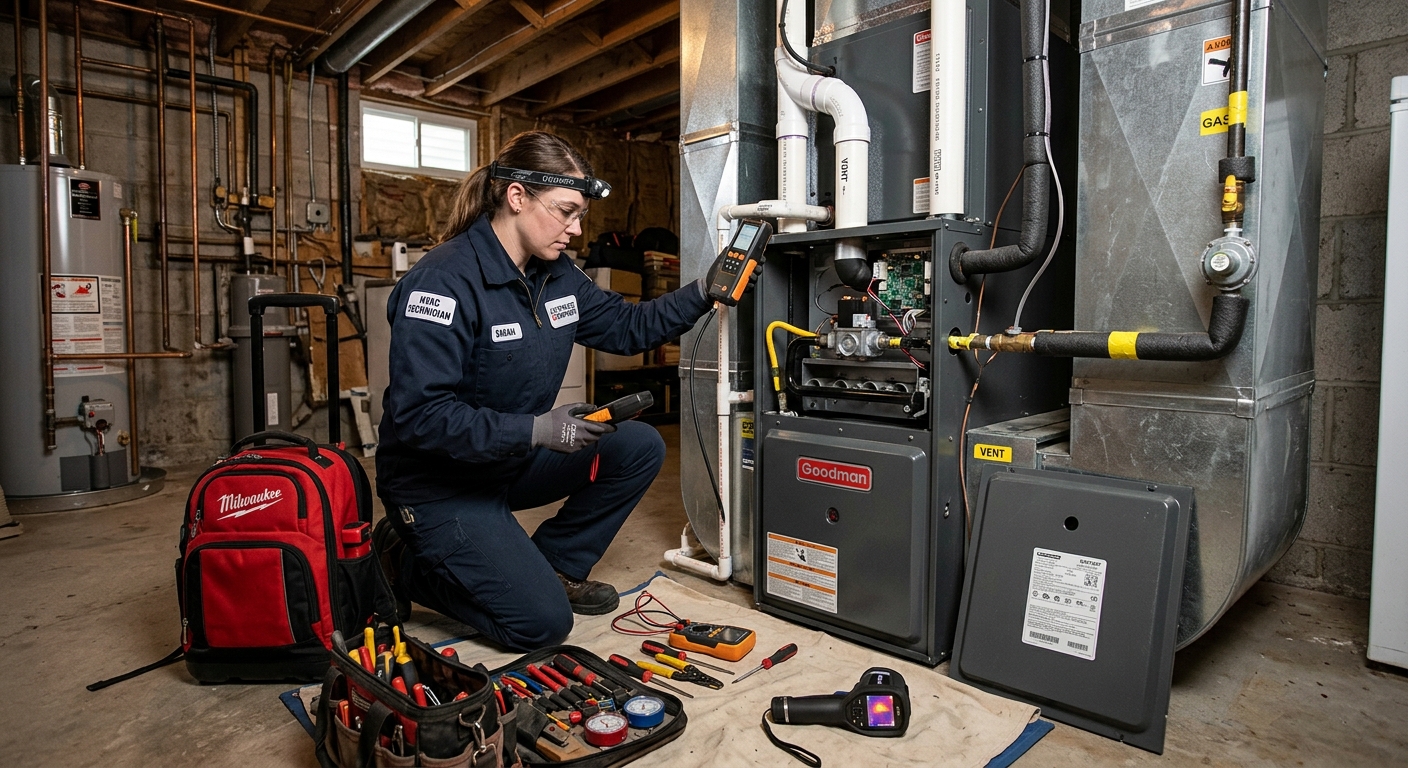
What a new HVAC system costs in Conemaugh
In Conemaugh, where 91.5% of homes are owner-occupied and nearly four out of five homes were built before 1980 (U.S. Census Bureau, ACS 2024), most HVAC projects are retrofits rather than straightforward replacements. Older homes here, typically constructed between 1940 and 1970, often have limited mechanical room space and, in many cases, aging or non-existent ductwork. That means central air or heat pump upgrades may also entail rebuilding or modifying existing ducts, which can shift costs and project complexity considerably.
Conemaugh sits in a heating-dominated climate, with 5,600 heating degree days and just 1,050 cooling degree days each year. This means winter comfort and efficiency put greater demand on your HVAC system than summer heat ever will. Systems that deliver reliable heat in single-digit temperatures are the local priority, and decisions about AC upgrades tend to weigh the state of old ducts and current electrical capacity.
Below is a realistic range of installed system prices for a typical home, reflecting Somerset County’s unique mix of old homes, often tight basements, and the predominance of heating over cooling:
| System |
Best for |
Efficiency |
Price range (installed) |
| Central AC replacement (existing ducts) |
homes with sound ductwork |
16–20 SEER2 |
$4,700–$11,500 |
| Air source heat pump (ducted) |
year-round heating and cooling |
8–10 HSPF2 |
$7,600–$16,000 |
| Cold-climate heat pump (ducted) |
heat pump as primary heat |
9–11 HSPF2 |
$12,500–$16,000 |
| Ductless mini-split (single zone) |
additions, rooms without ducts |
20–30 SEER2 |
$3,000–$6,600 |
| Full duct system installation |
homes with no existing ducts |
— |
$8,500–$17,000 |
Installed estimates for a typical Conemaugh home. Equipment tonnage, duct condition and electrical capacity move these more than brand.
Mechanical permits for HVAC work in Conemaugh
Pennsylvania does not issue a statewide HVAC license for residential contractors. Instead, residential HVAC work is governed by local authorities. In Conemaugh Township and most of Somerset County’s townships, mechanical permits and on-site inspections are handled by their own code enforcement offices. The state framework is the Pennsylvania Uniform Construction Code (UCC), which is based on the International Residential Code (IRC), but actual enforcement for residential jobs is at the municipal level. For projects over $500, a contractor must have Home Improvement Contractor (HIC) registration from the Pennsylvania Office of Attorney General—this is your main consumer protection. You can verify HIC registration at hic.attorneygeneral.gov.
Anyone handling refrigerants, including air conditioning and heat pump installers, must have federal EPA Section 608 certification, regardless of state or local rules. This applies everywhere in the U.S. For insurance, all employers must carry workers' compensation, which is mandatory in Pennsylvania and can be verified through WCAIS at wcais.pa.gov. Always request to see a contractor’s insurance documentation before work begins, and verify these credentials yourself for peace of mind. Permits, inspections and properly credentialed labor are non-negotiable—skipping them risks not only code violations but also insurance liability if there’s ever a claim related to the system.
What you can actually claim on a heat pump here
For a Conemaugh homeowner considering a heat pump, there are three potential types of incentives: federal tax credits, utility rebates, and any state-level programs. The most widely available is the federal tax credit for qualifying heat pump systems, which directly reduces the federal taxes you owe the following year—not an instant discount, but a dollar-for-dollar reduction on your tax bill once you file. Utility rebates, by contrast, act as cash-off the upfront invoice, but availability and amounts change and depend on your electric utility.
Penelec supplies electricity in Somerset County, so your first place to check for current rebates is Penelec’s official efficiency program website. If you’re in Somerset Borough and have natural gas from Peoples Natural Gas, check their website for potential gas-to-heat-pump or high-efficiency system rebates. For everyone, the ENERGY STAR rebate finder can be used to check current offers by zip code. These programs change annually and sometimes even within a year, making fixed figures in articles less useful than visiting the official program page when you’re ready to purchase.
Bottom line: use utility and ENERGY STAR resources directly and confirm with your contractor that your equipment meets any eligibility requirements before you commit. Don’t plan your budget around generic rebate numbers from past years—look up the current incentives the month you sign your contract.
Maintenance that actually extends system life
Filter changes, coil cleaning, and condensate line checks matter far more than the array of “tune-up” pitches you’ll see in flyers or on door hangers. In Conemaugh’s heating-heavy climate, just keeping your filter changed every one to three months (as needed, depending on pets and dust) makes the biggest difference. Don’t go above a MERV 8–11 filter unless your blower is rated for higher resistance—overdoing it reduces airflow and system efficiency.
Evaporator and condenser coils should be cleaned at least once a year, as Somerset County’s clay soil and freeze-thaw cycles can drive dust and grit indoors. Make sure your condensate drain is cleared of algae or debris every cooling season, or you risk overflow and water damage in tight basement utility rooms. For refrigerant, your tech should verify charge against the manufacturer's specs, not just “top it off”—if your heat pump or AC needs new refrigerant each year, it has a leak, and topping up is not fixing the problem.
Annual service plans are worth considering if they include a full inspection, filter change, and coil cleaning at a fair price (and a priority scheduling promise). Avoid plans that lock you into overpriced parts or charge premium rates for repairs. Most homeowners in Conemaugh schedule preventive maintenance in spring or early fall, before heating or cooling season kicks off and emergency calls tie up the calendar.
The central decision for a Conemaugh homeowner
The most important HVAC decision for a Conemaugh homeowner is whether to install a furnace or a heat pump as your main source of heat, and that’s dictated by our climate and utility costs. With a winter design temperature of just 8°F and 5,600 heating degree days, Somerset County demands equipment that can deliver steady, affordable heat in real cold. While older heat pumps fell short once the temperature dropped, today’s cold-climate models maintain usable heating even well below freezing; however, their output and efficiency still decrease in deep cold, which is why homes here sometimes use backup heat or dual-fuel arrangements.
Natural gas is only available in Somerset Borough and some parts of Windber, leaving most Conemaugh Township homes to rely on propane or fuel oil. In these outlying areas, the true comparison is between a heat pump (all electric) and older, more expensive propane or oil systems. Where electricity is your main option, a modern heat pump almost always wins on both operating cost and comfort—especially if you have a reasonably updated home envelope and electrical panel. If you live directly on a natural gas main, a high-efficiency furnace is still a solid choice, particularly if your home’s ducts aren’t well-sealed or sized for heat pump airflow.
| Option |
Installed cost |
Operating cost here |
Best when |
Incentive eligible |
| Gas furnace + central AC |
$4,700–$11,500 |
lowest with gas service |
existing gas service, coldest zones |
sometimes |
| Ducted heat pump (cold climate) |
$7,600–$16,000 |
lower if all-electric |
good envelope, all-electric goal |
yes |
| Dual fuel (heat pump + gas backup) |
$12,500–$16,000 |
minimizes peak costs |
gas on site, deep cold spells |
yes |
| Ductless multi-zone |
$8,500–$17,000 |
lowest with targeted use |
no ductwork, zone control |
yes |
The refrigerant change and what it means for repairs
Newly manufactured air conditioners and heat pumps now use refrigerants like R-454B and R-32, which have lower global warming potential (GWP) than the R-410A standard that dominated for twenty years. This shift is driven by federal rules phasing down high-GWP HFC refrigerants. For homeowners in Conemaugh with a working R-410A system, this means your equipment is perfectly legal to operate and service. There’s no requirement to swap out your system before it’s time.
The key consideration is long-term repair economics. As R-410A production ramps down, the cost of that refrigerant will likely increase—if your system develops a refrigerant leak, those repair bills can tilt toward replacement instead of patching up an old machine. However, there’s no need to rush: as long as your system is leak-free, it isn’t affected in daily use. The real effect is on repair decisions, especially when dealing with older, leak-prone equipment. System replacement is warranted when repairs cost you more in refrigerant and labor than a newer, more efficient machine puts back in savings and warranty coverage. But don’t let anyone tell you that an R-410A system is about to become “illegal” or unserviceable in Somerset County—service continues for years, just with reduced parts and refrigerant availability over time.
What a real HVAC quote contains
For Conemaugh homeowners, a real HVAC quote is more than just a brand and a price. Ask for model numbers for both the indoor and outdoor units, and make sure they’re matched—an unmatched pair won’t achieve its rated efficiency or reliability, especially if your ductwork needs updating for airflow. The quote should show equipment tonnage with the load calculation included, rather than simply matching whatever was previously installed—old equipment sizing is frequently wrong for today’s building envelopes or room layout.
Line set replacement (the refrigerant lines between indoor and outdoor units) is critical: reusing them is fine only if they’re clean, sized right, and pressure-tested. Quotes should list any required electrical work, including whether your panel needs an upgrade—especially in older Conemaugh homes with limited capacity. Look for a separate line for thermostats and permitting fees. Proper commissioning includes documentation—proof the installer measured airflow and charge, not just turned it on. Finally, make sure labor warranty years are clearly listed and separate from the equipment warranty from the manufacturer.
| Line item |
What to look for |
Red flag if… |
| Equipment |
model numbers, indoor and outdoor matched |
brand name only |
| Sizing |
load calculation attached |
matched to the old nameplate |
| Ductwork |
condition assessed, sealing scoped |
not mentioned |
| Electrical |
circuit and panel capacity confirmed |
assumed adequate |
| Line set |
replaced or documented as reused |
silent |
| Commissioning |
measured airflow and charge, documented |
no startup report |
| Warranty |
labour years stated separately |
manufacturer only |
| Permit |
included and priced |
'not needed' |
Frequently asked questions — HVAC installation in Conemaugh
Why does my system short cycle?
A system “short cycling”—turning on and off rapidly—almost always signals an underlying issue that’s not unique to Pennsylvania but is especially common in Conemaugh’s older homes. Oversized equipment is the leading culprit: many Somerset County homes, built before 1980, have older ductwork or insulation levels that change heating and cooling requirements. If your new system was matched to an old unit’s size without a current load calculation, it’s probably too large and unable to run a full cycle, costing efficiency and comfort. Other causes include a clogged air filter, failing thermostat, or refrigerant problems. If left unchecked, short cycling can shorten the lifespan of even a brand new system—which may have cost $7,600–$16,000 for a ducted heat pump install. Have your contractor look at sizing, airflow, and controls before spending money on parts swaps.
What does a heat pump cost installed in Conemaugh?
For a typical single-family home in Conemaugh, the installed cost of a ducted air source heat pump runs from $7,600–$16,000, depending mostly on whether your existing ductwork can be reused and the system’s heating capacity. Cold-climate models, sized for Somerset County’s 8°F winter design temperature, trend toward the higher end—especially in older homes where ducting is tight or needs improvement. If you need a mini-split for a zone or addition, the single-zone installs fall in the $3,000–$6,600 band. Full duct system replacements add cost quickly. Always get a site visit and written quote before budgeting, and ask about available rebates from Penelec or through the ENERGY STAR rebate finder.
What is commissioning and why does it matter?
Commissioning is the process your HVAC contractor uses to verify and document that your new system actually delivers its rated performance—something especially critical in Somerset County’s retrofit-heavy housing, like here in Conemaugh. It involves measuring things like refrigerant charge, airflow, static pressure, and verifying duct leakage and safety controls. Without commissioning, you might pay for a $11,500 system that never reaches the comfort or efficiency you paid for, simply because of incorrect settings or leftover issues in old ductwork. A serious quote will reference commissioning, and you should receive a startup or commissioning report showing the results. If it’s missing, your system’s warranty and operating costs can be at risk, and future troubleshooting gets harder.
Are duct sealing and insulation eligible for incentives?
Yes, incentives for duct sealing and insulation do appear in energy efficiency programs, though the amounts and details shift year to year. In Conemaugh, start by checking Penelec’s efficiency program site if you’re their customer, as they sometimes offer rebates specifically for duct upgrades that can make a significant difference in comfort and running costs, particularly in older Somerset County homes with leaky or poorly insulated runs. The ENERGY STAR rebate finder also lists relevant offers for your zip code. For a full ductwork installation, be prepared for a cost between $8,500–$17,000, although basic sealing and insulation jobs may run much lower. Always confirm eligibility on the program website before starting work, since program funding and requirements change frequently in Pennsylvania.
Should I repair or replace my HVAC system in Conemaugh?
In Conemaugh, the decision to repair or replace often comes down to age, cost, and refrigerant type. If your system uses R-410A and just needs a control or blower motor, repairs could make sense. But if there’s a refrigerant leak and the price to fix is nearing half of a new unit—considering that a modern replacement starts around $4,700–$11,500 for central AC—it’s rarely worth further patchwork, especially since refrigerant costs are only rising due to the current phase-out. In Somerset County’s older homes, frequent breakdowns can also signal bad ductwork or controls that new equipment will solve. If a trusted contractor quotes major repairs on an aging system, get a second opinion and a replacement quote to compare true long-term costs. Don’t spend good money after bad just to keep an inefficient, unreliable old system limping along.
How much does ductwork add to an HVAC installation?
In many Conemaugh homes, particularly those built between 1940 and 1970, existing ductwork is either undersized or in rough shape. Adding or fully replacing ductwork is often the most significant line item—full installations typically run $8,500–$17,000, especially when routing is tight or ceiling and floor access is difficult. If your ducts are basically sound, cleaning, sealing, and minor repairs may add only a fraction of that. For new or heavily remodeled spaces, the cost of ducts may double the price compared to replacement equipment alone. Always request a duct assessment and get breakdown pricing on new vs. reusing existing ductwork before committing.
What is EPA Section 608 certification?
EPA Section 608 certification is a federal requirement for anyone in the U.S. who installs, services, or disposes of equipment containing regulated refrigerants, such as heat pumps and central air conditioners. In Conemaugh and throughout Pennsylvania, there’s no statewide trade license for HVAC work, but your contractor must have this certification to buy and handle refrigerant legally. The rule applies whether you’re putting in a $3,000–$6,600 mini-split or a central system, and covers best practices for leak prevention and safe handling. Ask to see your contractor’s EPA card before any refrigerant work; it’s a basic standard, and honest pros will have it on hand.
How does southwestern Pennsylvania's climate affect system sizing?
Conemaugh’s heating season dominates system sizing, thanks to 5,600 heating degree days and a winter design temperature of 8°F. AC needs are modest, but heating loads are significant—undersizing leaves you chilly in January, while oversizing causes comfort and efficiency issues by short cycling. Many older Somerset County homes, built before 1980, have insulation and window issues that must be considered too. HVAC pros should use a Manual J load calculation for your actual square footage, insulation, and doors—not just guess based on the last unit installed. This is true whether you’re installing a $7,600–$16,000 ducted heat pump or a replacement furnace. Get a load calc in writing with your quote.
What is SEER2 and how is it different from SEER?
SEER2 is the latest standard for measuring air conditioning and heat pump cooling efficiency, now replacing the original SEER number. SEER2 accounts for more realistic external static pressure—essentially the resistance of ductwork and filters found in real homes like those in Conemaugh—whereas the older SEER method assumed ideal, low-resistance conditions. This means SEER2 ratings are generally lower for the same equipment, making it easier to compare savings across brands. When you’re quoted a $4,700–$11,500 central AC, always check whether the efficiency is listed in SEER or SEER2. For true apples-to-apples comparison, insist on SEER2 ratings, since these reflect the conditions likely present in Somerset County’s older, retrofit-heavy homes.