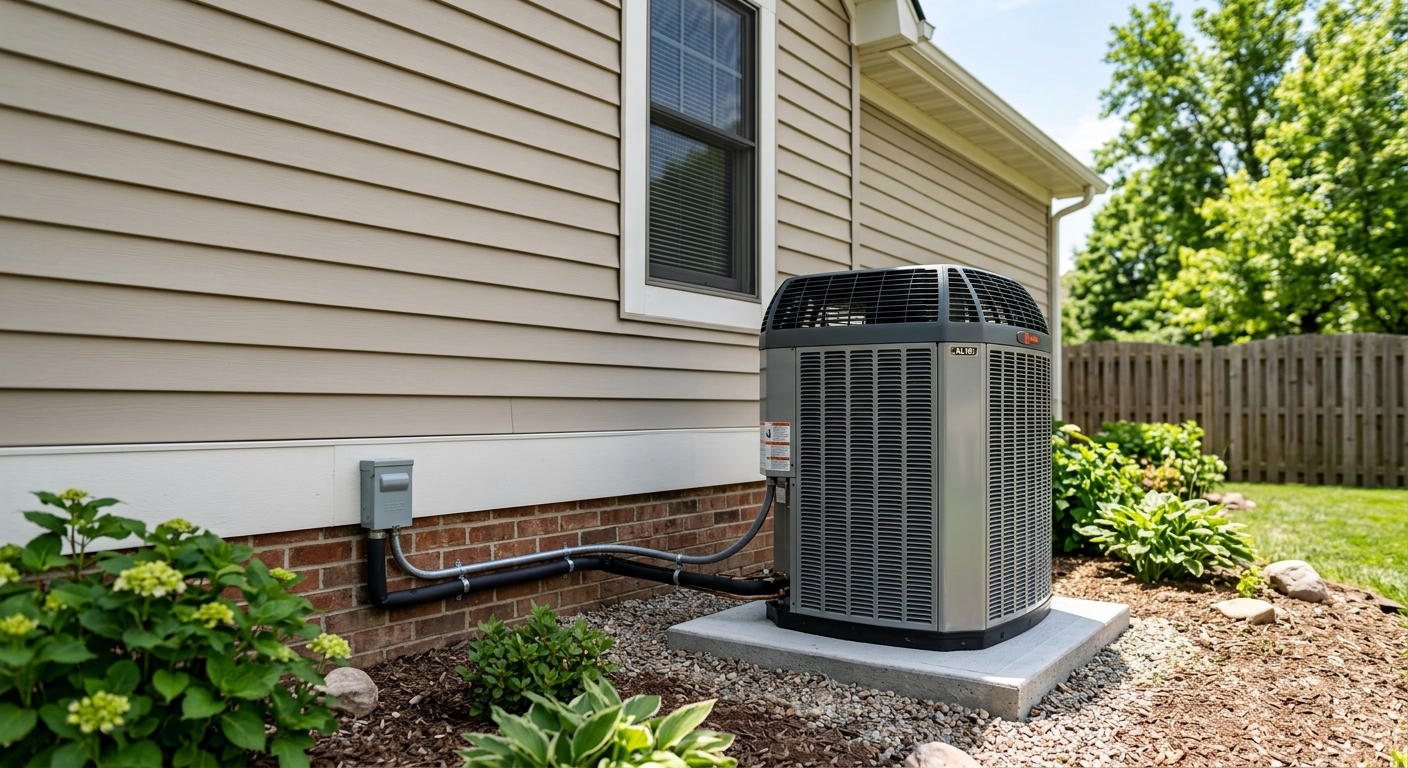
What a new HVAC system costs in East Hanover
East Hanover, like much of Dauphin County, is a replacement-driven HVAC market. With a homeownership rate of 85.8% and 42.3% of homes built before 1980 (U.S. Census Bureau, ACS 2024), most installations here involve updating existing systems rather than building from scratch. The prevalence of post‑1950 suburban tract homes, especially near Colonial Park and Swatara Township, means that many houses already have ductwork—though its quality and design may not always be up to modern standards.
Our climate is heating-dominated: south-central Pennsylvania averages 5,200 heating degree days each year, compared to 1,250 cooling degree days. Winters can be hard, with design temperatures dropping to 12 °F, so heating systems need to be robust and reliable—cooling matters, but heating will always be a bigger part of your energy bill and equipment sizing.
Here’s what typical installed prices look like for East Hanover, depending on whether you’re adding to an old house with no ducts, replacing split-system AC, or upgrading for year-round heat and cooling:
| System |
Best for |
Efficiency |
Price range (installed) |
| Central AC replacement (existing ducts) |
homes with sound ductwork |
16–20 SEER2 |
$5,300–$12,500 |
| Air source heat pump (ducted) |
year-round heating and cooling |
8–10 HSPF2 |
$8,500–$18,000 |
| Cold-climate heat pump (ducted) |
heat pump as primary heat |
9–11 HSPF2 |
$14,000–$18,000 |
| Ductless mini-split (single zone) |
additions, rooms without ducts |
20–30 SEER2 |
$3,400–$7,400 |
| Full duct system installation |
homes with no existing ducts |
— |
$9,500–$19,000 |
Installed estimates for a typical East Hanover home. Equipment tonnage, duct condition and electrical capacity move these more than brand.
Why your ducts may be the real problem in East Hanover
Ductwork is the hidden backbone of most East Hanover HVAC systems—especially in those post‑1950 suburban homes around Colonial Park and Swatara Township. Many homeowners focus on the furnace or AC unit, yet in my experience, the biggest comfort and efficiency gains often come from addressing duct issues first.
Older ducts are rarely sealed to modern standards and typically weren’t pressure-tested at installation. A duct blaster test can measure exactly how much air is leaking from your system—a problem that can easily waste 20% or more of your conditioned air before it reaches the rooms you’re paying to heat or cool. Sealing leaks with mastic or aerosol can greatly reduce losses if the existing ducts are fundamentally sound. Replacement only becomes necessary if your ducts are crushed, collapsing, or run through poorly insulated attics or crawlspaces.
Another chronic issue: undersized or poorly located return ducts. If returns were designed just for a furnace (common in houses predating central air), airflow may be so restricted that even the best new system underperforms—or overheats. Ducts routed through unconditioned spaces lose significant energy, especially in freeze-thaw cycles typical in our region.
Honest advice? Always have your ductwork tested and inspected before you replace any equipment. Fix the distribution first: you may find you don’t need as large a new system, or that your comfort problems aren’t coming from the unit at all.
Heat pump or furnace: what makes sense in East Hanover
Deciding between a heat pump and a furnace in East Hanover is not abstract—it comes down to our real winters and energy choices. Our winter design temperature hits 12 °F, and with 5,200 heating degree days a year, reliable heating is essential. Modern cold-climate heat pumps can run efficiently well below freezing, making the old argument that “heat pumps can’t handle cold here” outdated. Still, as temperatures fall, so does a heat pump’s capacity—there’s a reason why dual fuel setups are common, especially as backup on the coldest nights.
Natural gas is widespread in urban and suburban Dauphin County, but rural fringes often rely on propane or fuel oil. If your home already has gas, a high-efficiency furnace paired with central AC still makes sense for upfront cost and cold-weather performance. But if you’re on propane or oil, the new generation of heat pumps—especially cold-climate models—almost always wins for long-term operating cost, local incentives, and sustainability.
A furnace remains a good choice if your home has robust ductwork sized for forced air, a working flue or chimney, and convenient gas hookups. If you’re all-electric by preference or necessity, or working with a tighter envelope and upgraded panel, cold-climate heat pumps may be the best all-around solution.
| Option |
Installed cost |
Operating cost here |
Best when |
Incentive eligible |
| Gas furnace + central AC |
$5,300–$12,500 |
lowest with existing gas |
existing gas service, coldest zones |
sometimes |
| Ducted heat pump (cold climate) |
$8,500–$18,000 |
lowest with good envelope |
good envelope, all-electric goal |
yes |
| Dual fuel (heat pump + gas backup) |
$14,000–$18,000 |
moderate |
gas on site, deep cold spells |
yes |
| Ductless multi-zone |
$9,500–$19,000 |
can be lowest if zoning well used |
no ductwork, zone control |
yes |
When ductless is the right answer
Ductless mini-splits solve problems traditional systems can’t touch—especially in East Hanover’s mix of post‑1950 tract homes and converted older spaces. If you’ve added an in-law suite, finished a basement, turned an attic into a bedroom, or have a sunroom that stays stubbornly hot or cold, ductless is often the cleanest and least invasive fix.
Single-zone mini-splits with one indoor “head” per outdoor unit give top performance and simple install, making them ideal for individual rooms or isolated additions. Costs run from $3,400–$7,400 installed. Multi-zone systems serve up to five or six rooms off a single outdoor compressor, but with some trade-offs in efficiency: each “head” trades peak performance for convenience, and you may see less aggressive dehumidification compared to a dedicated unit per space.
Typical objections involve head placement (they must go on exterior walls and remain clear), handling the small but constant condensate drain, and aesthetics. In a housing stock where much of the ductwork was never sized for full-house cooling—or doesn’t exist at all—ductless systems can quietly revolutionize comfort, letting you avoid opening up walls or ceilings.
Bottom line: for rooms your central system never reached or those finished spaces from 30-70 years ago, ductless mini-splits are usually the only solution that pays for itself in comfort and control.
What construction era means for your system
East Hanover’s housing came in waves, and the era your home was built matters more than you might think. With 42.3% of homes built before 1980, you can’t assume the ductwork—if it exists—was ever sized for air conditioning. Many earlier systems were built around furnaces only, with returns and supplies sized for lower airflow and with minimal insulation or air sealing. Retrofitting cooling into these homes means most ductwork needs inspection, possible sealing, or outright rebuild.
Houses from the suburban expansion—think builder-grade vinyl siders of the late ‘90s and early 2000s—usually arrived with central air. The first replacements are coming due now, as original units hit 20-25 years. Electrical panels in these homes are more likely to support all-electric conversions, but even in these houses, insulation and window performance often leave something to be desired compared to what’s built now.
If your house is one of the many built after 1950 near Colonial Park or Swatara Township, odds are you do have ductwork, though it may be sized for a furnace. If you’re looking at switching from gas to heat pump, panel upgrades or new returns might be needed. For older homes, verify that any chimney or flue is still safe before committing to a new furnace.
Permits, licensing and inspections in East Hanover
Pennsylvania does not issue a statewide HVAC contractor license for residential work. Instead, for homeowner projects over $500, your contractor needs a Home Improvement Contractor registration from the state’s Attorney General. You can look up any East Hanover contractor at hic.attorneygeneral.gov to see if their registration is current for jobs over $500.
East Hanover is under the Pennsylvania Uniform Construction Code, which is based on the International Residential Code. Mechanical permits for installation or replacement of HVAC systems come from the municipality—this isn’t handled by the state but by your township or borough. In most Dauphin County townships, that’s a local permit office. Filter changes and swapping thermostat batteries don’t need a permit in Harrisburg-area homes, but installing a new central system does.
Anyone who works with refrigerant, such as installing an air conditioner or heat pump, must have EPA Section 608 certification—this is federal law and applies everywhere in the country. To protect yourself, confirm your contractor carries active workers’ compensation insurance; Pennsylvania uses the WCAIS system (wcais.pa.gov) for verification. Never sign a contract over $500 without seeing proof of these credentials—and remember that the Home Improvement Consumer Protection Act requires a written contract and a 3-day right to cancel.
The comfort problem that isn't temperature
East Hanover’s cold winters and humid summers create air quality and comfort challenges beyond just temperature. With our pronounced freeze-thaw cycles and 5,200 heating degree days, winter dryness is common—dry air can lead to static, skin and sinus problems, and even cracks in woodwork. A basic whole-house humidifier can help, but keep in mind these systems need regular cleaning to prevent mineral buildup and mold; often, they’re installed and then forgotten until water damage appears.
On the cooling side, high humidity is a real complaint. Oversized air conditioners—often a legacy of old “bigger is better” thinking—run short cycles that cool the air but leave humidity high, which actually makes you feel warmer and stickier. Correct system sizing and variable-speed blowers address this much more effectively than after-the-fact air treatment add-ons.
Newer, tightly sealed homes occasionally develop air quality problems due to lack of fresh air. Mechanical ventilation can fix this, but you need to verify your system can handle higher MERV filter ratings without burning out the blower. As for fancier air cleaners, UV lights, or electronic air purifiers, these are regularly oversold and rarely deliver a dramatic health improvement in the typical East Hanover home.
Frequently asked questions — HVAC installation in East Hanover
Is a high-efficiency system worth the extra cost here?
A high-efficiency HVAC system can make sense in East Hanover—especially given our long heating seasons and moderate-to-high energy bills. With 5,200 heating degree days each year, your equipment will see serious use compared to southern climates. For homes with good insulation and sealed ducts, you’ll generally see a payback over several years on high-efficiency heat pumps or furnaces. However, if your ductwork leaks or your home is lightly insulated, investing in upgrading those basics first may deliver more comfort and savings than simply paying more for a 20+ SEER2 air conditioner. Typical cost difference for a higher-efficiency system might be an extra $2,000–$5,000 upfront on a heat pump or AC, but the energy savings grow in a heating-dominated climate like ours.
Who inspects HVAC work in East Hanover?
In East Hanover and throughout Dauphin County, HVAC inspections for installation and major replacement are handled by the municipal code enforcement office—never the state itself. East Hanover, like most Pennsylvania townships, issues mechanical permits locally. After installation, an inspector from the township’s permit office checks the work to make sure it’s up to the current Uniform Construction Code. For small changes like filter swaps or thermostat batteries, you usually don’t need a permit or inspection. For any refrigerant work, the contractor must have EPA Section 608 certification. Permitting is included in the installed price—such as $5,300–$12,500 for a typical central AC replacement—so don’t pay extra just for the paperwork.
What does a ductless mini-split cost in East Hanover?
For a single-zone installation—perfect for a bedroom, office, or finished attic—a ductless mini-split in East Hanover typically runs $3,400–$7,400 installed. The final price depends on the capacity needed, how far the head is from the outdoor unit, and any tricky electrical or mount issues in your home. Multi-zone systems cost more, sometimes running up to $19,000 installed if you’re doing the entire house with multiple indoor heads. For most homeowners looking to condition one or two specific rooms, the single-zone solution is the most cost-effective and least disruptive.
What size HVAC system does my East Hanover home need?
Correct sizing in East Hanover is more about your home’s square footage, orientation, insulation, and window quality than just plugging in the old “tons per square foot” rule. The fact that 42.3% of local homes were built before 1980 means many weren’t built or updated for modern cooling loads. Oversized systems can cause short-cycling, poor humidity control, and higher bills. That said, most suburban tract homes fit 2–4 ton units, with final selection based on a load calculation (Manual J). Expect typical installed costs to run $5,300–$12,500 for properly sized central AC systems.
How cold does it get in East Hanover and does that affect heat pumps?
Winters in East Hanover can see lows around 12 °F, the region’s design temperature. This matters for heat pumps: traditional models lose capacity below freezing, but newer cold-climate heat pumps perform much better, delivering reliable heat even in January and February. If you have a well-insulated home and don’t mind a small dip in output on the coldest days, today’s heat pumps work here. For ultimate peace of mind, some homeowners add electric or gas backup—raising the installed cost to around $14,000–$18,000 for a dual fuel system. Don’t fall for the myth that heat pumps simply can’t handle Pennsylvania winters; the technology now says otherwise.
When is the best time of year to replace HVAC in East Hanover?
The best time for HVAC replacement in East Hanover is spring or early fall—before the first big heat wave or cold snap. Contractor schedules are less jammed, meaning you’ll get better attention, and equipment pricing is steadier. Because 42.3% of local homes are pre-1980, many owners wait until a system fails, then rush a decision. If you budget $8,500–$18,000 for a heat pump replacement, for instance, you can avoid the peak-season scramble and take advantage of off-season promotions and rebates, especially on high-efficiency models.
Are duct sealing and insulation eligible for incentives?
Yes, in many cases duct sealing and adding insulation are eligible for incentives or rebates if you’re upgrading an HVAC system in East Hanover. Programs can change from year to year, but it’s worth asking contractors what’s current when you’re getting bids. Duct sealing can improve efficiency significantly, especially in the 42.3% of houses here built before 1980, where leaks are common. Budget for this work: it’s often a fraction of the cost of a new system—maybe $1,000–$2,500 depending on scope—and pays off in both comfort and energy bills.
Is an annual maintenance plan worth it?
For most East Hanover homeowners, an annual maintenance plan is worthwhile—if it’s a real tune-up by a reputable contractor, not just a filter change. Given how many homes use gas heating and central AC or heat pumps, a yearly check can catch issues like dirty coils, failing capacitors, or refrigerant leaks before they become emergencies on a 12 °F winter night. Plans usually cost less than a single emergency call, and may include small perks or discounts on repairs. If you’re spending something like $8,500–$18,000 on a new heat pump system, annual maintenance is cheap insurance by comparison.
Do I need dual fuel in south-central Pennsylvania?
Dual fuel—pairing a gas furnace with a heat pump—makes sense in parts of East Hanover and Dauphin County, mainly if natural gas is already on site and you want efficient shoulder-season heating with the assurance of full power when temperatures drop near 12 °F. Homes in outlying areas, where propane or oil are the only fossil options, may actually fare better with a cold-climate heat pump only, skipping backup fossil entirely. A dual fuel system adds initial cost (about $14,000–$18,000 installed), but it gives you automatic transition between electricity and gas depending on which is cheapest and most efficient at a given temperature.