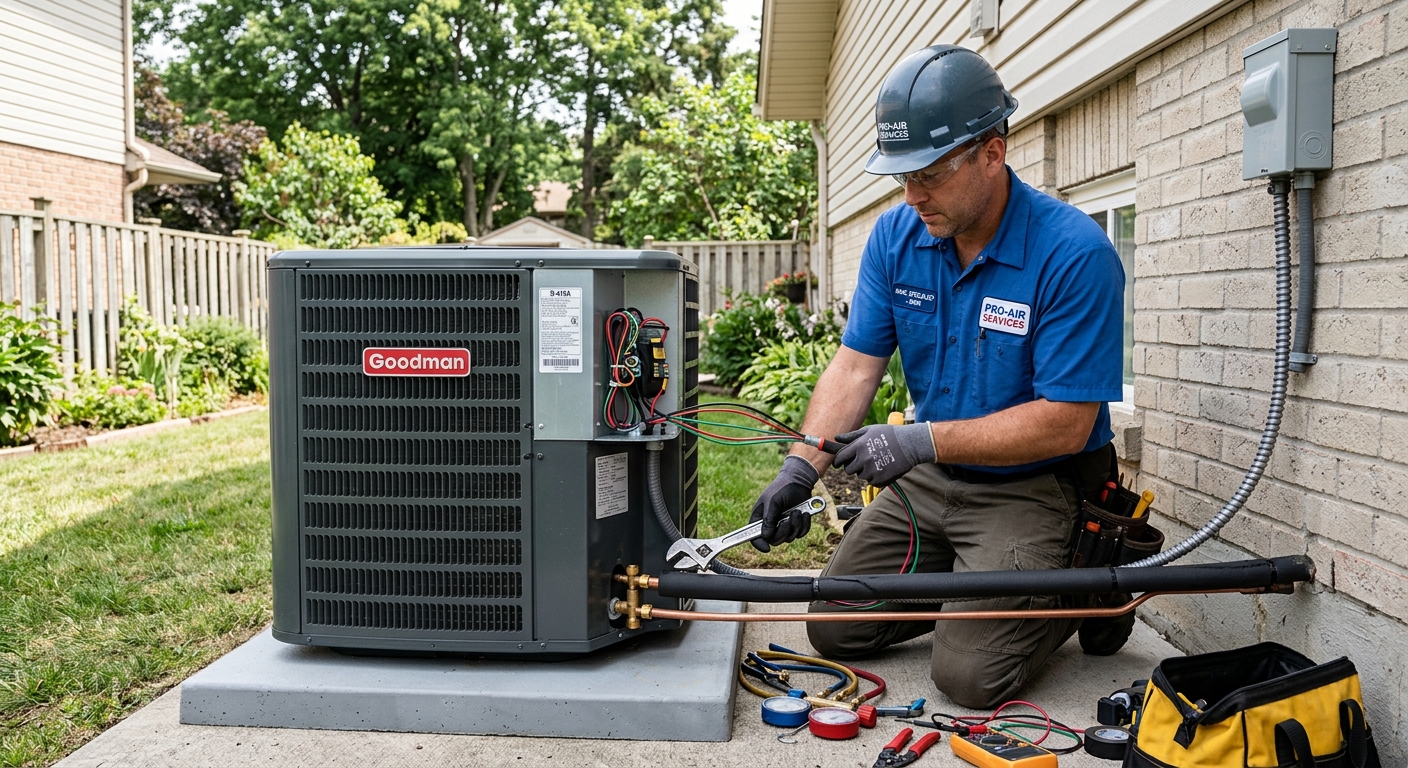
What a new HVAC system costs in Loyalsock
Loyalsock homeowners usually face HVAC decisions that are more about upgrading or retrofitting than starting from scratch. With 73.3% of homes owner-occupied and 59.2% built before 1980 (U.S. Census Bureau, ACS 2024), this is a community of long-term residents in aging houses, not rapid new construction. Many homes across Williamsport and South Williamsport date from 1900–1940, so the odds are high that any forced-air system is a retrofit—and the ductwork is often a limiting factor for replacements or upgrades. If you already have functional ductwork in good shape, that opens the door to a straight AC or heat pump swap at a lower cost. But if your home never had central air or heating, installing new ducts is a major component of the project cost.
This part of Pennsylvania is heating-dominated: it clocks in at 6,300 heating degree days and just 750 cooling degree days yearly. That means your heating choice will influence total cost of ownership more than your cooling decision, and a system that works efficiently in cold weather is paramount. Because of this, heat pumps—especially cold-climate models—are worth considering, but you may still lean on gas or oil in the coldest spots or rural townships.
| System |
Best for |
Efficiency |
Price range (installed) |
| Central AC replacement (existing ducts) |
homes with sound ductwork |
16–20 SEER2 |
$4,800–$11,500 |
| Air source heat pump (ducted) |
year-round heating and cooling |
8–10 HSPF2 |
$7,600–$16,000 |
| Cold-climate heat pump (ducted) |
heat pump as primary heat |
9–11 HSPF2 |
$12,500–$16,000 |
| Ductless mini-split (single zone) |
additions, rooms without ducts |
20–30 SEER2 |
$3,000–$6,700 |
| Full duct system installation |
homes with no existing ducts |
— |
$8,600–$17,000 |
Installed estimates for a typical Loyalsock home. Equipment tonnage, duct condition and electrical capacity move these more than brand.
Mini-splits and zoning in Loyalsock homes
Ductless mini-split systems have become a go-to solution in Loyalsock, especially for homes that went decades without central air. Many Williamsport-area houses built from 1900 to 1940 were designed before ducts were common, so retrofitting a forced-air system typically means costly demolition and repair of old lath-and-plaster walls. Mini-splits avoid this mess entirely by delivering heating and cooling directly to each room with minimal disruption.
Single-zone mini-splits are the simplest and most efficient: one outdoor unit serves one indoor head, perfect for an addition, attic, finished basement, or any isolated space. They're less expensive up front—typically $3,000–$6,700 for full installation in this area—and are extremely quiet and efficient. Multi-zone systems allow you to serve several rooms off one outdoor unit, but each added head increases cost and the total capacity per head drops a bit when all zones call at once. In many cases, multiple single-zone setups outperform a single multi-zone installation in terms of comfort and efficiency, though this approach can require more exterior wall space and wiring routes.
Aesthetic concerns with the indoor heads are real for some owners, but most mini-splits now come in low-profile wall, floor, or ceiling cassette options. Condensate must be drained to the exterior or a sump, so planning for a reliable drain path is important in basements or attics. In older Loyalsock homes where new ducts aren’t realistic, mini-splits are often the only practical way to get zoned comfort without major renovations.
Refrigerant rules and your existing system
If your Loyalsock HVAC system runs on R-410A, your equipment is still legal and fully serviceable. The shift to lower-global warming refrigerants such as R-454B and R-32 began with new residential systems shipping in 2025. As a homeowner, you do not have to replace a functioning R-410A system just because the refrigerant market is changing—there’s no mandate or forced retirement.
What does change is the economics of repair as R-410A becomes less widely produced. As supply tightens, the price per pound will rise, especially if you ever need a major recharge after a refrigerant leak. This could tip the balance toward replacement, especially for older equipment with questionable reliability. But normal service, such as topping off a minor leak or replacing a component, remains possible for years to come, so there’s no sudden “expiration date” on your current system.
The biggest impact is felt with costly leaks on high-mileage equipment. If a repair calls for several pounds of R-410A, and your system is near the end of its service life, it may make more sense to put those dollars towards a new unit running the next-generation refrigerants. Otherwise, keep what’s working and budget for a replacement when it’s truly necessary—no reason to jump the gun in Loyalsock just due to regulatory changes.
Heat pump or furnace: what makes sense in Loyalsock
Loyalsock sits in north-central Pennsylvania, where winters are long and bitterly cold—with a winter design temperature of 2 °F and 6,300 annual heating degree days. That makes this a heating-first market. The technology has changed: modern cold-climate heat pumps hold significantly more capacity down to low outdoor temperatures than old units could, so “heat pumps don’t work here” is outdated advice. Still, heat pump output drops as the mercury falls, so sizing and backup matter.
Gas service is common in Williamsport and South Williamsport, but in rural townships, many homes rely on propane or fuel oil. Where natural gas is available, a high-efficiency furnace plus central AC is often the simplest, most reliable, and cost-effective choice for deep-winter comfort. For homes off the gas grid, the math favors heat pumps—propane and oil are expensive to run, and a cold-climate heat pump will cost less to operate over time.
Dual fuel systems (heat pump with a gas backup) work well where gas is on site and you want efficient heat most of the year but furnace backup for extreme cold. A furnace is still the right call if your ducts are set up for it, gas is available, and the home regularly sees single-digit cold snaps. Otherwise, heat pumps or ductless mini-splits can carry the load—especially if you want to move away from fuels that spike in price during cold spells.
| Option |
Installed cost |
Operating cost here |
Best when |
Incentive eligible |
| Gas furnace + central AC |
$4,800–$11,500 |
lowest with gas; high with oil/propane |
existing gas service, coldest zones |
Yes, utility programs |
| Ducted heat pump (cold climate) |
$7,600–$16,000 |
lower than oil/propane, competitive with gas |
good envelope, all-electric goal |
Yes |
| Dual fuel (heat pump + gas backup) |
$12,500–$16,000 |
optimized—uses cheapest fuel per temp |
gas on site, deep cold spells |
Yes |
| Ductless multi-zone |
$8,600–$17,000 |
low in smaller, well-sealed homes |
no ductwork, zone control |
Yes |
Mechanical permits for HVAC work in Loyalsock
Pennsylvania does not issue a statewide HVAC contractor license. Instead, residential HVAC installation is regulated mostly at the municipal level, not by the state, so local requirements apply in Loyalsock. While Williamsport requires mechanical permits for central HVAC work, Loyalsock Township and other townships have their own code offices and typically require mechanical permits for new or replacement central systems—not for something minor like swapping a thermostat.
All HVAC contractors working on jobs over $500 must be registered with the state as a Home Improvement Contractor (HIC), which you can verify before signing any contract. Refrigerant handling is federally regulated: any technician working on your AC or heat pump must have an EPA Section 608 certification, regardless of any local requirement. There’s no statewide plumbing or electrical license, but permits and inspections are handled municipally within Lycoming County.
You should check for workers’ compensation insurance, which is required by Pennsylvania law for all employers. PPL Electric Utilities and UGI Penn Natural Gas both expect contractors to show proof of insurance for work on their service lines. Contractors in Loyalsock must provide a written contract for jobs over $500, and you are entitled to a three business-day right of cancellation under state law.
The decision point on an aging system
When your HVAC system falters, the repair-or-replace decision shouldn’t be automatic. In Loyalsock, most homeowners get the best value by repairing a system under 10 years old, as long as the issue is a single component and doesn’t relate to the compressor or heat exchanger. If the repair will cost a third or more of a new system, and your system is at least 10 to 15 years old, it’s worth considering replacement—especially if your unit uses older refrigerant or has efficiency far below modern units.
If your system is over 15 years old and faces a major failure, start budgeting for replacement. Efficiency gains from a new system can matter here, but the real savings come from reliability and reduced repair calls—not just lower bills, given the cold-heavy climate (6,300 HDD). Two cases require immediate replacement: a cracked heat exchanger, which is a safety risk, and a failed compressor once the warranty’s run out on an old system. Otherwise, weigh the age, refrigerant availability, and whether performance complaints could be solved more cheaply by addressing leaky ducts before condemning your system.
| Situation |
Recommendation |
Typical cost |
Reasoning |
| Under 10 years, single component failure |
Repair |
$300–$1,200 |
Most newer systems have years left; fix single faults |
| 10–15 years, repair over a third of replacement |
Consider replacing |
$4,800–$11,500 |
Big repair bill on an aging unit—replacement brings reliability |
| 15+ years, any major failure |
Replace |
$4,800–$11,500 |
Out of prime years; new system offers better comfort and reliability |
| Cracked heat exchanger, any age |
Replace immediately |
$4,800–$11,500 |
Safety issue; repairs not safe or code compliant |
| Compressor failure past warranty |
Replace |
$7,600–$16,000 |
Core part of system gone; repair rarely worth it in old units |
| Working system, high bills |
Test ducts and envelope first |
$300–$800 |
Often a leak or insulation issue, not equipment age |
Humidity and air quality in Loyalsock homes
With cold winters driving months of closed-window living in Loyalsock, the biggest air quality complaint is dry air, followed by humidity spikes when the weather finally warms. Long heating seasons dry indoor air to uncomfortable levels, causing everything from scratchy throats to cracks in wood trim. Whole-house humidifiers can help, but they carry a maintenance burden—neglected units become moldy or leak water into your ducts. Portable room humidifiers work fine for bedrooms, and skipping a whole-house unit is reasonable if you don’t mind topping up smaller tanks.
In summer, a properly sized and commissioned AC should keep humidity in check. If your current unit leaves you sticky, it may be oversized, short-cycling, or the ducts may be letting in too much warm air from basements or garages. Duct leaks are rampant in older homes. Don’t overspend on add-ons like UV lights, electrostatic filters, or fancy air washes—the measurable benefit is limited unless you have a medical need. Focus instead on using MERV 8–13 filters (if your blower can handle it) and periodic duct inspection and sealing. Mechanical ventilation makes sense mostly in new, tightly sealed homes, which remain rare in Loyalsock’s existing housing stock.
Frequently asked questions — HVAC installation in Loyalsock
Should I repair or replace my HVAC system in Loyalsock?
The right answer depends on your system’s age, the kind of failure, and local repair costs. In Loyalsock, if your HVAC system is under 10 years old and only needs a minor repair (like a capacitor or fan motor), it’s almost always worth fixing—your typical outlay is between $300–$1,200. However, if your unit is over 15 years old, and especially if you’re facing a compressor or heat exchanger failure, replacement quickly becomes more cost effective in the long run. The local climate puts a lot of demand on heating, so older, inefficient systems see wear fast. Always weigh any major repair over a third the cost of new installation (which starts at $4,800–$11,500) as a signal to price out a modern, higher-efficiency option.
What does a ductless mini-split cost in Loyalsock?
For a typical single-zone (one indoor head, one outdoor unit) mini-split installation in Loyalsock, expect a total installed price between $3,000–$6,700. This range covers the unit, standard installation, and all required electrical and refrigerant connections. Add-ons like line hide, extra distance from outdoor to indoor head, or difficult wall penetrations can push the cost up, especially in older Loyalsock homes with thick exterior walls. Multi-zone systems serving several rooms will run considerably more—sometimes double a single-zone’s cost. Ductless is a strong choice here for finished attics, additions, or any area not reached by your existing ductwork.
What is EPA Section 608 certification?
EPA Section 608 certification is a federal requirement for any technician who handles refrigerants like R-410A or the newer R-454B and R-32. It isn’t unique to Pennsylvania—it applies everywhere, including Loyalsock—because refrigerants have environmental impacts if not properly managed. So, any contractor or installer touching your AC or heat pump systems in Loyalsock should be able to show this credential. It’s different from state or municipal registration requirements. Section 608 means the technician knows how to safely recover, recycle, and not vent refrigerant to the atmosphere. When hiring for replacement (which starts at $4,800–$11,500 in this area), ask to see proof of their EPA certification.
How cold does it get in Loyalsock and does that affect heat pumps?
Loyalsock winters are cold, with design temperatures dropping to 2 °F and the region posting 6,300 annual heating degree days. That long heating season makes older heat pumps a poor match, but modern cold-climate heat pumps are engineered to run efficiently and reliably even on single-digit days. Their capacity does drop off the colder it gets, so sizing and backup options matter—a backup heat source or a dual fuel system is smart insurance here. You’ll pay more for cold-climate-rated systems ($12,500–$16,000 installed), but you won’t sacrifice comfort in most normal winters.
Can I service my R-410A system after the refrigerant change?
Yes. In Loyalsock and elsewhere in Pennsylvania, your R-410A system remains legal to operate and fully serviceable. The main impact is that R-410A costs are climbing as production drops, so big recharge jobs will be more expensive—possibly pushing towards replacement on older systems if leaks develop. If your unit is still in good working order, you don’t have to replace it. When service does make sense, expect a repair cost of $300–$1,200 for most minor leaks or compressor work, unless the system is already past its intended life.
Is a high-efficiency system worth the extra cost here?
For Loyalsock homeowners, where long winters drive up heating bills and older homes are common, upgrading to a higher-efficiency system can pay back slowly—especially if your old equipment is well past its prime. If you pay for propane or fuel oil, the savings from a heat pump can justify higher up-front costs (often $7,600–$16,000). With natural gas, the savings might take longer to recover depending on energy prices. Focus first on sealing and duct improvements. High-SEER or HSPF models only make real sense if your current system is in bad shape or you want to electrify. Otherwise, you may not see bill savings in line with the added equipment cost.
Are duct sealing and insulation eligible for incentives?
Yes, duct sealing and insulation work are often eligible for incentives, especially if you can document leaky or uninsulated ducts in a Loyalsock home built before 1980. Some utility programs in Pennsylvania help offset the cost. A well-executed duct sealing job can cost $300–$800, and is almost always worth doing before considering expensive equipment upgrades—most homes here lose more heat through duct leaks than older fans or motors. Check with your contractor to document improvements so you can claim available incentives.
What is commissioning and why does it matter?
Commissioning is the process of testing your new HVAC system after installation to make sure it runs as designed—confirming the equipment is properly charged with refrigerant, airflow is correct, and controls function as intended. In Loyalsock, commissioning makes a clear difference in comfort in older homes: leaky or undersized ducts, poor airflow, or miswired thermostats are common problems, especially in houses dating from 1900–1940. A properly commissioned system performs better and saves you money. Commissioning is part of any replacement job (costing $4,800–$11,500 or more), but not all contractors do it thoroughly, so ask for specifics in writing before work begins.
How long should an HVAC system last in Loyalsock?
In Loyalsock’s climate, a standard central air conditioner or heat pump lasts 12–15 years, while a well-maintained gas furnace can stretch closer to 20. The rough winters and older ductwork here do put a little more wear and tear on systems than you’d experience in milder climates. Regular preventive maintenance helps, but when you hit 15+ years, the risk of a major failure rises fast. Systems approaching two decades, facing costly repairs in the $4,800–$11,500 range, are ready for retirement—waiting leads to higher utility bills and less reliability in the coldest part of the year.