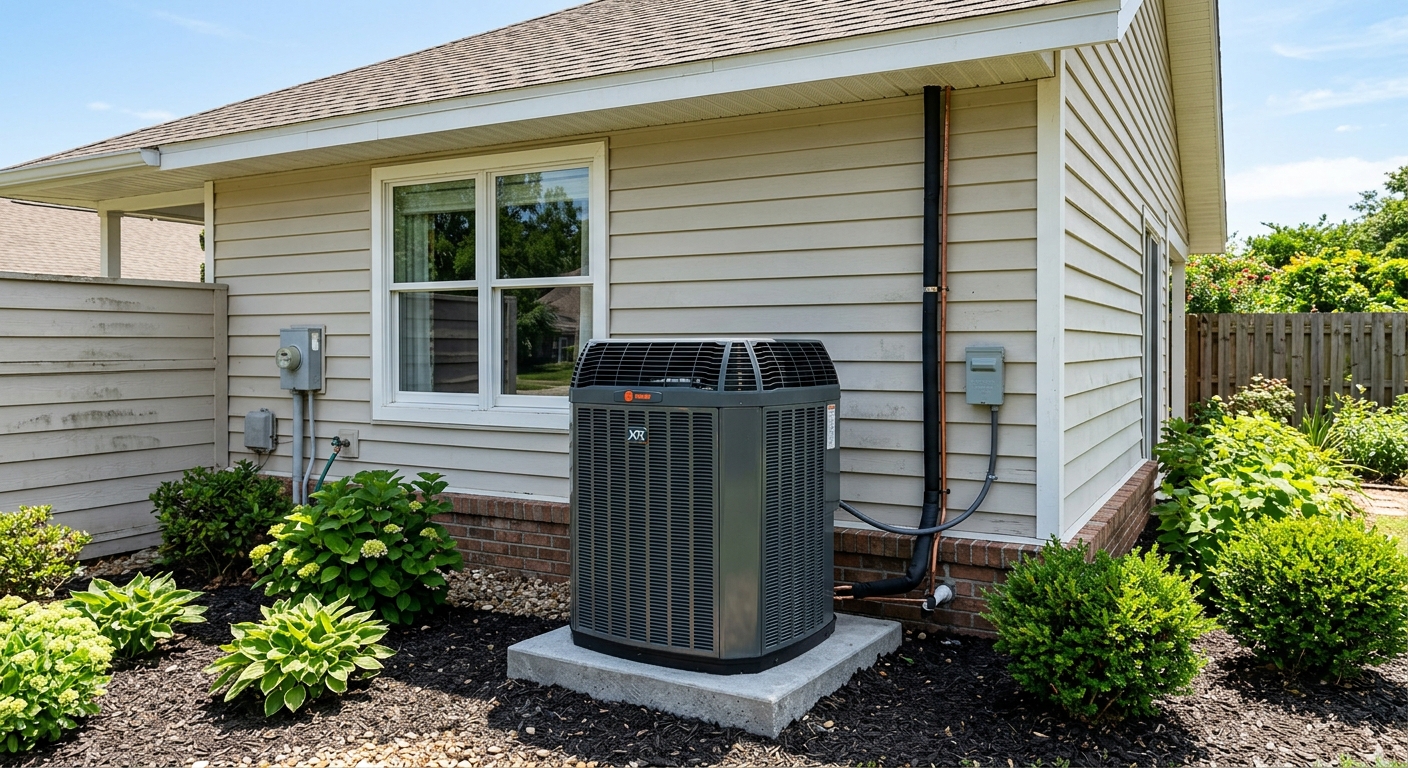
What a new HVAC system costs in Quincy
If you own a home in Quincy, you’re not alone—over three-quarters of Quincy’s households own their place, and nearly two-thirds of local homes were built before 1980 (U.S. Census Bureau, ACS 2024). For a typical home here, HVAC installation isn’t just about swapping in a new box; it’s often a retrofit or upgrade built around an existing, sometimes outdated, duct system from the 1950–1980 ranch and split-level era. Many of these older systems need ductwork upgrades to work well with today’s equipment.
Quincy’s climate is heating-dominated. With around 5,200 heating degree days and just 1,250 cooling degree days each year, most homeowners feel the biggest bite on their utility bill during the colder months. That puts the focus on robust, efficient heating—heat pumps, furnaces, or hybrids—while still ensuring summer comfort. If your ducts are sound, you’ll have more system options and likely lower costs; if not, a duct upgrade or complete replacement may be needed.
| System |
Best for |
Efficiency |
Price range (installed) |
| Central AC replacement (existing ducts) |
homes with sound ductwork |
16–20 SEER2 |
$4,600–$11,000 |
| Air source heat pump (ducted) |
year-round heating and cooling |
8–10 HSPF2 |
$7,400–$16,000 |
| Cold-climate heat pump (ducted) |
heat pump as primary heat |
9–11 HSPF2 |
$12,000–$16,000 |
| Ductless mini-split (single zone) |
additions, rooms without ducts |
20–30 SEER2 |
$3,000–$6,500 |
| Full duct system installation |
homes with no existing ducts |
— |
$8,400–$16,500 |
Installed estimates for a typical Quincy home. Equipment tonnage, duct condition and electrical capacity move these more than brand.
Reducing the net cost of a Quincy installation
When upgrading or replacing HVAC equipment in Quincy, there are three main ways to lower your out-of-pocket costs: federal tax credits, utility rebates, and any available statewide incentives. The federal government offers tax credits on qualifying high-efficiency heat pumps, air conditioners, and certain other improvements. A tax credit comes off your tax bill the next year—it won’t help with your upfront cash outlay, but it can make a noticeable difference in your net cost.
Local utilities, including West Penn Power for electric and UGI Utilities if you have natural gas, may offer rebates for installing energy-efficient HVAC systems. Rebates reduce your invoice directly, giving you the savings up front. It’s important to know that these programs are regularly updated, with new models and rebate amounts appearing every year. For the most current information, you should check your utility’s efficiency program webpage. Another place to check is the official ENERGY STAR rebate finder; both sources list current, qualifying equipment and exact requirements for application.
Don’t take rebate amounts from a generic article as a solid number—they change with funding, and program rules can be specific. Always confirm before you commit to a new system, so you know what savings you’ll really see.
R-410A phase-down: repair or replace?
If your Quincy home has a system that runs on R-410A refrigerant, you don’t need to panic. Under national rules to reduce high-GWP refrigerants, new residential HVAC systems now use lower-GWP blends like R-454B and R-32, but R-410A equipment is still legal to own, run, and service. What’s changing is the long-term cost picture: as suppliers focus on stocking newer refrigerants, R-410A is likely to see tighter supplies and climbing prices, especially for larger recharges tied to a major leak. For smaller, routine service needs—capacitor replacements, control repairs, or other non-refrigerant work—there’s no economic pressure to change your system before its time.
The only reason the refrigerant transition should tip your hand is if you’re facing a repair on an older system that involves a major refrigerant recharge. Here, the labor plus rising refrigerant cost can make replacement look more reasonable than it did a few years ago. Still, there’s no requirement to replace a working R-410A system, and well-maintained equipment can often run for years without needing a recharge. If someone tells you your system is now “obsolete” or can’t be worked on, that just isn’t correct in Franklin County or anywhere else.
Ductwork: the part nobody quotes properly
In Quincy’s older homes—especially 1950–1980 ranches and split-levels—the ductwork is often neglected during HVAC replacements. Many systems leak 15% or more of conditioned air before it ever hits the vent, thanks to age, poor sealing, or undersized return ducts common to the era. A good contractor will recommend a duct blaster test, which pressurizes the system to measure exactly how much air is escaping. This test is far more conclusive than a flashlight peek in the basement.
If leakage is high, professional sealing might save your system. But sometimes you’ll find ducts that are too small for modern equipment (especially for AC or heat pumps), or that run through unconditioned attics and crawlspaces, bleeding heat or cooling before it reaches you. Ductwork from this era was often sized for heating alone, not the higher airflow modern systems require. In worst cases—crushed sections, rust, or failed insulation—replacement is a better long-term investment.
The honest approach: don’t replace your system without knowing your ductwork’s actual shape. Test first, and repair or replace ducts if needed. Otherwise, you risk buying equipment that never hits its rated efficiency or comfort levels, no matter how much you spend up front.
What construction era means for your system
Quincy’s homes are largely products of the 1950–1980 building boom—63.7% were built before 1980. For HVAC, that means many houses already have ductwork, but it was usually sized for a furnace, not air conditioning. Insulation levels won’t meet today’s standards, and windows in these homes typically lose more heat than new construction. Upgrading to central AC or a heat pump often highlights duct shortfalls, drafty rooms, or even an electrical panel that can’t handle modern equipment’s demands—especially if you’re thinking about an all-electric system.
If your home is older, it’s not uncommon to find questionable flues or chimneys needing repair when replacing a gas furnace—a necessary safety check. Newer areas built later usually have more generous “builder grade” ductwork, but those systems are often at the end of their lifespan now. Knowing which era your home falls in helps your contractor plan for the most likely surprises: duct resizing, sealing, sometimes electrical upgrades, and making sure new gear doesn’t just drop into old slots for another round of the same problems.
What size system does a Quincy home need?
Getting system sizing right matters more than the brand you choose. In Quincy, many homes have legacy systems that are oversized, causing rapid cycling, poor dehumidification, and higher energy bills—problems people learn to live with until it’s fixed. A properly sized system should run longer, quieter cycles for steady temperatures and less humidity, especially important given the region’s 12 °F winter design temperature.
That’s why every real HVAC proposal should start with a Manual J load calculation. This detailed audit looks at your home’s square footage, insulation, windows, orientation, ductwork, and more. Rules of thumb—“one ton per 500 square feet”—ignore how homes handle the actual cold spells we get in south-central Pennsylvania. The key question to ask any contractor: "Did you run a Manual J, and can I see the results?" If the answer is no, or if they’re only matching your old unit’s tag, you’re likely inheriting someone else’s mistake.
With 5,200 heating degree days here, a system designed only for mild winters may leave you cold on the worst nights, while an oversized unit will cost more and deliver less comfort. Demand the calculation; it’s the most valuable paper you’ll get from your bidder.
What a Pennsylvania HVAC contractor must hold
Pennsylvania does not have a statewide HVAC contractor license for residential work. Instead, the state requires all contractors doing jobs over $500—including HVAC replacements—to hold a Home Improvement Contractor (HIC) registration. This is administered by the Pennsylvania Office of Attorney General and you can verify any contractor’s registration at hic.attorneygeneral.gov. Mechanical (HVAC) permits are issued by your local township or borough office; in Chambersburg, for example, HVAC replacements typically need a mechanical or building permit.
On the technical side, any technician who installs or services cooling systems must hold an EPA Section 608 certification to handle refrigerants legally—this is a federal requirement and applies everywhere, including Quincy. To protect yourself as a homeowner, always check workers’ compensation insurance by running a search at the WCAIS system (wcais.pa.gov). Contractors must carry this coverage if they have employees. Having these verifications in hand, along with a clear, written contract as required by state law, helps you avoid the most common headaches with HVAC projects in Pennsylvania.
Frequently asked questions — HVAC installation in Quincy
What is commissioning and why does it matter?
Commissioning is the process your HVAC contractor performs after installation to verify that every part of the new system works as designed. In Quincy, commissioning includes checking airflow, refrigerant charge, controls, and—critically—how well your system distributes air through your older ductwork. Many homes built before 1980 have ducts that need balancing or sealing, so a thorough commissioning helps reveal problems early. Without this step, even a high-efficiency system costing $7,400–$16,000 could underperform, causing noise, comfort complaints, or high energy bills. Always ask your contractor what their commissioning process includes and demand a written summary when the job is done.
Who inspects HVAC work in Quincy?
In Quincy and the rest of Franklin County, HVAC inspection and code enforcement are handled by your municipality. For example, the Borough of Chambersburg has its own Code Enforcement Office, while surrounding townships have their own permit offices. They’ll check if your contractor pulled the required mechanical permit and then inspect major installs like a central AC or ducted heat pump, usually before walls and ceilings are closed. Local inspectors help ensure your new $4,600–$11,000 HVAC system is safe, up to Pennsylvania Uniform Construction Code, and documented for resale value down the road.
How much does a furnace replacement cost in Quincy?
The replacement cost for a furnace alone isn’t separately listed in the current Quincy price bands, but a ducted air source heat pump—which often replaces both AC and furnace in one go—typically runs $7,400–$16,000 installed. If you’re keeping your ducts and only replacing the furnace, the actual cost tends to be a little lower, assuming no major complications with venting or gas lines. Always factor in possible duct repairs for pre-1980 homes, as these can raise project costs quickly if neglected.
What HVAC tax credits are available to Quincy homeowners?
Quincy homeowners can access federal tax credits for high-efficiency heat pumps, central ACs, and other system upgrades, provided the equipment meets energy standards. This tax credit reduces the amount of tax you owe in the year after installation—it’s not an instant rebate. While exact amounts change yearly, you can find up-to-date figures on the ENERGY STAR website. Utility rebates from West Penn Power or UGI Utilities may also apply depending on your home’s setup. For a heat pump installation—usually $7,400–$16,000—these incentives can make a significant dent, but verify availability before signing a contract.
Is a heat pump a good choice for Quincy winters?
Thanks to improvements in heat pump technology, ducted and ductless models now handle Quincy’s 12 °F winter design temperature better than ever. For many homes, especially those with adequate insulation and upgraded ductwork, a cold-climate heat pump (typically $12,000–$16,000) can cover nearly all heating needs. Fuel oil and propane users may especially benefit. Some homes might keep a backup furnace for severe lows, but for most, a properly sized heat pump offers comfort and savings even in south-central Pennsylvania’s icy months.
How long should an HVAC system last in Quincy?
In Quincy, a modern central AC, heat pump, or furnace usually lasts 12 to 20 years, assuming regular filter changes and annual tune-ups. Aging ductwork can shorten that lifespan if not properly sealed or insulated, especially in homes built before 1980. Systems may need earlier replacement if undersized, oversized, or neglected. With a typical ducted heat pump install costing $7,400–$16,000, investing in good design and maintenance helps you reach the high end of that range, making the most of your money and reducing surprise repairs.
What is SEER2 and how is it different from SEER?
SEER2 is the updated way to rate air conditioning and heat pump efficiency. The old SEER used test conditions that didn’t include real-world pressure drops found in Quincy’s older ductwork. SEER2 uses tougher, more realistic testing for a better sense of what you’ll actually pay to run the system in your home. For example, a new central AC replacement can now reach 16–20 SEER2, whereas the old SEER numbers would look a couple points higher but without giving you a fair apples-to-apples comparison. This matters if you’re spending $4,600–$11,000 on a new system and want to know what you’re truly getting.
Is a high-efficiency system worth the extra cost here?
For Quincy’s long heating season (over 5,000 heating degree days), higher-efficiency HVAC really does pay back quicker than in milder areas. Upgrading from standard to high-efficiency (especially for heat pumps or central ACs) may lift your upfront price—pushing toward $11,000–$16,000—but the annual savings are stronger. In older, draftier homes, spending a little extra for better efficiency can also translate to steadier comfort during our cold spells. The return depends on your ductwork and energy habits, but generally, efficiency investments make sense here—especially if rebates or tax credits help cover the difference.
How does south-central Pennsylvania's climate affect system sizing?
Quincy’s climate, with harsh winters and moderate summers, means heating needs dominate. The local winter design temp is 12 °F, so a Manual J load calculation must size your system to handle those cold snaps, not just average days. Oversized units—common in older homes—result in short cycles and poor comfort. With system installs from $4,600–$16,000, sizing mistakes are expensive and long-lasting. Ask your contractor to show you the load calculation they use; two otherwise identical homes in Quincy can differ a full ton in equipment need because of insulation, windows, or duct leaks.