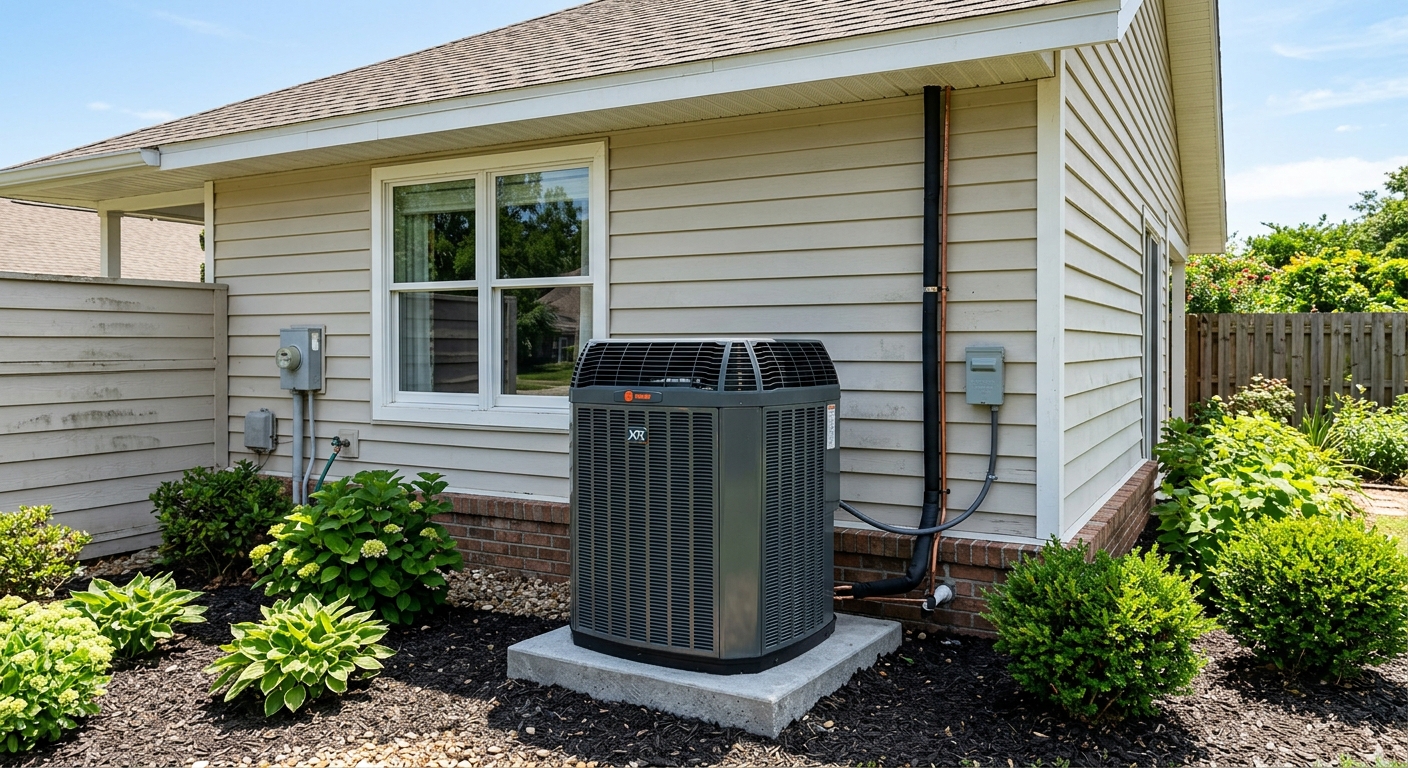
Souderton heating and cooling prices by system type — 2026
Souderton has a homeownership rate of 57.8% and nearly three-quarters of its homes were built before 1980 (U.S. Census Bureau, ACS 2024), making this a classic replacement and retrofit market. Very few houses were designed for central air at the start, so many upgrades involve navigating older ductwork — or the lack of it. That’s especially true when you look at post-war suburbs like Abington and Cheltenham driving retrofit ductwork and electrical upgrades for modern HVAC systems. This means system recommendations often hinge on the quality and existence of ductwork under your roof.
With roughly 4,800 heating degree days and 1,450 cooling degree days, this is more heating-dominated than cooling-dominated. Nights get cold enough in winter to challenge oversized air conditioners and force heating equipment choices designed for comfort when it actually matters. Most Souderton homes need a system that holds its own in long heating seasons and doesn't just chase the few hottest July days. If you’re considering a new system, keep in mind that equipment sizing and ducting matter as much as the sticker price. Below are realistic 2026 installed prices for Souderton:
| System |
Best for |
Efficiency |
Price range (installed) |
| Central AC replacement (existing ducts) |
homes with sound ductwork |
16–20 SEER2 |
$5,200–$12,500 |
| Air source heat pump (ducted) |
year-round heating and cooling |
8–10 HSPF2 |
$8,300–$17,500 |
| Cold-climate heat pump (ducted) |
heat pump as primary heat |
9–11 HSPF2 |
$13,500–$17,500 |
| Ductless mini-split (single zone) |
additions, rooms without ducts |
20–30 SEER2 |
$3,300–$7,300 |
| Full duct system installation |
homes with no existing ducts |
— |
$9,400–$18,500 |
Installed estimates for a typical Souderton home. Equipment tonnage, duct condition and electrical capacity move these more than brand.
Sizing: why bigger is worse
The most common and damaging HVAC mistake in Souderton is oversizing. When a system is too large for your home, it turns on and off in short bursts (short cycling), which leaves rooms unevenly conditioned, lets humidity creep up in summer, and wears equipment out years ahead of schedule. Contrary to what you might hear, a larger system is not extra protection—it’s a performance problem you’ll live with every season.
Correct sizing starts with a Manual J load calculation, not a rough guess based on square footage or the sticker on your old furnace. That old rule of thumb doesn’t account for insulation, window type, orientation, air leaks, or room-by-room differences. If your contractor doesn’t offer or show you a full load calculation, ask this directly: "Did you run a load calculation, and can I see it?" If not, they’re repeating someone else’s (often wrong) math.
In Montgomery County, including Souderton, the winter design temperature is 14°F. That’s the number load calculations build around—it ensures you get reliable heating when you actually need it, not just on mild days. Oversize for 14°F, and you pay for equipment you never use efficiently. Undersize, and comfort and safety suffer when temps actually dip. Bottom line: insist on the right process and the math to back up your investment.
Why your ducts may be the real problem in Souderton
If your Souderton home isn’t holding temperatures or your energy bills remain high after equipment upgrades, your ductwork might be the real culprit. In older local homes, duct leakage is common—sometimes up to a third of your heated or cooled air never makes it to the rooms you live in. This hampers every new system’s performance, no matter how efficient the equipment.
A duct blaster test measures exactly how leaky your ductwork is, tracking the percentage of air lost before it gets delivered. Sealing is often an effective first step for minor leakage, but some systems—especially those retrofitted after the post-war housing boom pushing central air into places like Abington and Upper Dublin—have undersized or badly routed ducts that really need replacement. Many original installations sized returns just for furnace airflow, not today’s higher-static systems, creating airflow bottlenecks that no amount of sealing can fix.
Unconditioned attics and crawlspaces are also a problem: ducts there lose or collect heat even before air enters your living space, and flexible duct runs in these locations age especially poorly. If you’re thinking about new equipment, test your ducts first—not as an afterthought. Replacing a high-efficiency system without addressing the distribution network wastes your money in this market.
Service plans: worth it or not?
Service plans are sold hard in Souderton, but that doesn’t mean every homeowner needs one. The essentials are simple: change filters at the right interval (never let a $10 filter choke a $6,000 system), stick to the MERV rating your blower can handle, and clean the coils to keep efficiency up. Condensate drains need to be clear, especially during humid summers. Crucially, “topping up” refrigerant should not be a routine: if your system is low, it has a leak, and that has to be found and repaired—not hidden with another few ounces of R-410A.
What do you really get in a service plan? If it’s just a filter swap and a perfunctory check, it won’t pay for itself. Good plans include checks on safety controls, blower motors, and refrigerant charge—with the visit actually documented. Shop for clear terms: avoid plans that auto-renew without notice or don’t credit unused balances toward repairs you might actually need.
Spring and fall are the best months in Montgomery County—schedule before peak heating or cooling starts in earnest, so you aren’t left waiting while everyone else’s emergencies tie up the techs.
Mini-splits and zoning in Souderton homes
Ductless mini-splits make the most sense in Souderton for additions, finished basements and attics, and those stubborn rooms that central air never seems to touch. If your home never had central ducts—common in pre-1980 houses and many postwar suburban developments in Montgomery County—ductless is a way to add efficient comfort without tearing into plaster or calling in a drywall crew.
Single-zone systems are the simplest and most cost-effective for one spot. Multi-zone setups, with one outdoor compressor and several indoor heads, cost more up front—between $9,400–$18,500 installed for a full multi-zone—plus careful thought about where each indoor unit goes. The look of wall-mounted heads is not for everyone, but newer models are smaller and can even be concealed in ceilings or floors. Don’t forget: every head needs a way to drain condensate, whether that’s pumped outside or into a plumbing stack.
Multi-zone systems aren’t magic—running all zones hard at once can strain the outdoor unit or deliver less precise comfort than separate single-zone systems. Retrofit suburbs like Abington and Upper Dublin saw many homes fitted with ductwork never sized for whole-house comfort; if your place predates central systems, treat mini-splits as a ductless upgrade—often a cleaner and more practical solution than wrestling with old ducts.
Heat pump or furnace: what makes sense in Souderton
The heating decision in Souderton starts with our numbers: winters bring 4,800 heating degree days and a 14°F design temperature. Older arguments against heat pumps—“they can’t heat when it’s truly cold”—are mostly history; modern cold-climate models keep real capacity well into the teens. Still, as temperature drops, even the best heat pump output falls, so for the coldest nights, backup heat (either electric strips or a gas furnace) becomes critical. That’s one reason dual-fuel setups—heat pump with a gas backup—exist in this county.
Gas service is widespread in most Montgomery County neighborhoods, including Souderton, and for homes already on natural gas, a new furnace or dual-fuel is straightforward. But in the outlying northwest, limits on gas service mean the main competition is between heat pumps and expensive propane or oil. In those homes, a high-efficiency heat pump is often the superior choice if you want to cut both bills and oil dependency—propane and oil prices simply aren’t competitive anymore when compared to heat pump COP in this region’s moderate winters.
The only time a straight gas furnace still makes the most sense: rock-bottom upfront cost, simple installation, or coldest corners of the county with big heating loads and reliable gas. If you’re staying long-term and want to decarbonize or futureproof, a cold-climate heat pump or dual-fuel delivers year-round comfort and keeps options open as incentives and grid pricing change.
| Option |
Installed cost |
Operating cost here |
Best when |
Incentive eligible |
| Gas furnace + central AC |
$5,200–$12,500 |
lower where gas is available |
existing gas service, coldest zones |
modest rebates available |
| Ducted heat pump (cold climate) |
$8,300–$17,500 |
electric rates, best in well-insulated homes |
good envelope, all-electric goal |
strong incentives for heat pumps |
| Dual fuel (heat pump + gas backup) |
$13,500–$17,500 |
efficient in shoulder seasons, switch to gas below 20°F |
gas on site, deep cold spells |
often rebate-eligible |
| Ductless multi-zone |
$9,400–$18,500 |
individual zone control, less efficient if all heads run simultaneously |
no ductwork, zone control |
rebates for specific units |
What a Pennsylvania HVAC contractor must hold
Pennsylvania does not issue a statewide HVAC contractor license for residential work. Instead, contractors must be registered as Home Improvement Contractors for any job over $500. This registration is issued at the state level by the Attorney General’s office as required under consumer protection law, and you can check their status before signing a contract. In Montgomery County, mechanical and electrical work (including HVAC installs, replacements, and upgrades) requires a municipal mechanical permit and passes local inspection, not a state inspector.
Anyone handling refrigerants—including all air conditioning and most heat pump work—must carry active EPA Section 608 certification. That’s federal law and it applies in every locale.
Employers must carry workers’ compensation for all employees, which you can and should verify by checking the state’s online system. Insurance coverage should also be confirmed with the same level of enthusiasm—don’t accept an expired form or verbal assurance. In every case, a written contract is required for any work over $500, and you have a three business-day right to cancel once it’s signed.
Frequently asked questions — HVAC installation in Souderton
What HVAC tax credits are available to Souderton homeowners?
For Souderton homeowners, federal tax credits are the biggest driver of direct savings for HVAC upgrades. As of 2026, you may be eligible for up to $2,000 back on select heat pump systems that meet efficiency thresholds, plus smaller credits for certain high-efficiency air conditioners, furnaces, and advanced controls. Many heat pumps and mini-splits qualify, and these credits stack atop rebates from PECO or state programs, which can vary based on the type of system. Documentation is key: keep your model numbers and installer receipts handy to claim credits. For example, a cold-climate ducted heat pump in the $13,500–$17,500 range could net you a credit if it meets all criteria. Always verify available credits before purchase, since not every brand or installer can provide eligible equipment.
When is the best time of year to replace HVAC in Souderton?
The best timing for an HVAC installation or replacement in Souderton is spring (March to May) or early fall (September through October). In these shoulder seasons, most contractors have more flexible schedules and parts or complete system shortages are less likely than during peak heating or cooling emergencies. If your system is teetering, don't wait for the first heat wave or cold snap—peak summer and winter are when everyone else is calling, and appointment wait times soar. Planning a project for the off-peak months can also mean access to better installation crews and sometimes even seasonal incentives or more favorable pricing on a $5,200–$12,500 job. In Souderton, with our heating-dominated climate, many homeowners want work done before November so the new system is online before any real freeze sets in.
How much does a furnace replacement cost in Souderton?
In Souderton, replacing a gas furnace—assuming you already have sound ductwork and basic controls—typically costs between $5,200–$12,500 installed. This band includes removal of the old unit, basic electrical and gas tie-ins, and a standard efficiency upgrade. Costs climb if your ductwork needs modification for airflow, or if new venting and return lines are required in a pre-1980 home. Homes in the far northwest parts of Montgomery County not on natural gas may see higher totals because equipment and fuel storage needs change (propane or oil setups may fall outside this band). It pays to get a detailed quote confirming what’s included—some contractors will upsell you on extras that are not always necessary.
What is EPA Section 608 certification?
EPA Section 608 certification is required by federal law for any technician in Pennsylvania (and nationwide) who installs, services, or disposes of equipment containing refrigerants, such as central air conditioners, heat pumps, or mini-splits. This certification ensures the tech understands how to handle refrigerants safely—and most importantly, how to avoid releasing them to the atmosphere, which harms the environment and carries steep penalties. In Souderton, anyone offering to recharge, replace, or upgrade an AC or heat pump, even those installed in the $8,300–$17,500 price range, must carry this credential. If a contractor cannot show proof of EPA Section 608, you should not hire them—period. Uncertified work risks voiding warranties and breaking the law.
Do I need dual fuel in southeastern Pennsylvania?
Dual fuel systems—pairing a heat pump with a gas furnace backup—make sense in much of Montgomery County, especially places like Souderton where winter design temps can reach 14°F. While today’s cold-climate heat pumps work efficiently down to the teens, below those points, a gas furnace still delivers faster, cheaper heat for those last bitter nights. In areas with reliable natural gas service, dual-fuel can keep energy bills lower and improve comfort. In less urbanized pockets where gas is limited, an all-electric cold-climate heat pump may now be more practical, especially as incentives climb and oil or propane prices remain high. Dual fuel does cost more—between $13,500–$17,500 installed—but it can be the smart play for long-term flexibility if you plan to stay in your home and want the best of both fuel worlds.
Why do HVAC quotes in Souderton vary so much?
HVAC quotes in Souderton range widely—sometimes by thousands—because every job is more than just swapping boxes. The real drivers include ductwork condition, electrical upgrades (especially for heat pumps), local permit requirements, and the complexity of retrofitting older homes. For example, a basic central AC replacement might show as low as $5,200–$12,500, but if duct leaks are found or power needs upgrading, expect totals to climb. System size, manufacturer, included warranty terms, and even project timing (peak demand fees) move the price needle. Bottom line: detailed, apples-to-apples quotes protect you from lowball numbers that leave out essentials, or padded bids selling you more than you need. Asking your contractor to walk through their detailed scope usually tells you what you’re actually paying for.
How cold does it get in Souderton and does that affect heat pumps?
In Souderton, winter’s design temperature drops to 14°F, and we log about 4,800 heating degree days per year—this is a real heating climate. Old-school heat pumps started to sputter below freezing, but today’s cold-climate models keep most of their output in the teens and only switch to backup heat (like electric strips or gas) on the coldest nights. If you install a cold-climate ducted system—costing $13,500–$17,500—expect it to keep your home comfortable through typical Montgomery County winters, provided your home is reasonably insulated. Extreme cold snaps may require brief use of backup, but those are rare here. Always have your contractor size equipment for our real winter lows, not just “average” conditions.
Why are my Souderton energy bills high with a new system?
High energy bills after a fresh system install in Souderton are usually a sign that something was missed during the project—most often, leaky or uninsulated ductwork, incorrect equipment sizing, or a poorly tuned system. Even the best new air-source heat pump ($8,300–$17,500 installed) can't overcome a duct system spilling heated or cooled air into an attic or crawlspace. Undersized return ducts or skipped air sealing in pre-1980 homes sabotage efficiency. Make sure your installer ran a Manual J load calculation and checked ducts for leaks. Sometimes, long-neglected habits (cranking the setpoint too high or low, or not adjusting humidity control) also drive up bills. Don’t accept “it’s normal” as an answer—press for a diagnostic visit if your bills don't match your expectations and historical data.
Can I service my R-410A system after the refrigerant change?
Yes, for now you can continue servicing your R-410A system in Souderton—even as new refrigerants arrive and tighter regulations phase out R-410A in new equipment. Most area contractors are still equipped, and R-410A remains available for maintenance or repairs. However, prices may climb as supplies tighten and eventually, new systems going forward will likely use R-32 or R-454B instead. A new central AC installed today—expect $5,200–$12,500—will last 10–15 years, and parts or refrigerant will be available for routine needs. Just make sure your contractor is up to date on new handling and recovery regulations, especially if your system gets replaced in the next few years.