Tamaqua heating and cooling prices by system type — 2026
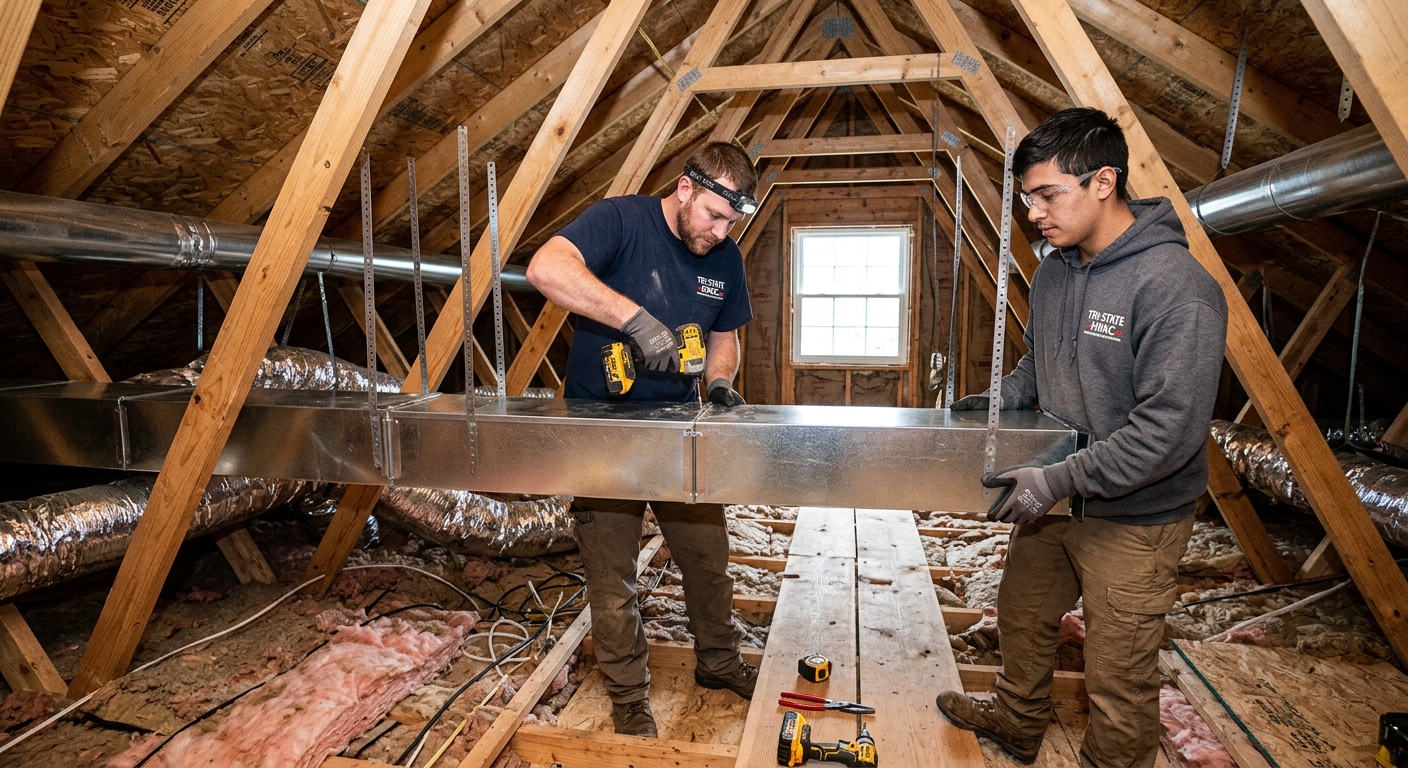
If you own a home in Tamaqua, you’re likely living in a house that predates 1980—almost 92% of the local housing stock fits that bill (U.S. Census Bureau, ACS 2024). Combine that with a homeownership rate of just over 62%, and it’s clear Tamaqua is a retrofit and replacement market, not a new construction boomtown. Most equipment replacements here aren’t just a switch-out; you’re often dealing with old, sometimes poorly sealed or undersized ductwork, and custom solutions are normal, especially with pre-1940 coal-region homes needing tailored ductwork and creative condensate routing.
The northeast Pennsylvania climate also puts the load on your heating far more than cooling—Tamaqua sees around 6,100 heating degree days a year and only about 850 cooling degree days. That means heat is the bigger concern for both equipment selection and operating costs. Cooling still matters (summertime humidity is real), but system sizing and reliability are mostly about how your setup holds up when it’s 4 °F outside, not when the July sun bakes the roof.
| System |
Best for |
Efficiency |
Price range (installed) |
| Central AC replacement (existing ducts) |
homes with sound ductwork |
16–20 SEER2 |
$4,400–$10,500 |
| Air source heat pump (ducted) |
year-round heating and cooling |
8–10 HSPF2 |
$7,100–$15,000 |
| Cold-climate heat pump (ducted) |
heat pump as primary heat |
9–11 HSPF2 |
$11,500–$15,000 |
| Ductless mini-split (single zone) |
additions, rooms without ducts |
20–30 SEER2 |
$2,800–$6,200 |
| Full duct system installation |
homes with no existing ducts |
— |
$8,000–$16,000 |
Installed estimates for a typical Tamaqua home. Equipment tonnage, duct condition and electrical capacity move these more than brand.
The central decision for a Tamaqua homeowner
In Tamaqua, deciding between a furnace, a heat pump, or a dual fuel setup isn't a theoretical exercise—it’s built around our climate and local energy options. With a winter design temperature of 4 °F and a hefty 6,100 heating degree days each year, this is a heating-driven county. The old wisdom that heat pumps can’t handle Tamaqua cold is out of date: modern cold-climate models maintain useful output impressively far below freezing, but their capacity does drop off as temperatures sink. That’s why heat pumps here are typically paired with either electric resistance or, in town, a gas furnace for back-up—especially on those occasional deep-cold mornings.
Gas is readily available in Pottsville and older boroughs, but in the more rural stretches of Schuylkill County, where many Tamaqua homeowners live, your choice may really be heat pump versus propane or fuel oil. When gas isn’t at the curb, heat pumps become a much stronger value proposition—especially if you want to get away from the high operating costs and maintenance headaches of oil and propane systems.
If your home has existing gas service, your envelope isn’t especially tight, or you simply want no-nonsense performance at the lowest upfront price, a gas furnace paired with central AC remains a reliable choice. For those aiming all-electric, or whose aging boiler just isn’t worth another repair, a cold-climate heat pump can handle most Tamaqua winters—with occasional help. Dual-fuel systems split the difference, offering heat pump efficiency most days and furnace power when January really bites.
| Option |
Installed cost |
Operating cost here |
Best when |
Incentive eligible |
| Gas furnace + central AC |
$4,400–$10,500 |
low (with gas on site) |
existing gas service, coldest zones |
yes (with efficiency upgrades) |
| Ducted heat pump (cold climate) |
$7,100–$15,000 |
medium (depends on electric rates) |
good envelope, all-electric goal |
yes |
| Dual fuel (heat pump + gas backup) |
$11,500–$15,000 |
low (switches fuel for cold spells) |
gas on site, deep cold spells |
yes |
| Ductless multi-zone |
$8,000–$16,000 |
medium-high |
no ductwork, zone control |
yes |
Keeping a Tamaqua system running
Nothing keeps your Tamaqua heating and cooling running better than regular attention to the basics: filter changes (with the correct MERV for your blower), coil cleaning, and ensuring the condensate line is clear. Most pre-1980 Schuylkill County homes need filter changes every 1–3 months during heavy use. If someone recommends a super-high MERV filter, check that your blower is strong enough for it; too restrictive a filter in older ductwork can strain the system and actually reduce air quality over time.
Coil cleaning keeps airflow up: a matted coil in July or February reduces both efficiency and comfort, and can freeze the system up entirely. The condensate line, especially where run creatively in Tamaqua’s coal-region houses, needs checking to stop leaks before they reach plaster ceilings or finished basements.
Refrigerant should never just be "topped up" as part of routine maintenance. If you need it, there’s a leak—find it and fix it, don’t repeat the charge each year. Annual service plans make sense if they truly cover labor and emergency calls, but avoid contracts full of exclusions or that just deliver a 10-minute filter check. Schedule non-emergency tune-ups in early spring or early fall; you’ll avoid the rush and get faster service, since contractors are less busy than during cold snaps or heatwaves.
What construction era means for your system
The age of Tamaqua’s housing stock shapes every HVAC decision. With over 91% of homes built before 1980, there’s a strong chance your house started life with coal or oil heat and no central air at all. Many old rowhomes, twins, and singles have makeshift or limited ductwork—often sized for heating alone, not for today’s air conditioning needs. If you’re adding or replacing central cooling, it’s smart to have your ducts inspected for sizing, leaks, and insulation before new equipment goes in.
Insulation levels and window quality often lag behind new construction. That means even the best unit can struggle if drafts or thin attic insulation undermine its output. Electrical panels in pre-1980 homes often need upgrading if you’re going with a heat pump or electric system—ask whether your panel and wiring can even support the new load.
For gas equipment, pay attention to your chimney or flue. Many old flues aren’t sized or lined for today’s high-efficiency furnaces, so a simple swap can become a major safety upgrade—or at least a code requirement. If your house is one of the newer single-families or subdivisions, you’re probably facing first-round replacement of builder-grade gear, which tends to be oversized and due for an efficiency upgrade.
What a Pennsylvania HVAC contractor must hold
Pennsylvania does not issue a statewide HVAC license for residential work—what matters for Tamaqua homeowners is that any HVAC contractor must hold a Home Improvement Contractor (HIC) registration from the Pennsylvania Office of Attorney General if the job is over $500, and that includes nearly every real heating or cooling install. Always verify at the state’s HIC registration lookup before signing a contract. Larger municipalities, like Pottsville, require a mechanical permit and may also require inspection by the local code office. In smaller boroughs and townships around Tamaqua, mechanical permitting and code enforcement are handled locally. If your area has opted out of code enforcement, the Department of Labor & Industry may step in.
Anyone handling refrigerant must hold the federal EPA Section 608 certification—no matter their local registration. Always ask to see this certification before a contractor starts on any air conditioning or heat pump work. Every employer in Pennsylvania must carry workers’ compensation insurance, which you can confirm on WCAIS for extra peace of mind. For jobs that include ductwork or mechanical system changes, expect to see a written contract and a clear path for code inspection; both are consumer protections under the Home Improvement Consumer Protection Act. Skip any contractor who can’t produce this paperwork, or who dodges permit questions.
Operating cost, not sticker price
The upfront price tag for new HVAC in Tamaqua is real money, but what you pay every month matters just as much—especially with our 6,100 heating degree days and long heating season. Here’s how to compare apples to apples:
- Find the system efficiency: SEER2 for cooling, HSPF2 for heat pumps, AFUE for furnaces.
- Estimate load using degree days: for heating, figure out total BTUs needed across our cold season, using Tamaqua’s design temperature of 4 °F as your baseline for worst weeks.
- Pull your actual electric (PPL Electric Utilities) or gas rate from your bill—rates here are local and change, so always use your own statement.
- Calculate: Annual heating cost = (annual BTU load) / (system efficiency) × price per BTU for your fuel or electric rate.
For example, suppose your house needs 60 million BTU of heat each year. If you install a heat pump at 9 HSPF2, you’ll use less electricity per BTU than a resistance system. Use your electric rate—say, $0.14 per kWh from your last bill; multiply by the annual kWh hours needed (found using system specs and load) for a rough savings estimate compared to gas or oil.
Don’t forget: leaky or undersized ductwork wastes even high-efficiency output, and actual results depend on your house’s envelope and usage. A tight house with good ducts can see real savings with efficient gear. But the priciest system installed on poor ducts won’t deliver. Always start with honest math and a duct check, then compare efficiency ratings using your own bills as the test.
What size system does a Tamaqua home need?
Sizing is the single most important (and most often botched) step in HVAC replacement in Tamaqua. Oversizing your furnace or AC causes more problems than it solves: the system will cycle on and off too often ("short cycling"), leaving your house with uncomfortable temperature swings, poor humidity control, and higher repair bills. It also shortens equipment life—bigger is not better.
The only way to know what size your Tamaqua house needs is a Manual J load calculation. This isn’t a quick square-foot rule; it takes into account insulation levels, window type and area, air leakage, sun orientation, and our 4 °F winter design temp. Yes, that means crawling through the details, but there’s no shortcut here—copying the nameplate from your old unit just repeats old mistakes, especially in retrofit-heavy homes where original sizing may have been a guess at best.
Ask: "Did you run a load calculation, and can I see it?" If a contractor hesitates or gives only a square-foot guess, they’re not giving you Tamaqua-specific advice. The load calc ensures your system runs long enough on the coldest January nights without wasting power or leaving your home muggy in July. It’s the difference between comfort you control, and comfort you hope for.
Frequently asked questions — HVAC installation in Tamaqua
How often should I change my filter?
Changing your filter regularly is critical, especially in Tamaqua's older homes. Most Tamaqua houses, built before modern return designs, need filters swapped every one to three months during heating and cooling seasons. If you have pets, run the system steadily, or did recent renovation, stick to the short end of that span. Resist upgrading to the highest MERV filter if your blower motor wasn’t built for it—too dense a filter restricts airflow, cutting efficiency and sometimes damaging your equipment. Replacement filters are cheap insurance compared to service calls; you can have clean air and efficient operation without spending hundreds. For most homes, a standard pleated MERV 8 filter is a solid choice. Filter changes never require a permit in Schuylkill County, so just mark your calendar and make it routine.
What is commissioning and why does it matter?
Commissioning is the process a good Tamaqua HVAC contractor uses to verify your new installation actually operates as designed. Instead of just swapping out units and flipping the switch, commissioning means checking airflow against the ductwork, confirming the refrigerant charge is exactly right (based on local conditions, not just the nameplate), and ensuring the system responds to thermostats and controls. In Tamaqua, with so many retrofits and older homes, commissioning can catch problems with duct sizing, leaky junctions, or electrical issues before you’re left without heat on a cold day. A properly commissioned system runs more efficiently, lasts longer, and keeps you comfortable—you shouldn’t accept a job as finished until you see numbers and paperwork, not just a running condenser or furnace.
Is a high-efficiency system worth the extra cost here?
In Tamaqua, where heating dominates annual utility bills due to 6,100 heating degree days, a high-efficiency unit often justifies its higher upfront price—especially if your house is insulated and your ductwork is tight. For example, stepping up from a standard to a cold-climate heat pump may cost between $11,500–$15,000 installed, but can cut electric bills substantially over time if you currently run old resistance heat or are looking to avoid propane or oil. The payback is slower if your house is drafty or you don’t use the system full tilt. Don’t overspend unless you’ve addressed insulation and window leaks first; efficiency always starts with the envelope, not the equipment label.
Should I replace the furnace and AC at the same time?
Replacing both the furnace and AC together in a Tamaqua retrofit can save on labor and help ensure the components are matched for efficiency and reliability. Contractors can typically bundle labor and avoid duplicating site visits, sometimes offsetting part of the upfront cost—central system replacements run $4,400–$10,500 installed. In many pre-1980 homes, replacing both at once helps with compatibility, and is often required when switching fuels or adding a heat pump backup. But if one unit is only a few years old and performing well, there’s no pressure to do both—just make sure replacement parts aren’t becoming scarce for the older system.
Are duct sealing and insulation eligible for incentives?
Many energy-efficiency incentives available in Pennsylvania include duct sealing and insulation, especially for older homes where duct leakage is almost guaranteed. Ductwork in Tamaqua’s pre-1940 houses is often leaky, poorly insulated, or both, which causes your high-efficiency system to underperform. Upgrading ducts or adding insulation can sometimes be bundled with new equipment installs—such as a new heat pump or central air—at a package price (typically running $8,000–$16,000 for a full duct system). Local utility programs sometimes include rebates for duct sealing, so it’s worth checking with PPL Electric Utilities or your contractor for current offers.
What does HSPF2 measure?
HSPF2 (Heating Seasonal Performance Factor 2) is the new rating system that tells you how efficiently a heat pump heats your Tamaqua home over an average heating season. The higher the HSPF2, the more heat your system delivers per unit of electricity—in other words, better for your electric bill. Modern cold-climate ducted heat pumps reach 9–11 HSPF2, which can translate into real operating savings during long Tamaqua winters compared to older equipment or baseboard resistance heat. When comparing bids, ask for the HSPF2, not just "high efficiency," and remember it’s measured under the newer, stricter test conditions, which reflect real-world Tamaqua cold better than the old HSPF rating.
How cold does it get in Tamaqua and does that affect heat pumps?
Tamaqua winters absolutely get cold—our winter design temperature is 4 °F, which sets a high bar for any heating system. It means your heat pump needs to keep working well below freezing, especially during overnight lows and January cold snaps. Modern cold-climate heat pumps maintain respectable output down to or below 0 °F, but their efficiency drops as outside temperatures fall, and supplemental heat (either electric or gas backup) may kick in. When comparing costs on new systems—say, a cold-climate ducted heat pump installed for $11,500–$15,000—be sure your contractor has sized it for peak winter loads, not just mild-weather efficiency.
What is EPA Section 608 certification?
EPA Section 608 certification is a federal requirement for anyone who works with refrigerants—including anyone installing or servicing central air, heat pumps, or ductless mini-splits in Tamaqua. It verifies that your technician understands safe handling practices, leak testing, and proper disposal of refrigerants to protect air quality and avoid fines. Pennsylvania doesn’t issue its own trade license for HVAC, but this federal certificate is not optional. Always ask your installer to show their Section 608 card before they start work on refrigerant lines. Contractor quotes for central AC replacement in Tamaqua (for example, $4,400–$10,500 installed) include the expectation that all refrigerant handling is by a certified technician—don’t settle for less.
What does a heat pump cost installed in Tamaqua?
For a typical Tamaqua retrofit, a ducted air source heat pump runs between $7,100–$15,000 installed, while a high-performing cold-climate model can be between $11,500–$15,000. Variables include duct condition (many homes need duct repairs or upgrades), electrical panel sizing (older houses may require upgrades), and whether you select backup heat. Ductless mini-split systems for single rooms start lower, around $2,800–$6,200, but whole-home multi-zones can cost more. Don’t just shop on sticker price—what you save in monthly bills, and what you avoid in emergency repairs by doing the job right, often pays off in a Schuylkill County winter.