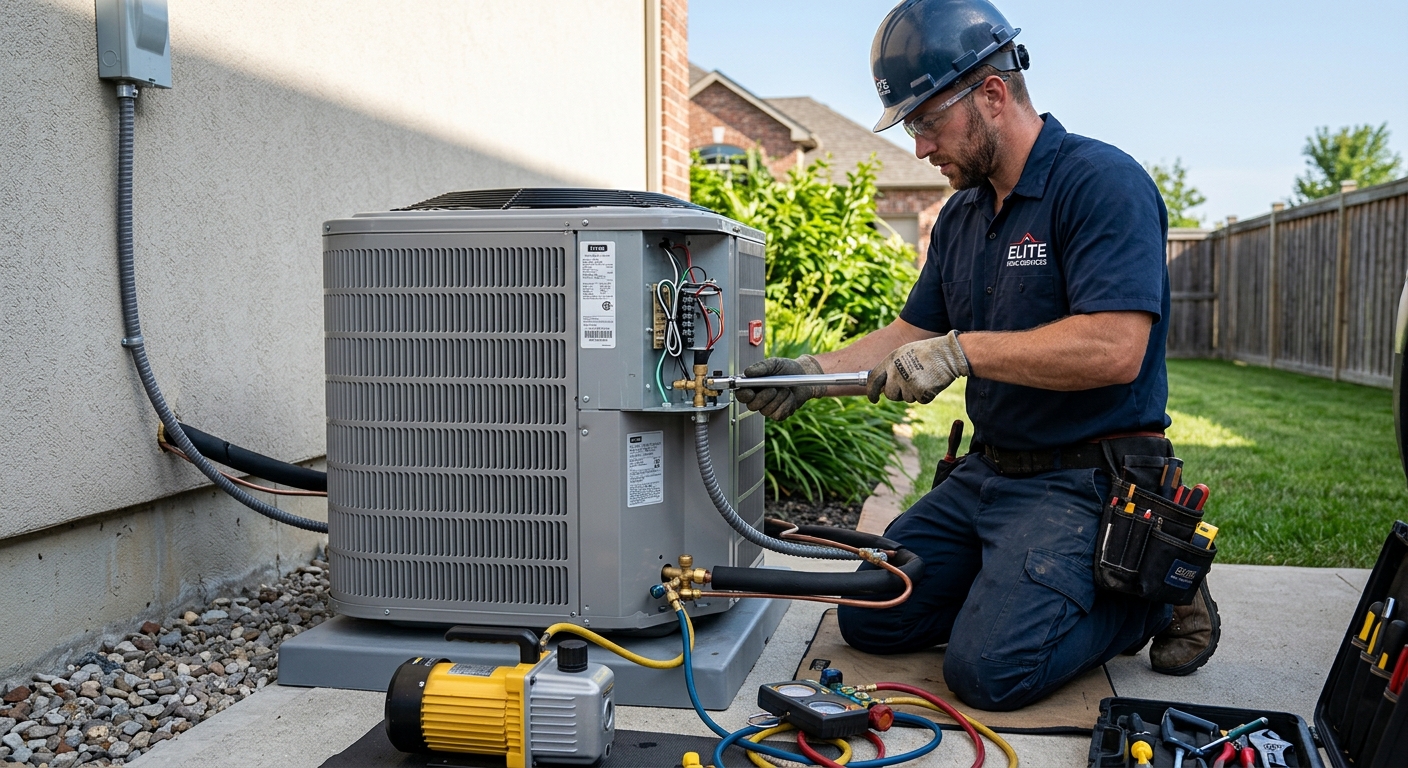
What a new HVAC system costs in Earl
Earl sits in a pocket of Lancaster County where about 68.2% of households own their homes and 42.1% of the housing stock predates 1980 (U.S. Census Bureau, ACS 2024). That means much of the HVAC work here is either full-system replacement or retrofitting, especially in older homes that lack ductwork. Many rowhomes around the Lancaster metro area, built between 1880 and 1930, are tough to run new ducts through; as a result, ductless mini-splits and high-velocity systems are common for comfort upgrades. If your home already has solid ductwork, central AC and heat pump replacements are straightforward. If not, you’re looking at either a duct install or ductless system.
Lancaster County’s climate is heating-dominated, with roughly 5,200 heating degree days but only 1,250 cooling degree days per year. That’s nearly a 4:1 ratio. Heat system performance and efficiency weigh heavier in decision-making than cooling. Still, our humid Pennsylvania summers make air conditioning important for part of the year, especially when older homes retain heat and moisture.
| System |
Best for |
Efficiency |
Price range (installed) |
| Central AC replacement (existing ducts) |
homes with sound ductwork |
16–20 SEER2 |
$4,900–$12,000 |
| Air source heat pump (ducted) |
year-round heating and cooling |
8–10 HSPF2 |
$7,900–$17,000 |
| Cold-climate heat pump (ducted) |
heat pump as primary heat |
9–11 HSPF2 |
$13,000–$17,000 |
| Ductless mini-split (single zone) |
additions, rooms without ducts |
20–30 SEER2 |
$3,200–$6,900 |
| Full duct system installation |
homes with no existing ducts |
— |
$8,900–$18,000 |
Installed estimates for a typical Earl home. Equipment tonnage, duct condition and electrical capacity move these more than brand.
The comfort problem that isn't temperature
Earl’s heating-dominated climate takes a toll on both humidity and indoor air quality. The long cold season — around 5,200 heating degree days — means months of dry air indoors, often under 30% relative humidity. That causes dry sinuses, static shocks, and hardwood floors that creak and gap. Whole-house humidifiers can add comfort in winter, but they come with a maintenance burden. Mineral buildup and standing water can turn them into mold machines if you’re not cleaning, draining, and replacing evaporative pads per the schedule.
During the sticky Lancaster County summer, the issue flips: moderate but sometimes muggy stretches test AC dehumidification. An oversized air conditioner will cool the air too quickly to pull out enough moisture, leaving the house clammy. Properly sized equipment, run on low or variable speeds, consistently does a better job.
Filtration is another frequent upsell. Higher MERV filters do trap more dust and allergens, but a filter that’s too restrictive for your blower motor does more harm than good — reduced airflow and potential damage. Most residential systems in Earl are best served by a MERV 8 or MERV 11 filter (unless someone has a health reason to go higher).
Tightly sealed, newer homes need some mechanical ventilation to prevent air becoming stale or stuffy, but in Lancaster County’s mix of leaky older homes, most never approach needing powered ERVs or HRVs.
To sum up, most “air quality” add-ons are oversold relative to measurable benefit. Skip built-in UV lights and high-end filters unless there’s a clear reason. Focus on right-sized, well-sealed equipment and humidity control that you’re prepared to maintain.
SEER2, HSPF2 and AFUE decoded
SEER2, HSPF2, and AFUE are the main efficiency ratings you’ll see on residential HVAC equipment sold in Earl today. SEER2 stands for Seasonal Energy Efficiency Ratio 2 and measures how efficiently a central AC or heat pump cools during the summer; the higher, the better. HSPF2, or Heating Seasonal Performance Factor 2, gauges heat pump efficiency in heating mode — again, higher means better. AFUE, or Annual Fuel Utilization Efficiency, is for furnaces and shows what percentage of fuel gets turned into usable heat.
What’s worth paying for? In Lancaster County’s climate, with 5,200 heating degree days and 1,250 cooling degree days, you get far more payback from investing in a higher HSPF2 rating for a heat pump or a higher AFUE gas furnace than from tacking on an ultra-high SEER2 AC. For example, paying for a central air system above 18 SEER2 rarely pays back unless you run AC almost year-round — not the case in Earl. Once you reach that threshold, adding dollars for each extra efficiency point sees diminishing returns.
Similarly, for heat pumps, jumping from 8 to 10 HSPF2 makes a real difference in annual heating bills; going beyond 11 can be tough to justify unless you want top-end comfort features, not just efficiency. Keep in mind these rating scales changed two years ago: most articles online will quote SEER and HSPF, not SEER2 and HSPF2, so old numbers don’t compare directly to new units.
Bottom line: match efficiency spending to where the weather actually hits your wallet, which in Earl means prioritize heating, not top-shelf cooling numbers.
Choosing an installer in Lancaster County
In Earl, the skill and care of your HVAC installer matter more than brand or sticker efficiency. The same system, installed differently, will deliver completely different results — for comfort, bills, and system life. Here’s what to watch for when vetting a contractor in Lancaster County.
First, any company you consider for an install or replacement over $500 must have a Home Improvement Contractor (HIC) registration from the Pennsylvania Office of Attorney General — check it at hic.attorneygeneral.gov. For refrigerant work or system charging, the technician must hold EPA Section 608 certification. Every reputable bid should include a Manual J load calculation (not just matching the old system), a full written scope with specific equipment model numbers, and commissioning at startup: measured and documented airflow and refrigerant charge, not “eyeballed.”
- Verify HIC registration for projects over $500
- Technician must hold EPA Section 608 certification
- Ask if load calculation (Manual J) is performed and offered in writing
- Written contract required for jobs over $500 (HICPA)
- Insurance — request verification, check through WCAIS (wcais.pa.gov)
- Get documented model numbers, not just generic tonnage
- Ask for mechanical permit paperwork if you’re in Lancaster city
- Request startup commissioning report (airflow, pressures, charge)
- Read warranty terms for labor, not just the equipment
- Check references for similar work, especially in older homes
- No waiving insurance deductibles — it’s prohibited by law
- Lead-safe certification for pre-1978 homes
In a moderate suburban market like Lancaster County, walk away from anyone pressuring you for same-day signing, offering suspiciously low bids, or refusing to document what equipment they are proposing to install. Quality and service matter a lot more than shaving a few dollars off the upfront price.
What a Pennsylvania HVAC contractor must hold
Pennsylvania does not issue a statewide HVAC contractor license for residential work. Instead, residential contractors must register for HIC (Home Improvement Contractor) status for jobs above $500, which is enforced and verified at the state level but does not imply trade proficiency. Municipalities handle permitting: Lancaster city, for example, requires mechanical permits and inspections for HVAC installations or replacements, while surrounding townships have their own code offices.
If your project involves a system using refrigerant — nearly every central AC or heat pump — the individual technician is required, by federal law, to have EPA Section 608 certification to handle and charge refrigerants. Always ask to see this if someone is installing or servicing your system.
Contractors who employ workers must carry workers’ compensation insurance; you can verify active coverage through the state’s WCAIS portal at wcais.pa.gov. For consumer protection, Pennsylvania’s Home Improvement Consumer Protection Act (HICPA) mandates a written contract for jobs over $500, clear cancellation terms, and prohibits waiving your insurance deductible. Every mechanical install in Lancaster city should come with a municipal inspection.
Never accept a “paperless” or handshake deal. Require contract documentation, proof of insurance, and credential verification before work starts.
Sizing: why bigger is worse
If there’s one thing that dooms comfort and system longevity in Earl homes, it’s oversizing your HVAC. A system that’s too big for your house doesn’t provide extra comfort — it starts and stops so rapidly (short cycling) that rooms get uneven, humidity remains high in summer, and you face big temperature swings in winter. The wear and tear shortens lifespan, drives up repairs, and robs efficiency.
Proper sizing in Lancaster County starts with a Manual J load calculation. This is a software-based assessment using insulation, window area, orientation, square footage, and — crucially — the winter design temperature for our region, which is 12°F. Cheap bids may skip this step and guess by square footage or just match nameplates from the old system. That’s copying someone else’s error forward, and the results cost you every winter for as long as you own the house.
The right approach: ask, “Did you perform a Manual J, and can I see the report?” This shows exactly how much BTU output is needed in both heating and cooling mode, using the real specifics of your home. No rules-of-thumb, no rounding up “just in case.” Lancaster County’s pronounced freeze-thaw cycles mean a precise match really counts, especially for heat pumps and systems supporting older houses. Don’t accept guesses or “what you had before” as a sizing answer.
A well-sized system will run longer, quieter, dehumidify more effectively, and simply last longer. Bigger isn’t safer — it’s a recipe for poor comfort, high bills, and avoidable repairs.
Repair or replace your Earl system?
You don’t always need to replace an HVAC system just because it’s acting up. In Earl, a sound approach to repair vs. replace weighs several factors: age of your system, what’s broken, repair cost compared to full replacement, refrigerant type, and whether any expected efficiency gain is likely to pay back — especially given Lancaster County’s heating-driven climate.
If your system is under 10 years old and the failure is a single component, repair is usually wise. Once the 10–15 year mark is reached, if a repair costs over a third of what a replacement would, replacement becomes more reasonable. True must-replace situations are a cracked heat exchanger (immediate safety hazard) or a compressor failure on a system out of warranty, especially if it’s already near replacement age.
Efficiency upgrades make sense only if your current system is truly inefficient — say, a low-AFUE furnace or pre-2010 AC — and your energy bills are unreasonably high for similar homes in Earl. In that case, test your ducts and envelope first; leaks are common in older Lancaster County stock and don’t require a new system to fix.
| Situation |
Recommendation |
Typical cost |
Reasoning |
| Under 10 years, single component failure |
Repair |
$300–$1,200 |
Parts are still available and service life remains |
| 10–15 years, repair over a third of replacement |
Consider replacing |
$4,900–$12,000 |
More costly repairs rarely pay back at this age |
| 15+ years, any major failure |
Replace |
$4,900–$12,000 |
Out of warranty, new system brings reliability and better efficiency |
| Cracked heat exchanger, any age |
Replace immediately |
$4,900–$12,000 |
Safety risk — replacement not optional |
| Compressor failure past warranty |
Replace |
$7,900–$17,000 |
Major repair costs approach full replacement |
| Working system, high bills |
Test ducts and envelope first |
$300–$800 |
Duct leaks and poor sealing drain efficiency before equipment does |
Frequently asked questions — HVAC installation in Earl
When is the best time of year to replace HVAC in Earl?
Spring and early fall are usually the best seasons for HVAC replacement in Earl. Contractors have more availability before the summer rush and after the heating season, so you’ll often see faster scheduling and, occasionally, better pricing. In Lancaster County’s heating-dominated climate, a breakdown in January or July can make “good timing” less relevant — you just need heat or cooling. Still, planning ahead pays off. Likewise, local equipment and labor demand peaks during intense cold snaps and heat waves. For reference, expect a central AC replacement to run between $4,900–$12,000 installed, so it’s worth shopping around and scheduling before you’re stuck with a dead system in high season.
How does south-central Pennsylvania's climate affect system sizing?
Lancaster County weather means sizing for efficient, reliable heating is more important than trying to maximize cooling. With 5,200 heating degree days annually, our climate is nearly four times as demanding for heating as for cooling. A well-sized unit (matched using Manual J calculations) will run longer, keep comfort steady, and improve winter humidity. Oversized systems, chosen by non-specific rules or “just matching what’s there,” lead to short cycling, uneven temperatures, and higher monthly bills. For example, oversized ACs commonly cost more upfront and fail to control humidity as well, even though their sticker SEER2 rating is high. A right-sized system in Earl might cost $7,900–$17,000 for a ducted heat pump — but longevity and comfort savings always outweigh marginal capacity.
What does a ductless mini-split cost in Earl?
In Earl and the wider Lancaster County area, ductless mini-splits are favored for heating and cooling spaces where it’s too tough or costly to run new ductwork. Many of our pre-1980 homes—especially rowhomes—can’t fit full-size ducts, making single-zone ductless systems an efficient solution. You’re looking at $3,200–$6,900 installed per zone (typical is around $4,900). Upfront cost will vary with the system’s size, brand, placement, and the complexity of running lines through masonry or plaster. Always get a firm quote after a site visit, since homes in Earl can surprise installers with their quirks.
How long should an HVAC system last in Earl?
In Earl, most central ACs, heat pumps, and furnaces last 12–20 years, depending on maintenance, installation quality, and how hard your system works each season. The region’s freeze-thaw cycles and humidity can take a toll on both indoor and outdoor components, especially on older homes where insulation and ductwork may not be ideal. A well-installed, regularly serviced system (filters changed, coils cleaned, ducts sealed) will often live past 15 years. Replacement costs run from $4,900–$17,000 locally, depending on the type and whether new ducts are needed. The worst thing for system life is oversizing — it wears out parts faster and causes uncomfortable cycling.
How much does a new HVAC system cost in Earl?
For a typical single-family home in Earl, budget between $4,900–$12,000 to replace a central AC if your ducts are already in good shape. A ducted heat pump install usually costs $7,900–$17,000. If your house has no ducts, a full system install is in the $8,900–$18,000 ballpark. Mini-split systems run lower per zone — $3,200–$6,900 — though complex layouts can add cost. These prices come from real 2026 project bands in Lancaster County and reflect equipment, labor, and permit. Factors such as electrical upgrades, patching, and special controls can move the number. Always insist on a site-specific written quote.
Should I replace the furnace and AC at the same time?
In Earl homes, it often makes sense to replace both furnace and central AC (or heat pump and air handler) together if they’re similar age or both near the end of their expected life — roughly 12–20 years. You’ll save labor and sometimes equipment costs doing the job as a package. Mixing new and old units can cause compatibility headaches, especially with modern communicating thermostats or high-efficiency coils. That said, if one unit is newer and performing well, there’s no rule you must do them together. For many Earl homeowners, a bundled system install lands between $7,900–$17,000, but don’t let anyone push you into unnecessary replacement; evaluate each case on system age, repair needs, and efficiency.
What MERV filter rating should I use?
For most Earl-area homes, a MERV 8 or MERV 11 filter is the right balance between effective dust and allergen removal and maintaining proper airflow for your blower motor. Many residents live in older homes with ductwork that doesn’t support a high-resistance filter. Going up to MERV 13 or beyond in a standard residential blower can reduce airflow, stress your equipment, and shorten system life. Higher MERV is only worth it if you have specific medical needs or your contractor confirms your fan can handle it. Filters are one of the most affordable upgrades in comfort and air quality—in most cases, under $300–$800 a year to upgrade and change regularly. Don’t let a salesperson oversell premium filters unless it’s warranted.
Does Pennsylvania license HVAC contractors?
Pennsylvania does not issue a statewide HVAC trade license for residential work — unlike plumbing in Philadelphia, for example. Instead, HVAC contractors working on jobs over $500 in Earl and Lancaster County must be registered as a Home Improvement Contractor (HIC), have a written contract, and meet insurance requirements. Individual townships and cities handle their own permits and mechanical code enforcement, so requirements vary within Lancaster County. If a job involves refrigerant (almost all AC or heat pump installs), the installer must hold federal EPA Section 608 certification regardless of Pennsylvania licensing. Expect to pay $4,900–$17,000 for a system; always ask your installer for their HIC registration and EPA card.
Do I need ENERGY STAR equipment to qualify for incentives?
Some incentive programs — like certain utility rebates or federal tax credits — do require new HVAC equipment to be ENERGY STAR rated, which means meeting minimum efficiency standards for SEER2, EER2, and HSPF2 (for heat pumps). In Earl, with PPL Electric and UGI Utilities serving the area, eligibility for rebates can shift year to year, but always check the current requirements before purchase. ENERGY STAR helps ensure your equipment meets a solid efficiency baseline, but the best payback comes when the system is sized and installed right for your home’s actual load. For example, a qualifying ducted heat pump will likely start around $7,900 installed. Have your contractor confirm, in writing, the model numbers meet any applicable rebate or tax credit thresholds.