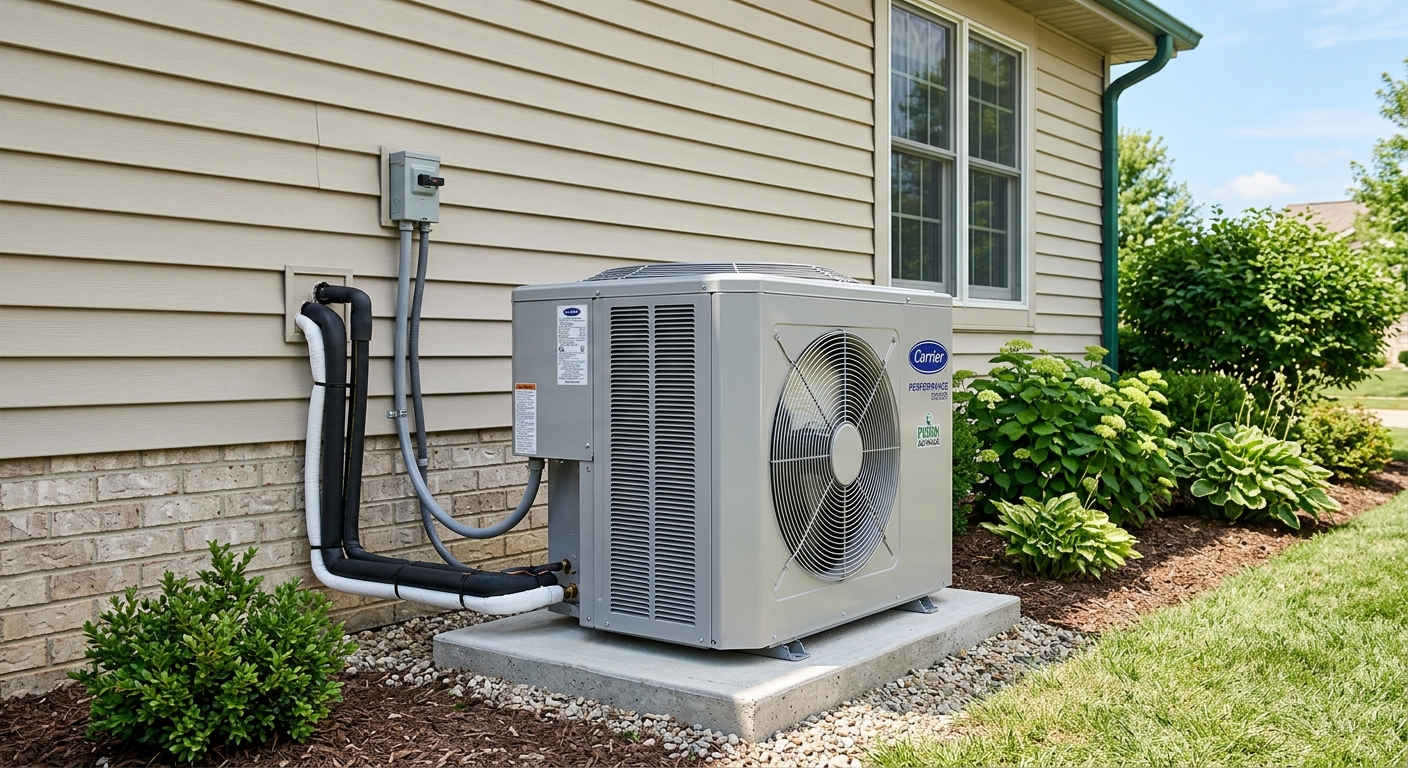
HVAC costs in Hatboro — 2026
Hatboro, home to many long-established properties, stands out in Montgomery County for its high proportion of homes built before 1980—80.5% as of recent counts (U.S. Census Bureau, ACS 2024). With a homeownership rate of 56.3%, a majority of HVAC projects here are replacement or retrofit jobs rather than first-time installations. Most Hatboro homes were not originally built for central air or today’s high-efficiency heating, making full ductwork retrofits and targeted electrical upgrades a fact of life, especially in neighborhoods modeled after post‑1945 suburban housing found in Abington, Cheltenham, and Upper Dublin.
This part of southeastern Pennsylvania is a heating-dominated region: its climate averages 4,800 heating degree days but only 1,450 cooling degree days. For homeowners, that means heating performance and efficiency outweigh cooling capacity in nearly every recommendation. Good ductwork is not a given, so the condition and layout of existing ducts will directly shape your installation strategy and costs.
| System |
Best for |
Efficiency |
Price range (installed) |
| Central AC replacement (existing ducts) |
homes with sound ductwork |
16–20 SEER2 |
$5,500–$13,000 |
| Air source heat pump (ducted) |
year-round heating and cooling |
8–10 HSPF2 |
$8,700–$18,500 |
| Cold-climate heat pump (ducted) |
heat pump as primary heat |
9–11 HSPF2 |
$14,000–$18,500 |
| Ductless mini-split (single zone) |
additions, rooms without ducts |
20–30 SEER2 |
$3,500–$7,700 |
| Full duct system installation |
homes with no existing ducts |
— |
$9,800–$19,500 |
Installed estimates for a typical Hatboro home. Equipment tonnage, duct condition and electrical capacity move these more than brand.
Separating installers from equipment sellers
In Hatboro, it’s not the equipment brand but the quality of installation that determines whether your HVAC system delivers comfort and lives out its full lifespan. Two houses can have identical model numbers and dramatic differences in utility bills, noise, and repair calls—all because one crew installed, sized, and commissioned the system correctly while another rushed the job or cut corners.
Start with verification: in Pennsylvania, all residential HVAC contractors working on contracts over $500 need Home Improvement Contractor (HIC) registration via the state Office of Attorney General. Refrigerant handling requires federal EPA Section 608 certification—ask that the actual installer (not just the company owner) holds it. Always ask for proof.
A credible estimate for a Hatboro home will include a room-by-room load calculation, full equipment model numbers, and spell out what’s being replaced, reused, and newly added. Demand documentation upon commissioning—actual airflow, final refrigerant charge, and static pressure readings at startup. That’s your record if anything goes sideways.
- HIC registration number, verified at hic.attorneygeneral.gov
- EPA Section 608 certification for refrigerant work
- Written, line-item estimate—not a lump sum
- Equipment model numbers, both indoor and outdoor
- Room-by-room load calculation included
- Start-to-finish permitting responsibility stated
- Proof of insurance and workers’ compensation (see WCAIS)
- Scope of ductwork repairs or sealing detailed
- Electrical upgrades, if needed, laid out in advance
- Commissioning checklist delivered at completion
- Manufacturer and labor warranty periods spelled out
- References from recent work in Montgomery County
Red flag: In Hatboro’s crowded metro market, a contractor pushing just equipment or a handshake deal—especially when reputable companies are booked—usually means you’re getting their leftovers, not their best crew.
Mechanical permits for HVAC work in Hatboro
Pennsylvania does not issue a statewide HVAC license for residential jobs. For homes in Hatboro, regulation falls to the local level—meaning municipal code offices set the rules and process the permits. This matters because you cannot assume what’s legal, safe, or allowed here is the same as what a friend in another part of the state just did.
Mechanical and electrical permits are typically required for equipment installation or replacement when new work is being performed (such as electrical lines or duct alterations), in line with the Pennsylvania Uniform Construction Code adopted locally. Contractor workers must have private or self-insured workers’ compensation policies in place; you can verify coverage at the state’s WCAIS website.
For refrigerant work, federal rules require that any technician handling refrigerants (replacement, charging, disposal, or leak repair) holds EPA Section 608 certification. This requirement is non-negotiable in every county, municipality, and state.
Before work begins, verify HIC registration at hic.attorneygeneral.gov, ask for a certificate of insurance naming you as certificate holder, and confirm workers’ compensation at wcais.pa.gov. Do not let someone pull a permit under a homeowner exemption unless you’re prepared to assume the risk if damages occur.
Comparing HVAC estimates in Hatboro
Comparing quotes is more than checking the total. In Hatboro—where most homes predate modern AC—details matter. The best estimate breaks out model numbers for both indoor and outdoor components because mismatched equipment ruins rated efficiency. Your quote should state system tonnage, with an attached load calculation using the home’s actual measurements, not guesswork or copying the old nameplate.
Line-set details show if refrigerant pipes are being replaced or reused. Electrical line items should say if a panel upgrade or new supply is needed. Look for specifics on condensate drainage (vital in basements here) and thermostat upgrade or retention. Confirm that a permit is included and priced and that you’ll receive a written commissioning/startup report. Ensure the equipment warranty is separate from a labor warranty—many Hatboro installs change hands or tenants, making this protection count.
If you see only a brand name and total price, you don’t have a real estimate to compare—only an invitation to risk paying for mistakes.
| Line item |
What to look for |
Red flag if… |
| Equipment |
model numbers, indoor and outdoor matched |
brand name only |
| Sizing |
load calculation attached |
matched to the old nameplate |
| Ductwork |
condition assessed, sealing scoped |
not mentioned |
| Electrical |
circuit and panel capacity confirmed |
assumed adequate |
| Line set |
replaced or documented as reused |
silent |
| Commissioning |
measured airflow and charge, documented |
no startup report |
| Warranty |
labour years stated separately |
manufacturer only |
| Permit |
included and priced |
'not needed' |
Mini-splits and zoning in Hatboro homes
Ductless mini-splits genuinely shine in Hatboro for finished attics, converted basements, additions, or homes (especially those built before central AC took hold) with rooms that never stay comfortable. If you have plaster walls from the mid-20th century, you probably don’t want them opened up for ductwork just to add one vent. This is why so many post-1945 houses in neighboring Abington, Cheltenham, and Upper Dublin also present opportunities for smart ductless retrofits alongside targeted electrical upgrades.
Single-zone mini-splits are ideal for one hard-to-condition space and deliver the highest efficiency per dollar. Multi-zone systems, which use one outdoor unit and several indoor “heads,” cost less per zone—but each head can only deliver its share of the total output: comfort and efficiency often lag behind multiple separate single-zones. Head placement matters, because they are visible in the room; aim for corners near ceilings, close to the exterior wall for direct condensate drainage. In basements, plan condensate routes carefully to avoid leaks that show up months later.
If you’re facing comfort gaps in a house that originally had radiators or basic window AC, ductless is often the least-disruptive and most cost-effective route. The local housing stock and moderate cooling demand make Hatboro a natural market for these systems, whether or not homeowners know it upfront.
Heat pump or furnace: what makes sense in Hatboro
For Hatboro, the choice between a heat pump and a furnace swings on climate and utilities, not sales pitches. Southeastern Pennsylvania clocks in at 4,800 heating degree days per year—with a winter design temperature of 14°F. That’s cold, but not Midwest-cold. Modern cold-climate heat pumps maintain significant heating capacity well below freezing; they’re tested for exactly these temperatures, so “heat pumps don’t work in Pennsylvania” is outdated. That said, as outside temps fall toward the teens (and lower in uncovered cold snaps), heat pump output drops, and electric backup kicks in—this is less efficient and more costly than gas if you have it.
Gas is widely available in most Montgomery County suburbs, including Hatboro. Where gas is on-site, a gas furnace with central AC remains efficient and reliable for the hardest cold spells. Dual fuel systems (heat pump plus gas backup) are popular for all-electric daytime operation and gas furnace at night or in prolonged cold. However, if your home is stuck with oil or propane, a heat pump dramatically improves operating cost, comfort, and safety, especially if you’re already considering an electrical service upgrade.
A furnace is still the best choice for homes with leaky envelopes, inadequate electricity, or where upfront cost is the deciding factor—but in tight, well-insulated homes, heat pumps are fast becoming the norm for new installs.
| Option |
Installed cost |
Operating cost here |
Best when |
Incentive eligible |
| Gas furnace + central AC |
$5,500–$13,000 |
moderate, lowest on existing gas |
existing gas service, coldest zones |
some utility rebates |
| Ducted heat pump (cold climate) |
$8,700–$18,500 |
low with good envelope |
good envelope, all-electric goal |
federal/state + utility |
| Dual fuel (heat pump + gas backup) |
$14,000–$18,500 |
optimized—lowest cost blending |
gas on site, deep cold spells |
federal/state + utility |
| Ductless multi-zone |
$9,800–$19,500 |
zone-based, lower with good insulation |
no ductwork, zone control |
federal/state + some utility |
Maintenance that actually extends system life
Plenty gets labeled as “annual HVAC maintenance,” but only a few tasks make a real difference in Hatboro’s climate. First: replace filters at the right interval (1–3 months depending on pets and allergy needs), and stick with a MERV rating matched to your blower—thicker or too-fine filters can reduce airflow and wear out equipment faster. Dirty evaporator and condenser coils steal system capacity and kill efficiency; annual coil cleaning, using water and a non-corrosive cleaner, works wonders. Check and clear the condensate line, particularly after humid Pennsylvania summers—a clogged line leads to water on the floor and potential ceiling stains.
Topping up refrigerant is not maintenance; any system low on charge has a leak that needs repair, not just a refill. Insist on a technician who can check superheat/subcooling and will document results. Annual maintenance plans are fine if priced right (ideally under the cost of a one-time tune-up and minor repair), but many are too expensive for what they deliver: avoid any plan that just promises a “look over” without measuring key performance values.
Peak service calls in Hatboro hit during the hottest weeks in July and coldest in January, so book routine maintenance just before those stretches to avoid backlogs and premium charges.
Frequently asked questions — HVAC installation in Hatboro
Why do HVAC quotes in Hatboro vary so much?
Quotes in Hatboro swing widely due to several local factors. First, the town’s older housing stock—over 80% of homes were built before 1980—means ductwork and electrical readiness are often unique and require custom labor. Contractors must account for labor time, unforeseen repairs, and permit costs when quoting. In a saturated market where reputable companies are busy, pricing reflects not only the equipment but the installer’s skill. Equipment selections can also drive differences: a ducted cold-climate heat pump can run from $14,000–$18,500 installed, while a simple central AC swap might be half that. Always compare model numbers, scope of work, and included commissioning—not just headline totals—so you aren’t caught off guard by “extras” later.
What is the R-410A refrigerant phase-down?
The R-410A phase-down is a federal initiative to transition away from this refrigerant to lower global warming potential alternatives. In Hatboro and across Pennsylvania, new air conditioning and heat pump systems installed from 2026 onward will increasingly use newer refrigerants like R-32 or R-454B. This impacts homeowners mainly when replacing older equipment—if your system still runs on R-22 (which is long out of production), repairs become expensive and sometimes impractical. If you’re getting quotes for a full replacement—say, in the $8,700–$18,500 range for a ducted heat pump—be sure your installer and warranty align with the refrigerant used, since technician training and availability may differ by brand and generation.
How much does a new HVAC system cost in Hatboro?
Costs in Hatboro reflect the local market and housing stock. For most homeowners replacing a central air conditioner with existing ductwork, expect totals from $5,500–$13,000, depending on tonnage, duct condition, and needed upgrades. Installing a new ducted heat pump usually falls between $8,700–$18,500. Prices jump for full duct installs or multi-zone ductless systems, which accommodate the many older homes that never had central air. Beyond equipment, labor and permitting in older homes—think tight attics or undersized electric panels—often drive the final figure. Always get a detailed, line-item quote so you’re clear on exactly what is (and isn’t) included.
Are duct sealing and insulation eligible for incentives?
In Hatboro and the rest of Montgomery County, duct sealing and insulation often qualify for utility company rebates and state-level efficiency incentives, especially when installed as part of an equipment upgrade. Since most homes built before 1980 have leaky, uninsulated ducts (sometimes from previous conversions or additions), this is one of the few upgrades with a high comfort return relative to its cost. While individual rebate amounts vary, they’re typically a fraction of larger installs—for example, a heat pump installation in the $14,000–$18,500 band might bring several hundred dollars in duct sealing bonuses once verified post-install. Check with your installer or utility before starting.
Is an annual maintenance plan worth it?
Maintenance plans can be useful for Hatboro homeowners—if you choose carefully. What you want is documented preventative maintenance: filter changes, coil cleaning, and checks on refrigerant charge. Think twice if the cost is higher than one annual tune-up (and maybe a minor repair), or if the plan only covers “visual inspections” without actually testing the system’s performance. On a modest system, expect plan prices to run less than $500 per year. If you’re handy and diligent about filter changes and coil cleaning, self-maintenance can save money; most system failures are due to neglect, not missed professional visits.
When is the best time of year to replace HVAC in Hatboro?
The least stressful time to replace HVAC in Hatboro is spring or early fall—before July and January, when local contractors log the most emergency calls and labor rates jump. Scheduling during these off-peak months means more attentive installs and, sometimes, price flexibility. For example, that $8,700–$18,500 heat pump quote will rarely get lower in midsummer, when every reputable contractor is booked solid. Never wait for a complete breakdown during a heatwave or cold snap—you’ll pay the highest price, sometimes for the first crew that says yes.
Is it worth switching from oil or propane to a heat pump?
In Hatboro, if your home uses oil or propane for heating, a switch to a modern cold-climate heat pump can lower your operating costs and cut out fuel deliveries. Most of the region’s far northwest townships rely on these fuels, and the numbers strongly favor heat pumps now that today’s models hold capacity at 14°F (the local design temp). Upfront costs can be steep—a ducted system ranges from $8,700–$18,500—but you may qualify for substantial incentives. Just make sure your electrical system can handle the load, as many older homes need a panel upgrade.
How do I verify an HVAC contractor's insurance?
In Pennsylvania, including Hatboro, you should always ask any prospective HVAC contractor for a certificate of insurance with you named as certificate holder. This is the only way to verify coverage is current and matches the crew doing the work at your address. For workers’ compensation, the state runs the WCAIS portal (wcais.pa.gov) to check registration. This matters on substantial jobs—a full duct installation can cost $9,800–$19,500, and injuries or damages without insurance put all the risk onto you. Never take “we’re covered” on faith—get the paperwork.
Do older Hatboro homes need ductwork replaced?
Many Hatboro homes—80.5% built before 1980—have ductwork added as a retrofit for central AC or forced-air heat. Ducts installed decades ago may be too small, uninsulated, or leaking at every joint, which kills modern system efficiency. Having a pro assess your ducts is worth it before any big replacement—sometimes sealing and minor repairs suffice, sometimes a full replacement is needed. A new duct system can range from $9,800–$19,500, but often sectional repairs or sealing solves comfort problems without major expense. If a contractor recommends full duct replacement without explaining why, get a second opinion.