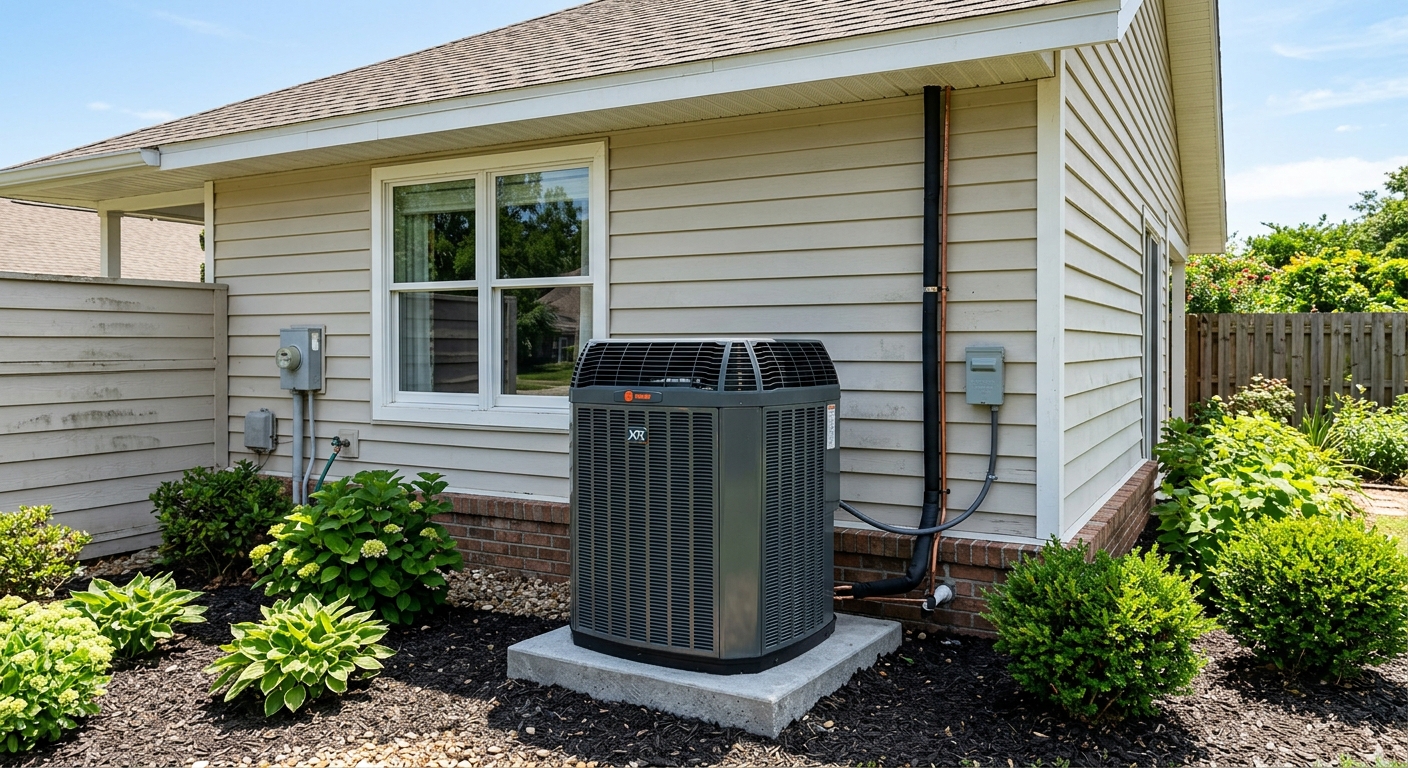
HVAC costs in Hellam — 2026
In Hellam, HVAC replacement and installation costs depend on factors unique to the area. With a homeownership rate of 89.8% and more than half the homes built before 1980 (U.S. Census Bureau, ACS 2024), most work here is system replacement, but retrofits for modern cooling are common—especially as many older local homes never had central air or standard ductwork to begin with. In nearby York City, a large stock of pre‑1940 rowhomes drives frequent ductless and high-velocity retrofits, and that trend carries into Hellam's older neighborhoods. If your house predates widescale air conditioning, it’s likely you have either older or no ductwork, making full duct installation or ductless mini-splits particularly relevant options.
Central and eastern Pennsylvania sits in a heating-dominated climate, with around 5,200 heating degree days and just 1,250 cooling degree days. That means most homeowners should be planning for winter performance first; a reliable and efficient heating source will generally pay for itself sooner than squeezing a few extra SEER2 points from a central AC. Ultimately, your ductwork’s condition and the age of your electrical system move your install price more than equipment branding alone.
| System |
Best for |
Efficiency |
Price range (installed) |
| Central AC replacement (existing ducts) |
homes with sound ductwork |
16–20 SEER2 |
$5,300–$12,500 |
| Air source heat pump (ducted) |
year-round heating and cooling |
8–10 HSPF2 |
$8,500–$18,000 |
| Cold-climate heat pump (ducted) |
heat pump as primary heat |
9–11 HSPF2 |
$14,000–$18,000 |
| Ductless mini-split (single zone) |
additions, rooms without ducts |
20–30 SEER2 |
$3,400–$7,400 |
| Full duct system installation |
homes with no existing ducts |
— |
$9,500–$19,000 |
Installed estimates for a typical Hellam home. Equipment tonnage, duct condition and electrical capacity move these more than brand.
Humidity and air quality in Hellam homes
In Hellam, you see both winter dryness and muggy summers—classic central Pennsylvania. With 5,200 heating degree days, homeowners run their furnaces or heat pumps for long stretches, driving indoor humidity well below comfort levels. That’s why cracked wood and static shocks are common in older homes here come January. A whole-house humidifier can solve this, but it does need regular cleaning to prevent mold or mineral buildup—most need annual service or new pads.
In summer, the region’s humidity can feel oppressive. The right air conditioner should remove moisture, but if your AC is oversized, it cools the house too quickly and doesn’t run long enough to dehumidify the air. This leaves you with clammy rooms and possible mold risk. Proper sizing matters more than any add-on dehumidifier in this case.
For filtration, a MERV 8–11 pleated filter is a good fit for most blowers in Hellam homes. Higher MERV ratings catch finer particles but can restrict airflow if your existing fan isn’t designed for them. Mechanical ventilation—think HRVs or ERVs—is only beneficial in tightly sealed newer homes, which are less common in Hellam given how much of the housing stock predates 1980. Many indoor air quality extras, like UV lights or high-end air scrubbers, are oversold for typical local homes; honestly, clean filters and small humidity controls solve most problems for less money.
Manual J and the tonnage question
The single weakest link in most Hellam HVAC installs is sizing—get this wrong, and the best system will disappoint. Too many contractors just swap in a system sized like the old one, or apply a quick square-footage rule (“a ton per 500 square feet”). But these shortcuts ignore your home’s insulation, windows, orientation, air leaks—all of which matter as much in a 1920s rowhome as a 1990s ranch.
This is why Pennsylvania code expects a Manual J load calculation for new or replacement equipment. Manual J uses the local winter design temperature—in Hellam, that’s 12°F—to figure out peak heating needs. Oversizing isn’t extra comfort; it causes short cycling, uneven temperatures, poor humidity control and faster wear. The system will start and stop constantly, wearing out compressors or furnaces and missing the chance to properly wring out summer humidity or stay efficient in winter.
If a contractor can’t show you the Manual J sheet, they’re guessing. Ask: “Did you run a load calculation, and can I see it?” This shouldn’t be optional—especially here, where older homes can be leaky, add-ons common, and many have never had centralized cooling. Copying from the last install just passes old mistakes forward.
Permits, licensing and inspections in Hellam
Pennsylvania does not have a statewide license specifically for HVAC contractors handling residential work. The state’s Home Improvement Contractor (HIC) registration is required for any contract over $500, but it is not a trade license; verify a contractor’s HIC number directly before signing. Mechanical permits are regulated at the municipal level—so Hellam and its surrounding York County townships each set their own permit and inspection rules. For most central system installs or replacements, a mechanical permit and inspection are expected locally (check with your township office before starting work). Replacing portable window units or thermostats generally doesn’t require a permit in York County townships.
Every contractor who handles refrigerant—central ACs, heat pumps, mini-splits—must have a federal EPA Section 608 certification, regardless of state licensing. To protect yourself, check for current general liability insurance and make sure any employer on your job carries Pennsylvania-mandated workers' compensation coverage; you can verify this using WCAIS (wcais.pa.gov).
Your contract (over $500) must be in writing under the Home Improvement Consumer Protection Act, and you have a 3-day right to cancel. Ordinary homeowners have no obligation to verify plumbing or electrical licenses for HVAC work in Hellam, as these are municipally controlled and not required everywhere.
Refrigerant rules and your existing system
New air conditioners and heat pumps are now being built for lower global-warming-potential refrigerants such as R‑454B and R‑32, in line with the phasedown of high-GWP HFCs like R‑410A. But if you have an existing R‑410A system in Hellam—still the most common—there is no requirement to replace it, and it remains fully legal to service and repair. The main consequence for you is economic: as manufacturers stop making R‑410A equipment, and bulk refrigerant supply tightens, topping off a leaky older system will get more expensive in the coming years.
This means if your R‑410A system is cooling fine and not leaking, keep it. Repairing a minor part or topping up refrigerant on a small leak may remain practical for now, but large leaks or major failures could push a repair bill close to the cost of newer, higher-efficiency equipment. As supply decreases, that repair-versus-replace calculation will tip sooner. Still, no one should tell you your current equipment is obsolete just because it uses R‑410A. The change only affects what’s installed new—and since refrigerant transitions typically take years, you have time to plan your next upgrade rather than feeling pressured into an early replacement.
Zone control without ductwork
Ductless systems (mini-splits) really prove their value in homes and additions where traditional ducts are a retrofit headache. In Hellam and especially in local vintage homes—think early 1900s or pre‑1940 York City rowhouses—running full-size ducts through thick plaster, tight attics or finished basements can mean huge disruption and expense. Here, ductless isn’t just “nice,” it’s practical.
A single-zone mini-split, perfect for a sunroom or attic conversion, is the most efficient route for isolated spaces. For cooling several rooms, a multi-zone outdoor unit can feed 2–5 indoor “heads,” but stacking too many heads onto one condenser often means each zone never quite meets its full capacity—the system can underperform and short-cycle. Separate single-zone systems cost more up front, but each room gets tailored control and peak efficiency.
Head placement also matters. Wall-mounts are most common, but some owners object to their look. Concealed ceiling cassettes or floor units can address that, often at higher cost. Every installation needs a plan for condensate drainage—either a gravity drain or a pump, since water from dehumidification can’t just be left to drip. In Hellam’s older housing stock, these systems allow modern comfort with minimal intrusion, which is a main reason why retrofits for modern cooling center on ductless options here.
Keeping a Hellam system running
Maintenance in Hellam is about focusing on what adds real life to your system and avoiding the hard sell. The single most important step for the average homeowner is changing filters at the interval the manufacturer (and your actual level of dust or pets) suggests. Most standard setups within the area do best with a MERV 8 or MERV 11 pleated filter—high enough filtration without choking blower airflow.
Before the cooling season, cleaning the outdoor condenser coil and making sure the condensate line runs clear will head off many expensive calls. In heating, make sure registers stay clear and verify airflow isn’t blocked by furniture or dampers. Any system that “needs a refrigerant top-off” isn’t being maintained—the right step is to find and fix the leak. Just adding refrigerant each spring is throwing money away, especially with R‑410A prices rising.
Annual “service plans” are often offered but read the fine print: a good plan includes a real inspection and gives you priority for peak-season service. If it’s just a quick filter swap and a once-over, skip it and schedule your own maintenance in spring or fall, before the hottest or coldest weeks put you at the back of every contractor’s line.
Frequently asked questions — HVAC installation in Hellam
How do I verify an HVAC contractor's insurance?
To verify a contractor’s insurance in Hellam or anywhere in Pennsylvania, ask directly for proof of general liability coverage and workers’ compensation. All employers in the state must carry workers’ compensation. You can check status at wcais.pa.gov, which is Pennsylvania’s verification system for workers’ comp. Look for a certificate with matching business names and active policy dates. Remember, the bare minimum for homes in this area includes a written contract for jobs over $500, as required by Pennsylvania’s Home Improvement Consumer Protection Act. This, plus an active HIC registration (verify at hic.attorneygeneral.gov), helps make sure you’re working with someone reputable—and if you’re looking at system installation, that’s a significant investment, often $5,300–$12,500 for a central AC. Don’t be shy about asking to see documentation—any professional expects it.
How often should I change my filter?
In Hellam homes, most filters should be changed every one to three months, depending on your system, dust levels, and whether you have pets or allergies. Furnace and heat pump systems here usually run hard due to long heating seasons. Neglecting filter changes stresses your blower and can make the system short-cycle, waste energy, or even lead to breakdowns that cost far more to repair than a few new filters a year. For most homes in Hellam, a MERV 8 or 11 is the right balance—anything finer may choke your blower if your ductwork is original to a pre‑1980s home. Since a filter is cheap compared to the cost of a full replacement (think $8,500–$18,000 for a ducted heat pump), err on the side of more frequent changes if your system runs a lot.
What does HSPF2 measure?
HSPF2 (Heating Seasonal Performance Factor 2) measures how efficiently a heat pump turns electricity into heating over an entire season, based on updated testing standards. The higher the HSPF2, the less you’ll spend on winter bills to get the same amount of heat, which matters in Hellam where winters are long and cold—5,200 heating degree days is no joke. Most modern units install in the 8–11 HSPF2 range here; cold-climate models hit the upper end. Efficiency differences can swing utility bills by hundreds a year. Compared to the up-front cost of a new heat pump ($8,500–$18,000), those numbers matter in a heating-dominated market like south-central Pennsylvania.
How is a tax credit different from a rebate?
In Pennsylvania, a tax credit is money you subtract directly from your IRS tax bill, while a rebate is cash or a discount paid right after a purchase—often from the manufacturer or utility. For example, Met-Ed sometimes offers rebates for select efficient systems, while federal credits apply to qualifying heating or cooling upgrades installed in Hellam. The difference: rebates arrive soon after you buy and install (think of them as instant savings), while tax credits may show up months later when you file taxes. Since a new ductless mini-split runs $3,400–$7,400 installed, rebates and credits can make a real dent in the total bill—just confirm that your actual equipment and installer are eligible before counting on the savings.
How cold does it get in Hellam and does that affect heat pumps?
Hellam regularly sees winter lows close to 12°F, the official winter design temperature used for sizing in south-central Pennsylvania. This matters for heat pumps: older or base models may struggle at these lows, switching to electric strip heat (which is less efficient and increases your bill). Cold-climate heat pumps specifically designed for these conditions can still perform and heat down to zero, though their price tags are higher ($14,000–$18,000 installed). Always ask the contractor for expected performance at 5–15°F—don’t just accept “it works down to zero” as an answer—especially since so much of your heating bill comes from those coldest weeks in Hellam.
Why do HVAC quotes in Hellam vary so much?
In Hellam and wider York County, quotes can swing by thousands for what seems like the same job. A big reason is the varied age and layout of local homes—many were built before 1980, with everything from exposed stone basements to tight attics, oddball additions, or ductwork that may never have been properly sized. The local contractor market is busy and competitive (York–Hanover is a saturated hub), so some bids will reflect thorough site assessments and actual Manual J sizing, while others just match your old unit. Upgrades to electrical service, full duct installs ($9,500–$19,000), brand tiers, and permit requirements all move the numbers. Always compare detailed scopes of work—not just brand or tonnage—to understand what you’re actually buying.
Do I need dual fuel in south-central Pennsylvania?
Dual fuel systems combine a heat pump with a gas or propane furnace, letting you heat with electricity when it’s efficient and switch to gas during cold snaps. In Hellam's heating-dominated climate, with design lows of 12°F, dual fuel can absolutely be worth considering if you already have access to natural gas (common in the borough and surrounding townships). For rural Hellam homes on propane or fuel oil, the value depends more on fuel prices and your hot water needs. While a cold-climate heat pump can handle almost any winter here, some folks still prefer the backup security of a furnace for peace of mind. Remember, your upfront cost will be higher than for a single-fuel heat pump ($8,500–$18,000), but operational savings or comfort can justify it.
Do I need to be home during installation?
While it’s not always mandatory in Hellam, it’s smart for at least one homeowner to be present when the crew arrives, especially for walk-throughs, thermostat placement, and confirming exactly what’s being replaced or installed. For most system installs—central AC, ductwork, or mini-splits—the crew will need regular access to indoor and outdoor spaces, which may include attics, basements, or closets. If it’s a single-day job (like many replacements in Hellam’s smaller homes), you can often step out after the initial review and return for the wrap-up. Larger jobs—such as a full duct system ($9,500–$19,000) or multi-unit split installs—may span several days. The more questions you ask up front, the smoother it’ll go for you and the installer.
What does a heat pump cost installed in Hellam?
For a typical detached home in Hellam, a standard air source heat pump system—including equipment, installation, and connection to existing ducts—runs between $8,500–$18,000, with most jobs priced near $14,000. For an older home needing full ductwork or high-efficiency cold-climate equipment, expect costs toward the top of the range. Actual price depends on house size, duct condition, and any electrical upgrades. If you’re considering ductless (common in older Hellam homes or additions), a single-zone mini-split comes in lower at $3,400–$7,400 installed. As always, detailed site visits and a real Manual J calculation—not rule-of-thumb estimates—will give you a firmer price for your specific situation.