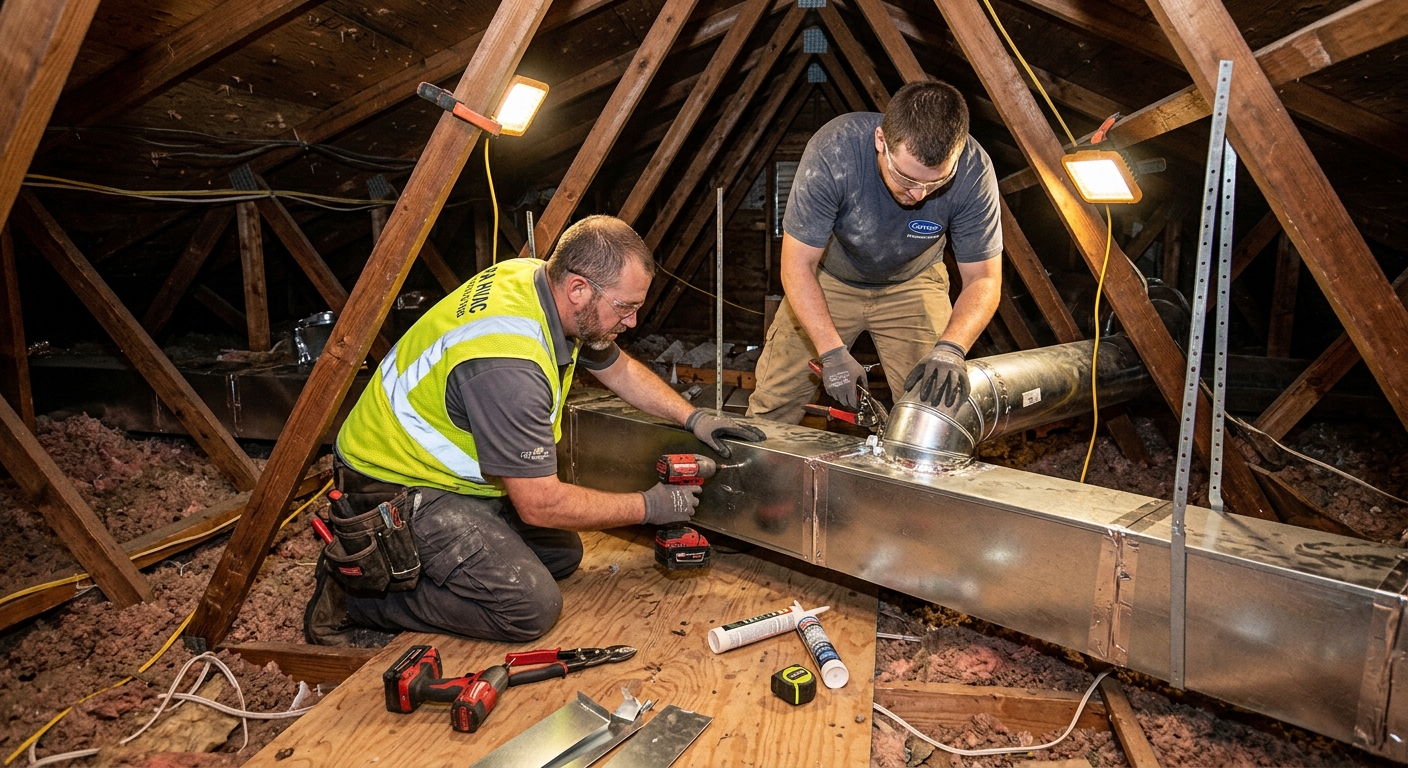
Philadelphia heating and cooling prices by system type — 2026
Philadelphia stands out in the HVAC world for how frequently the job is a retrofit, not just a straight replacement. With just 52.2% homeownership (U.S. Census Bureau, ACS 2024), there is steady demand from owners getting older systems up to modern standards. But the bigger influence on what people install is age: 85.1% of Philadelphia County’s homes were built before 1980, and a huge number are classic rowhouses that predate central air entirely. That means many houses have no central ductwork or can’t fit it—and it’s why ductless mini-split installations and creative retrofits are a Philadelphia staple. Step into a rowhouse basement and you’ll see how tight the job sites really are.
The southeast Pennsylvania climate gives you 4,800 heating degree days and 1,450 cooling degree days—heating is the higher load. That shapes every recommendation. Heat pump appeal is rising, but most buyers are thinking first about winter comfort and heating reliability, not just summer cooling. If you’ve got sound, insulated ducts, a high-efficiency central system will serve you well. If you don’t, you’re not alone here—and adding ducts is a major expense. Use the table below as a realistic snapshot for 2026 in Philadelphia homes.
| System |
Best for |
Efficiency |
Price range (installed) |
| Central AC replacement (existing ducts) |
homes with sound ductwork |
16–20 SEER2 |
$4,600–$11,000 |
| Air source heat pump (ducted) |
year-round heating and cooling |
8–10 HSPF2 |
$7,400–$15,500 |
| Cold-climate heat pump (ducted) |
heat pump as primary heat |
9–11 HSPF2 |
$12,000–$15,500 |
| Ductless mini-split (single zone) |
additions, rooms without ducts |
20–30 SEER2 |
$2,900–$6,400 |
| Full duct system installation |
homes with no existing ducts |
— |
$8,300–$16,500 |
Installed estimates for a typical Philadelphia home. Equipment tonnage, duct condition and electrical capacity move these more than brand.
Humidity and air quality in Philadelphia homes
Philadelphia’s winters are cold and dry, while summers are humid, especially given our 4,800 heating degree days and the occasional coastal storm pushing in wet air. In winter, many households battle cracked skin, static, and wood shrinkage from low humidity. In summer, humidity ramps up, making indoor air feel clammy if your system isn’t dehumidifying enough. Contrary to popular belief, bigger isn’t always better: when an oversized air conditioner cycles on and off too quickly, it cools but doesn’t run long enough to pull moisture from the air—making you feel sticky even at low temperatures.
For dry winter air, a whole-house humidifier can help, but these demand regular cleaning to avoid mold and mineral buildup. Expect to clean or service the pad twice a heating season. For filtration, many older Philadelphia homes have blowers that can’t handle the airflow resistance of a high-MERV filter. Stick with MERV 8–11 unless your system was specifically designed for higher ratings. If your home has been weatherized or air-sealed, mechanical ventilation (such as an ERV) might help avoid stuffy or stagnant air. But be careful—UV lights, air purifiers, and other pricey add-ons are often oversold. Most Philadelphia rowhouses benefit more from a well-fitted filter and good duct sealing than from gadgets or gimmicks.
When an HVAC repair stops being worth it
Philadelphia’s housing stock means HVAC repairs are a constant need, but you don’t want to throw money after a system at the end of its service life. If your system is under 10 years old and the repair is to a known component—a blower motor or capacitor—repair almost always makes sense unless there’s a design defect. When repair costs creep above a third of the price of replacement and your system is 10–15 years old, it’s time to seriously consider new equipment. For systems 15 years and up, major failures usually tip the scale toward replacement, especially with rising refrigerant costs for older R-22 units.
Replacement is not optional in two situations: if a heat exchanger cracks (because of carbon monoxide risk), or if the compressor fails on an older unit outside warranty. In Philadelphia’s climate, newer high-efficiency systems won’t save enough on utility bills to justify replacement unless you’re living with seriously high bills. If that’s you, get your ducts and building envelope checked before replacing anything—you could fix the problem for hundreds instead of thousands. Here’s a local repair/replace guide:
| Situation |
Recommendation |
Typical cost |
Reasoning |
| Under 10 years, single component failure |
Repair |
$300–$1,200 |
Longer service life left; most repairs are cost effective. |
| 10–15 years, repair over a third of replacement |
Consider replacing |
$4,600–$11,000 |
High repair cost vs. age; reliability cannot be assured. |
| 15+ years, any major failure |
Replace |
$4,600–$11,000 |
At end of expected life; unlikely to get a good return on more repairs. |
| Cracked heat exchanger, any age |
Replace immediately |
$4,600–$11,000 |
Carbon monoxide risk—not safe to repair. |
| Compressor failure past warranty |
Replace |
$7,400–$15,500 |
Cost of compressor plus labor is too high for older systems. |
| Working system, high bills |
Test ducts and envelope first |
$300–$800 |
Leaks or poor sealing may be the root problem—not the equipment. |
SEER2, HSPF2 and AFUE decoded
SEER2 (cooling), HSPF2 (heat pump heating), and AFUE (gas heating) are efficiency ratings, updated to better reflect real-world HVAC system performance. SEER2 tells you seasonal cooling efficiency: higher is better, but the difference flattens out above SEER2 18–20 in actual bills here. HSPF2 is for heat pumps—again, the higher the number, the less electricity used for the same amount of heat. AFUE, for furnaces, shows fuel-to-heat conversion; a 96% AFUE furnace turns nearly all its gas into usable warmth.
In Philadelphia, we see 4,800 heating degree days and just 1,450 for cooling, so heating costs matter more in your annual bill than high-end cooling savings. That means prioritizing HSPF2 for heat pumps and solid AFUE numbers for furnaces gets you more bang for your buck. Jumping to the highest SEER2 costs a premium, but most rowhouse owners won’t ever make that up—especially with our average summer humidity and moderate temperatures. The bottom line: SEER2 16–18 is plenty for most Philadelphia homes; pay for better HSPF2 or AFUE if you use those systems as your main heat. Remember that SEER2 and HSPF2 replaced the old SEER and HSPF, and aren’t directly comparable—don’t mix them when shopping quotes.
Permits, licensing and inspections in Philadelphia
Pennsylvania doesn’t have a statewide HVAC contractor license for residential work, so everything comes down to local regulation. Philadelphia County requires that any HVAC installation or major replacement is permitted and inspected by the Department of Licenses and Inspections. Contractors need Home Improvement Contractor (HIC) registration from the Pennsylvania Office of Attorney General for contracts over $500. Always check that number—hic.attorneygeneral.gov keeps an up-to-date registry so you know you’re protected under the state’s consumer contract law.
For any HVAC job using refrigerant, EPA Section 608 certification is federal and required regardless of what local licensing says. That means it applies to every real installer. Philadelphia’s system is designed to ensure code compliance, proper system sizing, and safe installation. Make sure your contractor pulls the required mechanical permit and schedules a final inspection—it’s about insurance, safety, and not accidentally voiding your warranty. On insurance: Pennsylvania mandates workers’ compensation for all employers, and you can verify it for yourself on the WCAIS system (wcais.pa.gov). That’s the official record; never just take a contractor’s word for it.
What you can actually claim on a heat pump here
If you’re considering a heat pump in Philadelphia, you’re looking at three categories of incentives: federal tax credits, utility rebates, and occasionally state-level programs. The federal tax credit (like the ENERGY STAR program) cuts your tax bill when you file next year; it doesn’t take money off the invoice, but it can offset as much as a thousand dollars depending on the equipment. Utility rebates—offered by local energy suppliers—give you money back after installation, but their terms and amounts change every year. In Philadelphia, check PECO Energy Company for electric rebates and Philadelphia Gas Works if you’re looking at heating incentives.
No matter what you read elsewhere, rebate names, eligibility rules, and payout amounts are moving targets. For the freshest info, use your utility’s own efficiency program page, and check the ENERGY STAR rebate finder online. Any dollar figure you see in an article is a ballpark, not a promise—they’re just a starting point for your research. The important thing is this: tax credits lower your taxes after the fact, while rebates reduce your cash cost up front. Plan your timing and cash flow around those differences if you’re budgeting a project in Philadelphia.
Mini-splits and zoning in Philadelphia homes
Ductless mini-splits are a go-to fix for much of Philadelphia’s housing stock—from pre-1940 rowhouses to additions and finished basements. Any room your central system never reached, or where historic plaster would make duct installation a nightmare, is a candidate. In these real-world conditions, mini-splits get the job done without major demo work and bring better comfort than window units ever could.
For zoning, single-zone mini-splits make sense for isolated spaces—think attic offices or sunrooms. Putting in multi-zone systems (one outdoor unit serving several indoor heads) fits rowhomes needing climate control on multiple floors, but keep in mind: if you run only one head most of the time, system efficiency and performance suffer versus using separate single-zone systems. There’s also the look to consider; indoor heads can be mounted on walls, ceilings, or even recessed, but you’ll see them. Drain lines (for condensate) and power wiring need careful planning or they become eyesores, especially in a Philadelphia rowhome renovation. Zoning, if done thoughtfully, solves comfort complaints without the duct runs or major patchwork central retrofits would bring.
Frequently asked questions — HVAC installation in Philadelphia
What is EPA Section 608 certification?
EPA Section 608 certification is a federal requirement for anyone who handles refrigerants during HVAC installation, service, or disposal. This rule isn’t specific to Pennsylvania, but every contractor working in Philadelphia—whether swapping out a central AC, heat pump, or installing a ductless system—must be certified if they touch refrigerant lines. You’ll see this most often with new system installations or even major repairs. It’s about protecting the environment by preventing improper handling or venting of refrigerants. If you’re comparing bids, ask your contractor directly if their techs are EPA Section 608 certified. You’ll want that assurance especially when you’re looking at higher-end installs in the $4,600–$11,000 range. This isn’t just another box ticked—it can affect warranty eligibility and, more importantly, ensures your refrigerant lines are handled the right way for everyone’s safety.
What MERV filter rating should I use?
MERV (Minimum Efficiency Reporting Value) ratings tell you how well a filter catches dust, pollen, and other airborne particles. In older Philadelphia homes, systems often can’t handle the airflow restriction of very high-MERV filters. For most Philadelphia County houses, a MERV 8 to MERV 11 filter hits the sweet spot—enough to catch common allergens without overworking the blower. Unless your system was specifically designed (or upgraded) for higher filtration, pushing to MERV 13 or above can do more harm than good by reducing airflow and stressing your system. Remember, if your house still has original ductwork or an older furnace, sticking with a mid-range MERV filter will protect both comfort and equipment—the real value is in regular filter changes, not in maxing out the rating. With new systems in the $4,600–$11,000 price bracket, your installer should guide you based on your exact blower and duct specs.
Which utility serves Philadelphia?
Most homes in Philadelphia County get their electricity from PECO Energy Company, and for natural gas service, Philadelphia Gas Works is the primary provider. If you’re planning a system that might affect utility connections—like upgrading to a heat pump or considering a gas furnace replacement—the installer will likely coordinate any required inspections or meter upgrades with these utilities. Rebates and efficiency programs, if available, flow through these two companies, not the city or state directly. If you’re budgeting a project, keep in mind the typical central AC replacement cost in this market is $4,600–$11,000, plus any possible rebates or permit fees. Always check with your specific utility before signing a contract, as eligibility and offers shift from year to year.
How long should an HVAC system last in Philadelphia?
Typical service life for a central AC or heat pump in Philadelphia is 12–18 years, depending on make, maintenance, and whether it’s exposed to the city’s freeze-thaw cycles and humidity. With our 4,800 heating degree days, heating systems work hard—but properly installed and maintained furnaces or boilers can reach 20 years. Age isn’t everything, though. If your equipment is pushing 15 and needs a major repair in the $4,600–$11,000 range, replacement is usually the better bet here. Factor in the housing stock: original ductwork or limited attic access can force replacement sooner. Always weigh a big repair bill against expected years left—a tune-up might stretch a few more seasons, but expensive fixes late in the equipment’s life are often money lost.
Are duct sealing and insulation eligible for incentives?
In Philadelphia, incentives for duct sealing and insulation are possible, but the specifics change as utility efficiency programs and tax credits adjust each year. Neither Philadelphia County nor Pennsylvania has a guaranteed, always-on incentive, but your first stop should be PECO’s or Philadelphia Gas Works’ efficiency program website; they often update rebate amounts annually. For new ductwork (which runs $8,300–$16,500 installed), some programs may require proof of duct sealing and insulation to qualify for a rebate on HVAC equipment—not always a cash incentive for the ductwork itself. If applying for a federal tax credit, check the current IRS rules—at times, air sealing and related upgrades contribute toward the maximum allowed. Don’t rely on a random blog for the latest rebate; go straight to the official utility or ENERGY STAR pages to verify before you buy.
How much does ductwork add to an HVAC installation?
If your Philadelphia home doesn’t have existing central ductwork—and many city rowhouses don’t—you’re looking at a significant extra cost. A full duct system installation here runs $8,300–$16,500 over and above just replacing the furnace or AC. The price varies based on how accessible your joists and wall spaces are, and whether you need creative workarounds to fit ducts around old brick or through limited attic/crawlspaces. Compare that to a standard central AC replacement using existing ducts at $4,600–$11,000. For many Philadelphia rowhouse owners, the ductwork cost alone is enough to make ductless mini-splits the smarter, less invasive option. Always ask for a line-item bid on ductwork—shortcuts now become headaches later in comfort and air quality.
What does a ductless mini-split cost in Philadelphia?
A single-zone ductless mini-split system for one room, addition, or attic in Philadelphia runs $2,900–$6,400 installed. This price covers the outdoor compressor, indoor wall head, and standard installation. Costs rise towards the upper end if there’s difficult wiring, a long refrigerant line run, or wall repair. For multi-zone systems serving several rooms or floors, pricing climbs as each extra “head” requires more labor and longer refrigerant and drain runs—expect a quote per zone. In older rowhouses, ductless is an especially popular retrofit since so many homes were never built with central AC or even ductwork. Compare this to the full central system plus ducts—often $13,000 or more—and you see why mini-splits are popping up all over the city.
Should I replace the furnace and AC at the same time?
Bundling furnace and AC replacement in Philadelphia can make sense if both are old (15–20+ years) or if you’re upgrading to a new high-efficiency system that requires paired components to hit the promised ratings. Many local houses—especially older ones—have mismatched systems, and that sometimes causes reliability or efficiency issues. It’s not a rule, though: if your furnace is only halfway through its life and your AC just failed, it’s often cheaper to just replace the AC ($4,600–$11,000). Get a tech to check heat exchanger condition and verify both units are sized correctly for your house. If you do replace both at once, you’ll usually pay less than if you split the work over a few years, especially when permit or labor costs are bundled.
What is commissioning and why does it matter?
Commissioning is the final, detailed setup process your installer should perform after a new HVAC system (like a $7,400–$15,500 heat pump) goes in. It covers checking refrigerant pressures, blower speeds, temperature splits, and verifying the system meets the manufacturer’s performance specs in your actual Philadelphia house—not just in the lab. Too often, especially in the city’s older homes, contractors swap a box and skip this step, leaving you with uneven cooling, short cycling, or even high power bills. Real commissioning ensures the equipment matches your current ductwork and electrical setup, and that all the system controls are working. Ask for this by name—it will pay you back in comfort and peace of mind, and it’s the best defense against callbacks or warranty disputes down the line.