HVAC costs in Longswamp — 2026
Longswamp homeowners face a specific set of circumstances when considering HVAC installation or replacement. With a high homeownership rate and more than half of houses built before 1980 (U.S. Census Bureau, ACS 2024), this is overwhelmingly a replacement and full-system retrofit market—not just a simple swap of a failing unit. In nearby Reading and older boroughs like Hamburg, pre-1940 homes often require complete new ductwork or major repairs due to original designs for coal or oil, rather than modern heating and cooling. If your house still has the original ductwork, it may not be properly sealed or sized for today’s higher-efficiency equipment.
Berks County winters are long and cold (5,200 heating degree days versus 1,250 cooling degree days), so heating needs drive most decisions. This is a heating-dominated market: the size, type, and efficiency rating for your furnace or heat pump matter more for bills and comfort than chasing the highest efficiency air conditioner. Natural gas is available in population centers, while rural homes rely on propane or oil, which can shift costs and system types.
| System |
Best for |
Efficiency |
Price range (installed) |
| Central AC replacement (existing ducts) |
homes with sound ductwork |
16–20 SEER2 |
$5,000–$12,000 |
| Air source heat pump (ducted) |
year-round heating and cooling |
8–10 HSPF2 |
$7,900–$17,000 |
| Cold-climate heat pump (ducted) |
heat pump as primary heat |
9–11 HSPF2 |
$13,000–$17,000 |
| Ductless mini-split (single zone) |
additions, rooms without ducts |
20–30 SEER2 |
$3,200–$7,000 |
| Full duct system installation |
homes with no existing ducts |
— |
$8,900–$18,000 |
Installed estimates for a typical Longswamp home. Equipment tonnage, duct condition and electrical capacity move these more than brand.
Permits, licensing and inspections in Longswamp
In Pennsylvania, residential HVAC installation is regulated at the local, rather than state, level. There’s no statewide trade license for HVAC contractors, but anyone contracting for HVAC work in Longswamp above $500 must hold a Home Improvement Contractor (HIC) registration from the Pennsylvania Office of Attorney General. Always check any contractor’s registration at hic.attorneygeneral.gov before hiring. HVAC work in Reading and most Berks County townships typically triggers mechanical and sometimes electrical permits, meaning code offices review and inspect the installation. If you’re outside an enforcing municipality, some permit responsibilities shift to the state.
EPA Section 608 certification is required federally for anyone handling refrigerants—so whether your installer is swapping out a central AC or installing a heat pump, they need this to legally work with the system. This is non-negotiable and not covered by local or state licensing.
Verification of workers’ compensation is always the homeowner’s right—insurance is mandatory for employers under Pennsylvania law. You can check a contractor’s insurance standing through the state’s WCAIS system at wcais.pa.gov. Finally, if your home was built before 1978, federal law requires any work that disturbs painted surfaces to comply with the EPA Lead RRP Rule; you can verify a contractor’s certification at certifiedrenovatorsearch.epa.gov.
The refrigerant change and what it means for repairs
In 2026, new residential HVAC systems in Longswamp are shipping with lower global warming potential (GWP) refrigerants like R-454B and R-32. This is part of a national move away from high-GWP refrigerants such as R-410A under federal rulemaking. If your current system uses R-410A, it is still legal to operate and service. Existing R-410A equipment does not become obsolete or unrepairable overnight.
What changes is the long-term economics: as new equipment stops using R-410A, the supply of this refrigerant will contract over the next several years. This may lead to rising costs for major repairs involving refrigerant recharge, especially if your system develops a significant leak. As a result, the cost calculus of repairing an older R-410A unit versus investing in modern equipment will shift earlier than it used to. It doesn't mean a homeowner in Longswamp needs to proactively replace a working R-410A system, but with major refrigerant-related repairs, it's worth comparing the cost of short-term fixes against that of replacing the system altogether.
For now, service for R-410A systems continues as before, but keep future pricing in mind when faced with a big repair. For any new installation in Longswamp, expect that it will use one of the newer, more environmentally friendly refrigerants standard in 2026.
SEER2, HSPF2 and AFUE decoded
SEER2, HSPF2, and AFUE are the standard ways to rate the energy efficiency of cooling and heating equipment. SEER2 (Seasonal Energy Efficiency Ratio 2) measures the average cooling efficiency of air conditioners and heat pumps over a season, adjusted under new testing procedures. HSPF2 (Heating Seasonal Performance Factor 2) is the seasonal efficiency of heat pumps in heating mode. AFUE (Annual Fuel Utilization Efficiency) rates how efficiently a furnace uses its fuel.
In Berks County, which averages 5,200 heating degree days versus 1,250 cooling degree days, winter heating loads dominate. That makes HSPF2 and AFUE more important than the highest SEER2 number. For most Longswamp homes, paying extra for the very highest SEER2—above about 18—rarely pays off, while putting money toward a higher-efficiency heat pump (higher HSPF2) or furnace makes a meaningful difference in bills and comfort.
It’s also key to know: the recent change from the old SEER and HSPF to SEER2 and HSPF2 ratings means comparisons from older articles do not apply directly. When weighing efficiency upgrades, keep the local climate in mind. Top-tier cooling efficiency yields smaller returns here than a high-performing heating system.
Sizing: why bigger is worse
Getting the size of your HVAC system right is the most important choice you’ll make—and the one contractors get wrong most often in Longswamp’s older housing stock. An oversized system isn’t a harmless “extra safety margin”—it’s an expensive problem that causes short cycling (the unit turns on and off too often), poor dehumidification in summer, uneven room temperatures, and early mechanical failures. If your new AC or heat pump costs more and runs less, that's often the reason.
Proper sizing starts with a Manual J load calculation—a standardized method that evaluates the insulation, air leaks, window quality, orientation, and building size. Square-footage “rules of thumb” and copying the nameplate size of your old system frequently miss the mark, especially in pre-1980 Longswamp homes that have seen renovations or additions over the years. Relying on what’s already installed just repeats prior mistakes.
The calculation uses Longswamp’s local winter design temperature of 12 °F, not a generic average, making sure your system is adequate on the coldest nights. When you get quotes, ask: “Did you run a load calculation, and can I see it?” That one question can separate careful contractors from those rushing through bids. The right size isn’t just about comfort—it protects your investment and keeps bills under control.
Humidity and air quality in Longswamp homes
Longswamp’s heating-dominated climate means homes here often swing between dry indoor air in winter and high humidity in summer, especially when the AC isn’t running long enough to properly dehumidify. Oversized air conditioners are notorious for this—they cool the house quickly but don’t run long enough to pull out moisture, which can leave basements and back rooms damp and uncomfortable through muggy Berks County summers.
Whole-house humidifiers can help manage winter dryness, but they do demand regular cleaning to avoid microbial buildup. If you install one, plan on at least seasonal maintenance. When upgrading filters, be aware: higher MERV-rated filters (which capture fine particles) are valuable for air quality, but only if your blower is strong enough to handle the added resistance. Swapping in a thick, restrictive filter without checking fan capacity can strain equipment.
Mechanical ventilation—fresh-air supply fans or energy recovery ventilators—are worthwhile in tightly sealed modern homes, but most older Longswamp homes are leaky enough that these add-ons rarely offer measurable benefits. Be skeptical of costly air-quality “upgrades” unless there’s a proven need.
Why your ducts may be the real problem in Longswamp
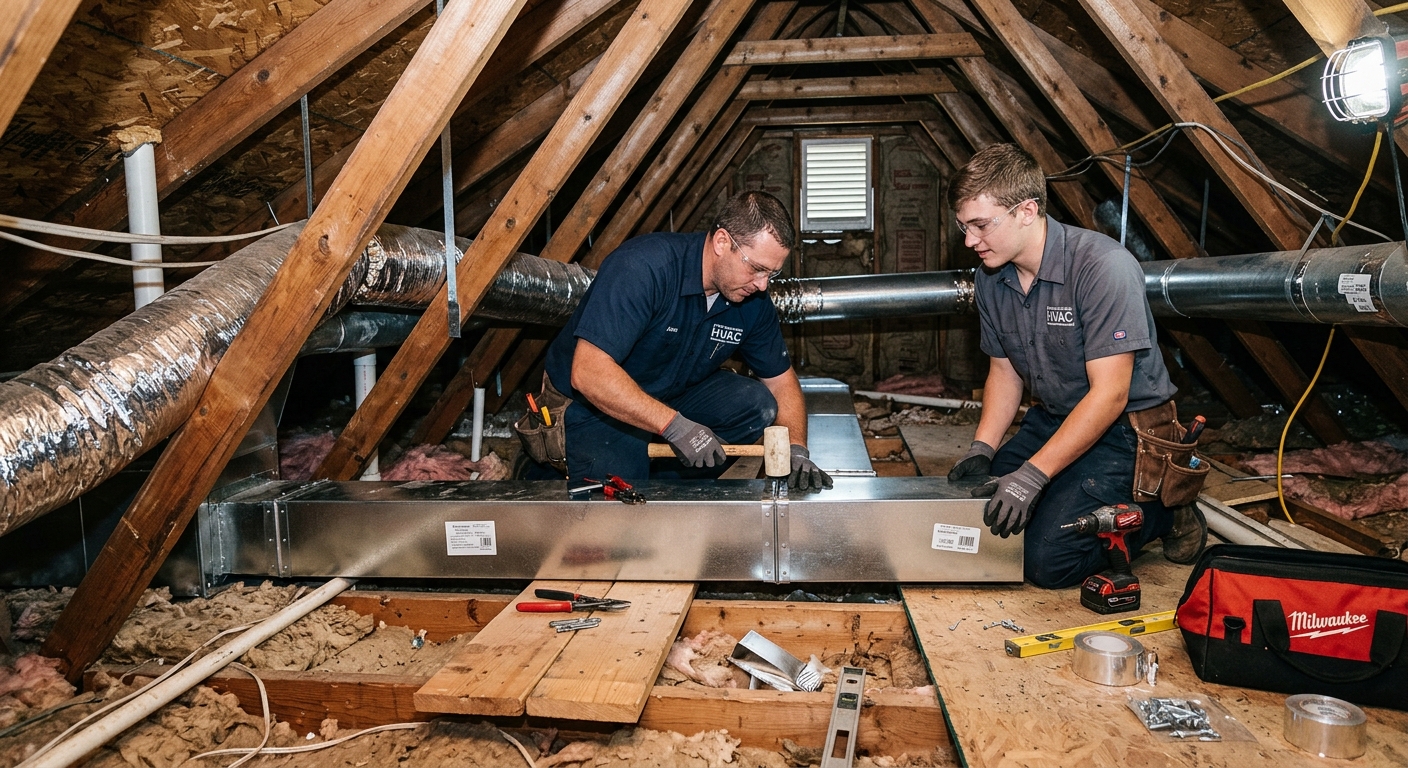
In Longswamp and throughout Berks County, leaky and undersized ductwork is a common culprit behind high energy bills and poor comfort—especially in homes dating from the pre-1940 and pre-1980 era. Many of these older houses either have no original ductwork, or ducts that were meant for old coal or oil furnaces, not for today’s central AC or high-efficiency heat pumps. Duct leakage wastes a surprising amount of heated or cooled air, sometimes more than 20% of system output vanishes into attics or crawlspaces.
A duct blaster test pressurizes your system, measuring the amount of air escaping so you know precisely where you stand. Sealing joints and connections with mastic, and insulating exposed duct runs in unconditioned spaces, can yield immediate savings. If your return ducts are undersized, it restricts airflow and causes noisy operation, hot and cold spots, and premature system wear—fixing this often matters more than the equipment on either end.
In Reading and older boroughs like Hamburg, the construction era determines whether central ductwork even exists, and whether it’s worth salvaging or needs full replacement. Before spending thousands on new equipment, test your ducts first; a simple blower test or inspection can save you from investing in a new system only to have old ductwork undermine its efficiency.
Frequently asked questions — HVAC installation in Longswamp
Why are my Longswamp energy bills high with a new system?
Even with a new HVAC system, Longswamp homeowners can see unexpectedly high energy bills if underlying factors aren’t addressed. Common culprits include leaking or poorly insulated ductwork (especially in homes built before 1980), incorrect system sizing, or setting the wrong thermostat habits for Berks County’s long heating season. It's also possible the contractor didn’t perform a load calculation—oversized systems drive up costs due to short cycling and lack of dehumidification. If a duct blaster test wasn’t performed before installation, up to 20% of your conditioned air might be disappearing into attics or crawlspaces. In some cases, the problem isn’t the equipment but the distribution—sealing and correcting old ducts can sometimes save more than upgrading to a top-tier furnace or heat pump. For reference, replacing a full duct system in Longswamp can run $8,900–$18,000, but targeted duct sealing is often a far more cost-effective first step.
Is a high-efficiency system worth the extra cost here?
In Longswamp, with 5,200 heating degree days and a cold winter design temp, the payoff for higher-efficiency heating systems is real. However, paying for the absolute highest SEER2 rating on a central AC is rarely wise here because our winters are much longer and colder than our hot spells. Instead, direct your upgrade dollars toward higher HSPF2 or AFUE ratings in heat pumps and furnaces, which provide measurable winter savings in Berks County’s climate. For many homes, a ducted air source heat pump install runs $7,900–$17,000; choosing a high-performance model at the upper end moves the needle on annual energy cost, especially if you’re heating with propane or electricity. The sweet spot is often mid-to-high efficiency, not the most expensive ultra-premium unit—invest any extra funds into duct sealing, which can make even a standard-efficiency system outperform a poorly installed “high-efficiency” one.
Which utility serves Longswamp?
Longswamp’s primary electric provider is Met-Ed, a FirstEnergy company, and if your area of Berks County has access to piped natural gas, your supplier will be UGI Utilities. Rural sections of Longswamp and some outer Berks townships, however, rely primarily on propane or fuel oil—natural gas isn’t universal once you get outside urbanized areas near Reading, Muhlenberg, Exeter, and Spring. This matters for HVAC decisions: higher-efficiency gas systems are worth the premium where gas is available, while homes on propane might benefit more from a cold-climate heat pump, which typically falls in the $13,000–$17,000 range installed. Utility availability is a foundational check before bidding any replacement.
Are duct sealing and insulation eligible for incentives?
As of 2026, Berks County homeowners in Longswamp may find utility-sponsored incentives for duct sealing, insulation, and high-efficiency system upgrades, especially through Met-Ed if you’re an electric customer. Many HVAC contractors will know the paperwork required, but incentives change frequently and program funding comes and goes. Even without incentives, duct sealing is often the best value—you can expect measurable efficiency gains without the investment required for a full new duct system, which may run $8,900–$18,000 installed. Before committing to upgrades hoping for rebates, check the latest with your utility or contractor, and avoid making a big decision based only on promotional promises.
Is a heat pump a good choice for Longswamp winters?
Heat pumps—especially cold-climate models—are now a competitive choice in Longswamp, even in our cold Berks County winters with a 12 °F design temp. While traditional furnaces still dominate, ducted air source heat pumps now deliver reliable heat through most of the winter and can sharply reduce bills for propane or electric resistance users. Just note, not every heat pump is created equal—look for “cold-climate” performance if you want the system to handle nearly all heating without backup. These systems typically cost between $13,000–$17,000 installed. In rural Longswamp, where natural gas is not available, a heat pump paired with an oil, propane, or electric backup keeps comfort high and annual costs down.
When is the best time of year to replace HVAC in Longswamp?
Scheduling your HVAC replacement in Longswamp is often easiest in spring (March–May) or fall (late September–early November), when contractors aren’t overloaded with emergency calls. You get better appointment availability and less rush—meaning more time for quoting, permitting (where required), and thoughtful sizing. It’s common after harsh winters for homeowners across Berks County to rush for replacements, driving up wait times and sometimes pricing. Planning ahead can help avoid additional costs and the risk of going without heating or cooling at the worst moment. If you wait for a failure during a heat wave or deep freeze, installation speed becomes your priority rather than system quality or best price. A typical central AC replacement here will run $5,000–$12,000 depending on duct condition and controls.
What does a ductless mini-split cost in Longswamp?
For Longswamp homes with additions, finished attics, or rooms that never seem to get comfortable, single-zone ductless mini-splits are a popular option. These systems avoid the cost and disruption of installing new ductwork (which can be considerable in older homes—often $8,900–$18,000 installed), and offer high efficiency, typically 20–30 SEER2. Expect to pay between $3,200–$7,000 for a single-zone installation, depending on room size, electrical service, and unit brand. Multi-zone systems for whole-home use will be higher. This approach is common for homes built before modern HVAC standards or where existing ducts just can’t do the job—long-run maintenance is also generally lower, but exact pricing depends on your home’s unique needs.
What is SEER2 and how is it different from SEER?
SEER2 (Seasonal Energy Efficiency Ratio 2) is the updated test standard for measuring central air conditioner and heat pump cooling efficiency—it replaces the older SEER metric. The change reflects a more realistic, stricter test regimen, so SEER2 values are always a bit lower than the SEER numbers from older articles or brochures. In practical terms, a 16 SEER2 system cools as efficiently as what used to be called an 18 SEER under SEER, but with test conditions closer to real life. For Longswamp homeowners, comparing equipment by SEER2 is the only apples-to-apples method now. Typical central AC replacements are rated 16–20 SEER2 and cost $5,000–$12,000 installed—spending for higher SEER2 often pays back slowly in our mostly heating-driven climate.
How do I verify an HVAC contractor's insurance?
In Longswamp and throughout Pennsylvania, every legitimate HVAC contractor is legally required to have both liability insurance and workers’ compensation if they employ others. Before signing any contract for work over $500—which triggers written contract rules—it’s your right to ask for proof. You can verify a contractor’s insurance status and workers’ compensation coverage on the state’s WCAIS website (wcais.pa.gov). This step is important—both to protect yourself from future lawsuits (in case of injury on your property) and to weed out anyone not operating above board. Installation work such as a full duct system install often costs $8,900–$18,000, and at those prices, a few minutes of paperwork checking is time well spent. Also, verify their HIC registration at hic.attorneygeneral.gov for legal compliance.