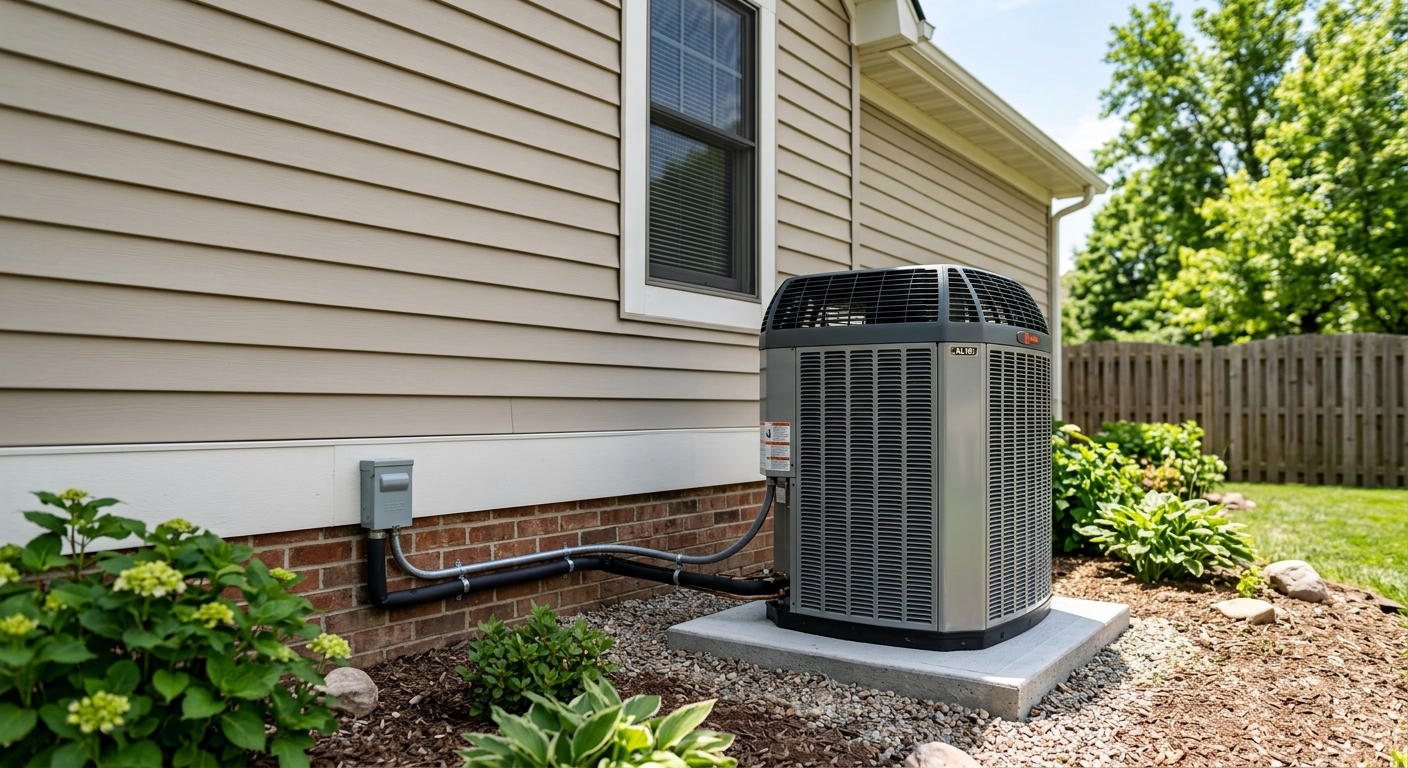
What a new HVAC system costs in Ridley
Ridley’s housing stock is overwhelmingly older—88.0% of homes here were built before 1980 (U.S. Census Bureau, ACS 2024)—and a striking 73.8% of households own their homes. This shapes the HVAC market: most projects are either system replacements in homes with aging forced-air equipment, or retrofits for houses that never had central ducts. Central air conditioning replacement is routine where older homes have serviceable ductwork, but much of the local housing (especially rowhomes and twins similar to Upper Darby and Haverford) lacks central ducts or has minimal space for new runs, making ductless mini-split or high-velocity systems a practical necessity.
Ridley’s temperature swings favor heating more heavily: 4,800 heating degree days (HDD) per year compared to 1,450 cooling degree days (CDD). This means heating costs and system selection tend to dominate decisions, with robust cooling still needed for humid summer stretches. The table below covers the major options for Ridley homes, their efficiency, and current installed price ranges—including cases where a new duct system must be added for full central air solutions.
| System |
Best for |
Efficiency |
Price range (installed) |
| Central AC replacement (existing ducts) |
homes with sound ductwork |
16–20 SEER2 |
$5,100–$12,000 |
| Air source heat pump (ducted) |
year-round heating and cooling |
8–10 HSPF2 |
$8,200–$17,500 |
| Cold-climate heat pump (ducted) |
heat pump as primary heat |
9–11 HSPF2 |
$13,500–$17,500 |
| Ductless mini-split (single zone) |
additions, rooms without ducts |
20–30 SEER2 |
$3,300–$7,100 |
| Full duct system installation |
homes with no existing ducts |
— |
$9,200–$18,500 |
Installed estimates for a typical Ridley home. Equipment tonnage, duct condition and electrical capacity move these more than brand.
When an HVAC repair stops being worth it
For many Ridley homeowners, replacement isn’t the default answer—especially with systems in the 8–15 year range or homes with limited budgets. Age, repair cost, and the nature of the breakdown are the deciding factors. Most modern furnaces and central air conditioners run 15–20 years with proper care. If a repair is less than a third of full system replacement, and the equipment is under 10 or 12 years old, I tell customers to fix it and save their cash.
There are two failures that make replacement non-negotiable. One is a cracked heat exchanger (carbon monoxide risk, cannot legally or safely repair); the other is a compressor failure on an old unit—fixing that can cost more than half the price of a new system, and at that age it’s money down the drain.
For homeowners seeing higher bills in a system that otherwise runs, test and seal your ducts before replacing major equipment. Leaky, uninsulated ductwork in older Ridley homes is a far more common culprit than the unit itself. Finally, the switch away from older refrigerants means a major leak on an R-410A system can push repairs into diminishing returns, as the cost of refrigerant rises.
| Situation |
Recommendation |
Typical cost |
Reasoning |
| Under 10 years, single component failure |
Repair |
$300–$1,200 |
Unit is not near end of life, cost-effective fix |
| 10–15 years, repair over a third of replacement |
Consider replacing |
$5,100–$12,000 |
Approaching service life, unlikely to be last repair |
| 15+ years, any major failure |
Replace |
$5,100–$12,000 |
Beyond expected life; replacement saves more long-term |
| Cracked heat exchanger, any age |
Replace immediately |
$5,100–$12,000 |
Health and safety risk, cannot repair legally |
| Compressor failure past warranty |
Replace |
$8,200–$17,500 |
Repair is half or more of new system |
| Working system, high bills |
Test ducts and envelope first |
$300–$800 |
Leaky ducts are common in pre-1980 Ridley homes |
Refrigerant rules and your existing system
Homeowners in Ridley with an existing R-410A system can continue using it—there is no current regulation making your perfectly working system illegal or unserviceable. The national shift is only affecting newly manufactured equipment, which now use lower global warming potential (GWP) refrigerants such as R-454B and R-32. The main impact on current homeowners is the long-term economics: R-410A will become more expensive to purchase and handle as supply shrinks over the next decade, especially for major leak repairs. But minor service and topping off is still allowed, performed by a technician with a valid EPA Section 608 certification.
If a Ridley homeowner faces a major leak and needs pounds of R-410A to reload the system, the repair may soon approach or exceed a third the cost of a new system—making replacement worth considering. For the moment, standard maintenance such as leak checking and coil cleaning continues unchanged. Do not let any contractor pressure you to replace a running, leak-free R-410A system based purely on new refrigerant regulations; this is not necessary, and your system remains both legal and serviceable.
The bottom line here is timing: as R-410A becomes expensive, it brings forward the point where repair stops making sense, especially for older units. For any Ridley homeowner, don’t replace a working system due to “refrigerant law changes”—wait until the underlying equipment needs replacement for other reasons.
Heat pump or furnace: what makes sense in Ridley
Ridley’s climate is firmly on the heating side: 4,800 heating degree days each year and a winter design temperature of 14 °F. While summers can be muggy and demand solid AC, sizing and type of heating system carries more weight than in milder regions.
Modern cold-climate heat pumps deliver comfortable indoor temperatures well into the teens, a far cry from the heat pumps we saw twenty years ago. Past critics argued these systems “don’t work in Pennsylvania winters,” but that’s no longer true—especially with variable-speed compressors and new refrigerants. Where it does matter is capacity drop: as outdoor temps dip below 20 °F, even high-end heat pumps output less heat. For a majority of Ridley homes, sizing a heat pump with electric or gas backup is a practical approach. Dual-fuel systems are common—offering heat pump efficiency most of the winter and furnace backup for deep cold snaps.
Natural gas is widely available in Delaware County, making the “furnace plus AC” combination both cost-effective and reliable—especially in older homes or where envelope upgrades are uneconomical. In areas where gas is unavailable, high operating costs for oil or propane tip the scales sharply in favor of heat pumps. Furnaces are still the right call where budget, existing ducts, and the lowest upfront costs win out, or in homes that see internal temperatures dip near zero in storms.
| Option |
Installed cost |
Operating cost here |
Best when |
Incentive eligible |
| Gas furnace + central AC |
$5,100–$12,000 |
existing gas service, coldest zones |
Older homes, budget projects |
Yes for 95%+ models |
| Ducted heat pump (cold climate) |
$8,200–$17,500 |
good envelope, all-electric goal |
Where gas isn’t available or owner prefers electrification |
Yes |
| Dual fuel (heat pump + gas backup) |
$13,500–$17,500 |
gas on site, deep cold spells |
Want lowest bills, flexibility, and backup in freezing events |
Yes |
| Ductless multi-zone |
$9,200–$18,500 |
no ductwork, zone control |
Older rowhomes or where ducting isn’t practical |
Yes |
Keeping a Ridley system running
The most cost-effective way Ridley homeowners keep HVAC systems reliable is routine filter replacement at the correct interval. Older Ridley homes (most built before 1980) tend to need 1–2” filters swapped every 1–3 months, using a MERV rating the blower can handle—MERV 8 is a safe bet for most, while higher numbers can bog down weak fans. Letting a filter go too long shortens system life, hurts efficiency, and can lead to froze-up coils.
Coil cleaning makes a real difference, especially in homes where summer pollen and dust get drawn in. The condensate line should be flushed every cooling season: blockages here cause leaks and costly water damage. Refrigerant levels should never be “topped off” year after year—if a Ridley tech says you need more, insist on a true leak check.
Annual maintenance plans are sold heavily here. They make sense if: you get discounted or priority repairs, the cost is less than an average tune-up, and they don’t lock you into unnecessary visits. Skip the plan if it’s only a lightly discounted filter change. Schedule tune-ups early spring or fall—before peak breakdown season, so you’re not at the end of the line when the first heat wave or freeze hits.
What a Pennsylvania HVAC contractor must hold
Pennsylvania does not issue a statewide HVAC trade license for residential projects. Instead, regulation of residential HVAC work—including central air and heat pumps—is at the local or municipal level. Every contractor performing a job in Ridley must hold a Home Improvement Contractor (HIC) registration for contracts over $500, which is required and verified through the Office of Attorney General. Always check a contractor’s HIC registration status before signing a contract.
For refrigerant-related work, EPA Section 608 certification is federal law, regardless of state and covers the handling of refrigerants for installation and repairs. Mechanical permits are generally required for central equipment installation across Delaware County municipalities. Inspections are arranged through the relevant municipal code office, which can vary depending on where you live in the county.
Insurance and workers’ compensation are mandatory for HVAC contractors with employees. Verification is performed through the Workers’ Compensation Automation and Integration System (WCAIS). Ask for current proof; never accept verbal assurances. For jobs over $500, a written contract is required under consumer protection law, and you cannot waive your homeowner’s insurance deductible. Always review your contract and retain your three-business-day right of cancellation as Pennsylvania law allows.
Filtration, humidification and ventilation
Ridley’s humid summers and cold, dry winters mean local HVAC systems need to address both excess moisture and winter dryness. An oversized AC doesn’t run long enough to lower humidity—a common miss in older Ridley homes rebuilt for bigger equipment. Properly sized systems with two-stage or variable-speed compressors control humidity the right way: they run longer at lower power, pulling more moisture from the air.
Whole-house humidifiers ease winter dryness, but they do need ongoing care. Skipping pad changes or letting scale build up can encourage mold and odor. If you rarely feel overly dry in February, pass on a humidifier—many Ridley families never need them.
MERV 8–11 filters balance dust and pollen control with airflow. Don’t chase high-MERV numbers if your blower can’t handle it—this can actually hurt air quality and stress equipment. Tightly weatherized homes (less common here, but growing) should consider mechanical ventilation. For most Ridley homes, spot exhaust and modest sealing are enough; energy recovery ventilators rarely pay their way unless your house is already tight as a drum.
UV lights, advanced purifiers and high-dollar duct cleaning are frequently oversold. In this climate, practical filter changes and occasional coil cleaning deliver more bang for your buck.
Frequently asked questions — HVAC installation in Ridley
What is EPA Section 608 certification?
EPA Section 608 certification is a federal requirement for anyone who installs, services, or repairs equipment containing refrigerants—this includes all reputable HVAC contractors working in Ridley and anywhere in Pennsylvania. It ensures technicians can properly handle, recover, and dispose of refrigerants like R-410A or new low-GWP refrigerants, protecting both the environment and your home. Ask to see proof: legitimate contractors will have their certification card on hand. Without this, it is illegal for a contractor to even add refrigerant during an AC or heat pump service or installation. Always confirm this credential in addition to their Home Improvement Contractor registration. For any system requiring refrigerant recharging—repairing a heat pump or mini-split, or replacing central AC—the technician must be Section 608 certified, especially as refrigerant costs can add significantly to a project (with repairs running $300–$1,200 for even a moderate leak).
When is the best time of year to replace HVAC in Ridley?
In Ridley, the best window for HVAC replacement is early spring (March to April) or early fall (September to October). During these periods, temperatures are milder and HVAC contractors face fewer emergency calls, meaning you can schedule installation at your convenience, often with some cost flexibility. If you wait until a July heat wave or a January cold snap, local contractors are booked solid—delays are longer and prices may inch up due to demand. Most Ridley homes are older, and replacing a system before the heavy use seasons helps ensure you’re not left waiting when AC or heat is critical. For central AC replacement, expect quotes in the $5,100–$12,000 range, but the timing of your project often affects how quickly and smoothly the work is completed.
What does HSPF2 measure?
HSPF2 stands for Heating Seasonal Performance Factor 2, which is the efficiency rating for air source heat pumps under updated Department of Energy testing protocols. It reflects how efficiently a heat pump delivers heat over the full heating season, taking colder weather into account. In practical Ridley terms, a higher HSPF2 means more heat delivered per dollar of electricity, especially during our long winter with 4,800 heating degree days. The latest ducted and ductless systems now post HSPF2 ratings around 8–11, and knowing that rating will help you compare operating costs with existing gas, oil, or propane setups. While cold-climate units are more expensive (installing for $13,500–$17,500), they deliver far more reliable heating than older designs—so make sure to discuss HSPF2 when you’re weighing heat pumps for your Ridley home.
Is a heat pump a good choice for Ridley winters?
Heat pumps have become well-suited for Ridley’s winters, thanks to technology that keeps them running efficiently down to the teens. With a winter design temperature of 14 °F and 4,800 heating degree days, cold-climate ducted or ductless heat pumps handle the vast majority of our heating needs. It’s critical, though, to have a system properly sized for your home—older houses with poor insulation may still need auxiliary electric or gas backup, especially during the coldest snaps. For homes without access to natural gas, converting from oil or propane to a heat pump nearly always cuts operating costs. The installed cost for a quality cold-climate system typically falls in the $13,500–$17,500 range. In Ridley, the days when heat pumps were only for southern climates are over; for many families, they’re now the right call.
Are duct sealing and insulation eligible for incentives?
Yes, duct sealing and insulation measures are often eligible for local utility and state-level incentives in Pennsylvania, especially in areas like Ridley where a high percentage of homes were built before 1980 and have leaky or poorly insulated ducts. These improvements can lower heating and cooling bills by 10–20% in older houses. Some programs tie incentives to full system upgrades or energy audits, but sealing and insulating ducts alone are considered valid energy-saving upgrades. If you’re replacing your HVAC equipment, ask the contractor to include duct testing and sealing—a service usually running $300–$800—as part of the job. Not only can this earn you a rebate, it almost always pays for itself over a few years in this climate.
How much does ductwork add to an HVAC installation?
Adding full ductwork in a Ridley home can be a major cost driver, especially since many local houses (particularly rowhomes and twins built before 1950) never had central air. Brand-new duct system installation ranges from $9,200–$18,500 depending on house size, layout, and finish requirements. This can double the cost of a basic furnace or central AC replacement in homes where ducts already exist. If your house has accessible, sound ducts, a central AC or furnace job is far more affordable. For homes without ductwork or with space constraints, ductless mini-split systems—often installed for less, around $3,300–$7,100 per zone—are a practical alternative and avoid invasive renovations.
How cold does it get in Ridley and does that affect heat pumps?
In Ridley, winter lows routinely dip into the teens, with design temperatures set at 14 °F. While these are not arctic conditions, they do mean any heat pump installed here must be able to maintain adequate heating even during our coldest snaps. Fortunately, modern cold-climate heat pumps are specifically built for these temperatures, holding most of their capacity well below freezing—but as the mercury plunges, their efficiency drops, and backup heat (either electric or gas) sometimes kicks in. In areas without access to natural gas, heat pumps are still the most practical and cost-effective way to heat a home, as running oil or propane is more expensive. Expect to pay $8,200–$17,500 for a properly sized heat pump installation. For many Ridley homeowners, concerns about heat pumps “not working in the cold” can be put to rest—as long as the right equipment is selected for our climate.
Is a high-efficiency system worth the extra cost here?
Upgrading to a high-efficiency HVAC system in Ridley is often worth it, but the math depends on your fuel source and house condition. For homes with natural gas, stepping up to a 95%+ gas furnace and a 16–20 SEER2 central AC does cut long-term operating costs, especially with 4,800 heating degree days on the books. However, if you rarely run your AC or your heating bills are already modest, the extra 30-40% upfront (typically adding $2,000–$4,000 to job cost) could take a decade or more to pay back. Where electricity or delivered fuels (oil/propane) are the norm, high-efficiency ducted or ductless heat pumps offer much faster returns. For Ridley, if your ductwork and building envelope are right, efficient systems almost always pencil out—just make sure you get a real load calculation, not guesses based on square footage.
How often should I change my filter?
For most Ridley homes—especially older ones built pre-1980—a 1” or 2” filter should be checked every month and changed every 1–3 months, depending on dust, pets, and allergy sensitivity. With our humid summers and pollen-heavy springs, filters can clog faster here than the packaging suggests. Using a MERV 8–11 filter gets the balance right: it captures plenty of airborne debris without overtaxing your blower. Extended-life 4”–5” filters can sometimes go longer, but check monthly for buildup. Filter changes are the single best low-cost maintenance to avoid expensive calls; a missed filter can quickly lead to dirty coils or system breakdowns, costing you $300–$1,200 for repair visits that could have been prevented. Never let a contractor upsell to “super allergen” filters unless you have specific health reasons—they often hurt, not help, system airflow in older Ridley homes.