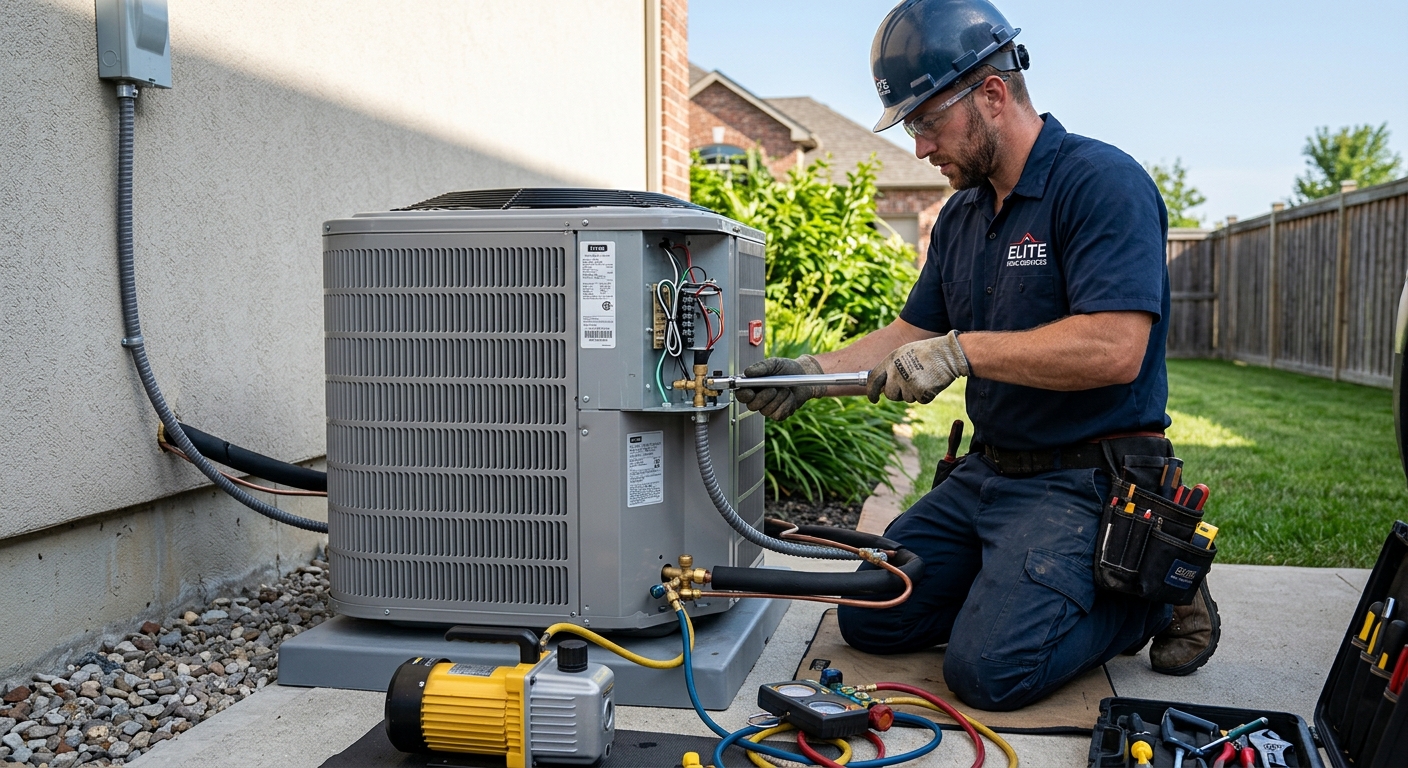
Jackson heating and cooling prices by system type — 2026
Jackson, with its high rate of homeownership (84.2%) and a significant number of homes built before 1980 (40.7%), is a classic replacement market. Most homes here are single-family and owner-occupied, meaning heating and cooling systems are long-term investments rather than short-term fixes. Many of the forced-air systems installed during Cranberry Township’s 1990–2010 subdivision boom are now reaching the end of their useful life, so ducted system replacements and upgrades are especially common. Where those ducts are still in good shape, a central AC or a ducted heat pump replacement makes economic sense. If the ducts are poor or missing—sometimes the case in older or recently added living spaces—other options like ductless mini-splits or a full new duct system come into play.
Jackson’s climate puts a much heavier load on your heating than on your cooling. We average 5,600 heating degree days per year compared to just 1,050 cooling degree days. That means heating efficiency and reliability matter more than squeezing out the last bit of summer cooling performance. System recommendations, expected comfort, and price bands below all reflect this local climate reality.
| System |
Best for |
Efficiency |
Price range (installed) |
| Central AC replacement (existing ducts) |
homes with sound ductwork |
16–20 SEER2 |
$5,400–$13,000 |
| Air source heat pump (ducted) |
year-round heating and cooling |
8–10 HSPF2 |
$8,600–$18,500 |
| Cold-climate heat pump (ducted) |
heat pump as primary heat |
9–11 HSPF2 |
$14,000–$18,500 |
| Ductless mini-split (single zone) |
additions, rooms without ducts |
20–30 SEER2 |
$3,400–$7,500 |
| Full duct system installation |
homes with no existing ducts |
— |
$9,700–$19,500 |
Installed estimates for a typical Jackson home. Equipment tonnage, duct condition and electrical capacity move these more than brand.
Permits, licensing and inspections in Jackson
Pennsylvania does not issue a statewide HVAC contractor license for residential work; however, contractors must have a Home Improvement Contractor (HIC) registration from the Pennsylvania Office of Attorney General for any job over $500. Homeowners in Jackson should always verify this registration at hic.attorneygeneral.gov before signing a contract. The state Uniform Construction Code (UCC) is enforced either locally or, in some cases, by the PA Department of Labor & Industry for municipalities that have opted out. That means your permit, inspection, and enforcement experience may differ between townships.
Mechanical permits are typically required for HVAC installation or replacement, especially in places like Cranberry Township. The inspection process confirms that the installed system meets the code requirements, but the contractor’s credentials and insurance are equally important. For any work involving refrigerants—a central air conditioner or a heat pump, for example—EPA Section 608 certification is non-negotiable and federally required no matter what the state’s licensing rules are. You can always ask for the credential directly.
Worker’s compensation insurance is mandatory for all employers in Pennsylvania. You can verify a contractor’s insurance status via WCAIS (wcais.pa.gov). Make sure any contract totals over $500 come with a written agreement as required under the Home Improvement Consumer Protection Act: this grants a three-day right to cancel. A reputable contractor will not ask you to waive your insurance deductible; in fact, doing so is prohibited.
Comparing HVAC estimates in Jackson
To make a fair comparison between estimates in Jackson, check that every quote clearly states model numbers for both the indoor and outdoor units. A mismatched indoor and outdoor pair will not deliver the efficiency rating you’re paying for. Insist that the contractor includes their sizing method—ideally a Manual J load calculation, not just a match to your old system’s nameplate or a rule of thumb. Ductwork matters: cost to replace, repair, or seal is a large factor and should be priced out based on its actual condition.
Electrical work is often overlooked but can easily add hundreds or thousands of dollars if your main panel needs upgrading. The quote should spell out whether any new circuit or breaker is needed. Replacing or reusing the refrigerant line set should be documented—reusing old lines is only acceptable if they are in great condition and properly flushed. You should also see line items for a new thermostat (if applicable), new condensate handling, and, for larger jobs, commissioning reports that prove the system was started up right. The labour warranty—often one year by default—should be listed separately from the equipment warranty.
Any quote that just names a brand and a single price can’t be properly compared; you need actual details.
| Line item |
What to look for |
Red flag if… |
| Equipment |
model numbers, indoor and outdoor matched |
brand name only |
| Sizing |
load calculation attached |
matched to the old nameplate |
| Ductwork |
condition assessed, sealing scoped |
not mentioned |
| Electrical |
circuit and panel capacity confirmed |
assumed adequate |
| Line set |
replaced or documented as reused |
silent |
| Commissioning |
measured airflow and charge, documented |
no startup report |
| Warranty |
labour years stated separately |
manufacturer only |
| Permit |
included and priced |
'not needed' |
Sizing: why bigger is worse
The most expensive mistake you can make with HVAC in Jackson is having your new system oversized. It might seem safer to get a bigger unit "just in case," but the reality is the opposite. An oversized furnace or air conditioner cycles on and off too quickly (short cycling), which means uneven temperatures, poor humidity control, and extra wear and tear. Short cycling also leaves much of your home feeling stale and clammy in the summer and can lower your comfort level in the winter.
A correct sizing job always starts with a Manual J load calculation, which considers your actual insulation, window area, air leaks, and the number of occupants. Never accept sizing based purely on square footage or—worse—copying the label from your old unit; that only repeats mistakes that may have been built into your home 20 or even 50 years ago.
Jackson’s winter design temperature is 8 °F. That’s the cold point your system needs to handle. Too small and you’ll be cold when you most need heat; too large and you pay for wasted output eleven months of the year. Always ask your contractor: "Did you run a load calculation, and can I see it?" A reputable pro won’t hesitate to show their math. It’s your best protection against both over- and undersized equipment.
Filtration, humidification and ventilation
Southwestern Pennsylvania’s climate brings real winter dryness and sticky summer humidity—both affecting indoor air quality and comfort in Jackson. Because we experience long heating seasons, dryness becomes the main comfort complaint from November through March. People often add a whole-house humidifier to their furnace, but these require annual cleaning and scale management, so weigh the maintenance before buying.
On the cooling side, high summer humidity means your air conditioner must both cool and dehumidify. A system that’s too large will cool the air too fast, shutting off before removing enough moisture, and leaving the house muggy. That’s why size and run time matter more than any gadgety add-on for moisture control.
Upgrading your air filter can help with dust and allergens, but higher MERV filters also restrict airflow. If you go above MERV 8 or 11, check your blower motor specs or ask your contractor—overdoing it can stress your system. For newer, tightly sealed homes, mechanical ventilation like an ERV or HRV is worth considering. For older, draftier homes, this is often oversold. Indoor air quality monitors and UV lights are popular upsells, but in most Jackson homes, good filtration and humidity control matter more and cost much less.
What each system actually costs to run in Jackson
Most Jackson homes use West Penn Power for electricity and, where available, Columbia Gas for natural gas. To estimate your system’s operating cost, you need three numbers: how efficient your equipment is, how much heating or cooling you use each year (based on degree days), and your energy rates (found right on your electric or gas bill).
For example, let’s say you’re comparing a new air source heat pump (seasonal COP about 3), a high-efficiency gas furnace, and a central air conditioner. Jackson’s 5,600 heating degree days are the overwhelming driver of your annual cost, far outweighing the 1,050 cooling degree days. You’d multiply the degree days by the heat loss of your home (your contractor can estimate this), then divide by your system efficiency. Multiply the resulting kWh or therms by your rate to see what you’d pay.
Say your electricity rate is $0.14 per kWh (look for the “price to compare” section on your bill). If the heat pump uses 8,000 kWh/year, that’s $1,120 annually. The same house with a gas furnace might burn 900 therms at $1.20 per therm, totaling $1,080 per year. These are just example figures—your real use may differ, especially if your ducts are leaky or insulation is lacking. Bad ducts can erase the savings of a high-efficiency system. Always check your bill, not just national averages, and know that equipment efficiency is only half the story—your home’s condition and duct integrity matter just as much.
Keeping a Jackson system running
Routine filter changes are the single most important part of HVAC maintenance in Jackson. Use the MERV rating your blower is built to handle—usually MERV 8 or 11 for most systems, unless your installer has upgraded your fan. Change the filter every 1–3 months during peak use. Next up: evaporator and condenser coil cleaning. Dirty coils sap efficiency and shorten system life, especially with all the airborne pollen and dust we get most springs and falls.
Condensate lines—critical for both ACs and high efficiency furnaces—should be cleared every season to prevent backups and water damage. Refrigerant charge should not be topped off annually; if a system needs more, there’s a leak that must be found and fixed. Adding refrigerant without leak testing is not maintenance, it’s ignoring the problem.
Annual service plans can be worthwhile if priced reasonably and if the contract lays out exactly what’s included. Skip plans that are just filter swaps and visual checks. The best time to book tune-ups is spring or early fall, before Jackson’s peaks hit and you compete with emergency calls for appointments.
Frequently asked questions — HVAC installation in Jackson
Why do HVAC quotes in Jackson vary so much?
Quotes can seem all over the map in Jackson for a few reasons. First, our homes run the gamut from pre-1980 construction to newer, larger layouts from the subdivision boom of the past 30 years. That means many variables: duct condition, access, asbestos risk in older homes, and electrical capacity. Not every installer’s base price includes needed electrical upgrades or duct repairs. One contractor might include a new line set, permit, and a commissioning report, while another offers only equipment and hookup. Watch for what’s priced in and what’s left as your problem. Equipment brand matters far less than model numbers and actual installation work. For reference, a central AC replacement here ranges from $5,400–$13,000, but low or high bids might be skipping key line items or padding profit. The most useful quote shows every piece and why, so you can compare apples to apples.
How often should I change my filter?
In Jackson, most homeowners should plan to change their HVAC filter every 1–3 months, especially during our long heating season and humid summer. Dust, pollen, and clay from our soil can clog filters quickly. If you have pets or allergies, check monthly. The type of filter also matters—using a MERV 8 or MERV 11 pleated filter is generally safe for most blower motors in this region. Going to higher MERV ratings can restrict air flow unless your system is specifically set up to handle them, so ask your contractor before swapping in a “better” filter. Neglecting filter changes can ruin your efficiency and even cause breakdowns—maintenance that’s included in service plans can help keep you on schedule, but the filter itself is your responsibility. Whole house filter upgrades, like a media cabinet addition, usually cost much less than fixing damage from neglect.
Do I need dual fuel in southwestern Pennsylvania?
Dual fuel—where a heat pump runs until the temperature drops and then a furnace takes over—isn’t a must-have for every Jackson home, but it’s worth a look. Our winter design temp is 8 °F, so a regular air source heat pump can struggle on the coldest days unless you upgrade to a cold-climate model. If your home already has natural gas, you may get the best balance of efficiency and cost by combining a heat pump for mild weather with a gas furnace for deep cold. This can reduce your annual heating cost and provide backup if one system fails. Keep in mind, though, that a cold-climate heat pump alone can cover Jackson winters, though the installation will put you in the upper end of the range—$14,000–$18,500. Dual fuel is mostly about comfort, redundancy, and operating cost, not code or safety.
Do I need ENERGY STAR equipment to qualify for incentives?
Not always, but sometimes. Pennsylvania doesn’t require ENERGY STAR certification for HVAC installs, but many utility rebates and some federal programs do. West Penn Power, the main electric utility for Jackson, typically ties most rebates to ENERGY STAR-qualified equipment or specific efficiency benchmarks. That means a central AC or heat pump often has to meet SEER2 or HSPF2 minimums—which are usually equivalent to ENERGY STAR levels here—to get the incentive. For example, a ducted air source heat pump from $8,600–$18,500 might get a rebate if it’s rated 15 SEER2 or higher. Always ask your contractor for written proof of eligibility before you count on a rebate, and check the actual requirements on the utility or program’s website.
Does Pennsylvania license HVAC contractors?
Pennsylvania, including Jackson and the rest of Butler County, does not issue a statewide HVAC license for residential work. Contractors must have HIC (Home Improvement Contractor) registration through the Office of Attorney General for jobs over $500. Some municipalities require additional mechanical permits. For refrigerant handling (AC and heat pumps), all techs must hold a federal EPA Section 608 certification, but there’s no special state or county HVAC license. You can verify HIC registration at hic.attorneygeneral.gov. For larger installations—like a full duct system for $9,700–$19,500—always ask to see both the registration and proof of workers’ compensation, which you can check on WCAIS.
Do I need to be home during installation?
It’s important to have someone home for at least the start and end of the installation day, even if you can’t be there the whole time. In Jackson, jobs usually take one to three days depending on system size. The technician may need access to your attic, basement, electrical panel, or thermostat wiring. You’ll want to review the work at the end, ask questions, and be shown how the system operates. Some municipalities, like Cranberry Township, require a code inspection after installation for systems in the $5,400–$13,000 price range, so you’ll need to coordinate for your signature and access. Having a neighbor let the crew in is fine for basic swap-outs but not ideal for major upgrades and walkthroughs.
How cold does it get in Jackson and does that affect heat pumps?
Jackson’s winter design temperature is 8 °F, so your heating system has to keep up even in single digits or below. Standard air source heat pumps lose efficiency and output as the temperature drops, but modern cold-climate models are built to handle low teens with only a small dip in performance. For older or drafty homes, it’s smart to keep a backup heating source or install a dual fuel system. Cold-climate heat pumps that replace fossil fuel backup put you in the higher investment bracket—$14,000–$18,500. Don’t let anyone claim standard heat pumps “don’t work in Pennsylvania”—when sized and installed right, they handle our winters well, but your installer needs to adjust the setup for these conditions.
What is a Manual J load calculation?
A Manual J load calculation is the industry-standard way to size an HVAC system for your exact home, factoring in your square footage, insulation, window area, orientation, and air leaks. In Jackson homes—especially older ones or those with additions—this calculation is essential to avoid oversizing or undersizing, both of which kill comfort and efficiency. Relying on rules of thumb or copying your old furnace size is not the same thing; it repeats old mistakes. Ask your contractor: “Did you run a load calculation, and can I see it?” Any bid, whether a replacement for $5,400–$13,000 or a new ducted system, should include that sheet or summary. You’re paying for performance, not guesswork, and Manual J is how you get it.
How much does a new HVAC system cost in Jackson?
The price depends on what you’re replacing and the condition of your existing ducts. For a straightforward central AC swap using your current ductwork, expect to pay between $5,400–$13,000. Upgrading to a ducted heat pump costs a bit more—typically $8,600–$18,500. Adding a mini-split to a room without ducts starts at $3,400–$7,500. If your older Jackson home needs brand new ducts as well, a full install runs $9,700–$19,500. Remember, these are total installed costs and the wide range covers duct condition, system tonnage, and any electrical panel or code upgrades required. Actual bids should include a load calculation and detail all parts and labor for a fair apples-to-apples comparison.