HVAC costs in Plumstead — 2026
Plumstead’s HVAC costs reflect its high homeownership rate and the age of its housing. Nearly 90% of Plumstead households own their homes, and over a quarter were built before 1980 (U.S. Census Bureau, ACS 2024), so this is firmly a replacement and retrofit market, not new construction. In neighborhoods with post-1960 tract homes like those common in Bensalem and Middletown, most houses already have some form of ductwork—although the condition and efficiency of these ducts often varies, driving frequent full-system upgrades.
Bucks County experiences 4,800 heating degree days and only 1,450 cooling degree days yearly, which makes it a heating-dominated climate. This means your HVAC investment should prioritize reliable, efficient heat—cooling is important, but secondary. Your choice between replacement and upgrade is always colored by how much of the season you’re heating, and whether your home already has sound ductwork.
Here is what you can expect for installed system prices in Plumstead in 2026:
| System |
Best for |
Efficiency |
Price range (installed) |
| Central AC replacement (existing ducts) |
homes with sound ductwork |
16–20 SEER2 |
$5,900–$14,000 |
| Air source heat pump (ducted) |
year-round heating and cooling |
8–10 HSPF2 |
$9,500–$20,000 |
| Cold-climate heat pump (ducted) |
heat pump as primary heat |
9–11 HSPF2 |
$15,500–$20,000 |
| Ductless mini-split (single zone) |
additions, rooms without ducts |
20–30 SEER2 |
$3,800–$8,300 |
| Full duct system installation |
homes with no existing ducts |
— |
$10,500–$21,500 |
Installed estimates for a typical Plumstead home. Equipment tonnage, duct condition and electrical capacity move these more than brand.
Heat pump or furnace: what makes sense in Plumstead
Choosing between a heat pump and a furnace in Plumstead means looking hard at our local numbers. With a winter design temperature of 14 °F and 4,800 heating degree days, heating is your big budget item. Modern cold-climate heat pumps can deliver useful heat well below freezing—gone are the days when they couldn’t handle Pennsylvania winters. But all heat pumps lose capacity as the temperature drops, which is exactly why we care about that design temperature: it’s the point your system must be able to heat your house reliably, even on the coldest days.
If you’re in southeastern Bucks County—places like Bensalem, Bristol, or Middletown—natural gas is widespread and affordable. In these settings, a gas furnace can still make sense, especially if efficiency upgrades elsewhere let you downsize your system. In more rural northern parts of the county, where homeowners rely on propane or fuel oil, heat pumps become much more appealing thanks to lower operating costs and the push away from delivered fuels.
Furnaces remain the best call for homes with existing gas lines, older or leaky constructions, or when you need maximum output in the very worst weather. Heat pumps excel in homes aiming to go all-electric, for additions, or in retrofits where fuel delivery is a headache.
| Option |
Installed cost |
Operating cost here |
Best when |
Incentive eligible |
| Gas furnace + central AC |
$5,900–$14,000 |
lowest with gas utility |
existing gas service, coldest zones |
sometimes |
| Ducted heat pump (cold climate) |
$9,500–$20,000 |
moderate (all-electric rate) |
good envelope, all-electric goal |
yes |
| Dual fuel (heat pump + gas backup) |
$15,500–$20,000 |
optimized per season |
gas on site, deep cold spells |
yes |
| Ductless multi-zone |
$10,500–$21,500 |
low in zoneable homes |
no ductwork, zone control |
yes |
Permits, licensing and inspections in Plumstead
In Pennsylvania, there’s no statewide HVAC license—residential HVAC work is regulated at the local level, not by the state. What you do need from your contractor is Home Improvement Contractor (HIC) registration, issued by the Pennsylvania Office of Attorney General, for any job over $500. Always verify this at hic.attorneygeneral.gov before signing the dotted line.
Municipalities like those in Bucks County enforce the Pennsylvania Uniform Construction Code (UCC), based on the IRC. Each township—Plumstead included—runs its own code office and decides when mechanical permits and inspections are required for HVAC installations and replacements. Central air or heat pump installs typically require a permit; simple thermostat swaps often do not.
Anyone handling refrigerant in the United States, including those installing or repairing your air conditioning or heat pump, must have a federal EPA Section 608 certification. Workers' compensation insurance is mandatory, and you can check this using Pennsylvania’s WCAIS system (wcais.pa.gov). For your protection, written contracts are required by the state’s Home Improvement Consumer Protection Act for work over $500, and you’re entitled to a three-business-day right of cancellation.
The comfort problem that isn't temperature
Plumstead’s winters are dry and summers are sticky—humidity and stale air are the real enemies of comfort here, not just the thermostat setting. The region’s moderate freeze-thaw cycle means heating dries your home right out, while humid summer weather (1,450 cooling degree days) puts real pressure on your AC to pull moisture, not just temperature.
An oversized AC cools your home too quickly to dehumidify properly. When that happens, you get a cold, clammy house with mold risk and musty odors. It’s best to size your cooling system for a longer cycle time, which gives it a chance to wring out the humidity.
Whole-house humidifiers are often suggested for winter dryness, but they add maintenance—filters, standing water trays, and annual checks. Most homes see more benefit for less money from a portable unit in the bedrooms.
High-MERV filters trap fine particles, but restrict airflow if your blower isn’t sized for them; don’t upgrade to a high-efficiency filter without a contractor checking your system’s static pressure first. If you’ve air-sealed your home, mechanical ventilation like an ERV keeps the air fresh and controls humidity, but in most Plumstead homes with classic ductwork, the benefit is modest compared to duct repairs or fixing drainage issues first.
The decision point on an aging system
Don’t replace your system on a schedule—replace it when an expensive repair can’t be justified, or the unit poses a safety risk. The average service life for a central AC or furnace around Plumstead is 15 to 20 years, sometimes less if maintenance was skipped. If your system is under 10 years old and the repair is less than half the cost of replacement, repair is usually the smart move. When a unit is 10 to 15 years old and problems start piling up, it’s time to look at whether the next big repair crosses a third of replacement cost.
If the issue is a compressor failure or a cracked heat exchanger—those aren’t optional; replacement is required. The old refrigerant (R-22/Freon) also complicates repairs: it’s phased out, so topping off a leak becomes much more expensive and a bad investment.
Efficiency upgrades should be justified here by our balance of heating and cooling degree days. Bucks County’s climate means energy savings from ultra-efficient new units often take 10 years or longer to pay back. Don’t replace based on manufacturer “average savings” alone—test your ductwork and building envelope first to see if there’s a cheaper fix.
| Situation |
Recommendation |
Typical cost |
Reasoning |
| Under 10 years, single component failure |
Repair |
$300–$1,200 |
Unit has useful life left, part is replaceable |
| 10–15 years, repair over a third of replacement |
Consider replacing |
$5,900–$14,000 |
Major repair near end of expected lifespan |
| 15+ years, any major failure |
Replace |
$5,900–$14,000 |
Inefficient and unreliable, replacement preferable |
| Cracked heat exchanger, any age |
Replace immediately |
$5,900–$14,000 |
Safety issue—risk of carbon monoxide |
| Compressor failure past warranty |
Replace |
$9,500–$20,000 |
Repair cost approaches new system |
| Working system, high bills |
Test ducts and envelope first |
$300–$800 |
Leaks or insulation often are the hidden culprit |
What size system does a Plumstead home need?
Sizing isn’t about square footages—it’s about matching the load. In Plumstead, oversized HVAC is a common and expensive problem: it leads to short cycling, uneven temperatures, higher bills, and a system that wears out prematurely. Too many contractors simply replace your old system with another of the same tonnage, copying forward any original sizing mistakes—especially in track homes built before energy codes mattered.
The right way is to perform a Manual J load calculation, taking into account your home’s insulation, window quality, air leakage, and orientation. This calculation uses our local winter design temperature (14 °F) to ensure the new equipment can meet Plumstead’s coldest days without oversizing for the average.
If your contractor can’t show you their Manual J results—or won’t do one for your project—find someone else. Even two identical homes on the same street can have very different needs if one was air-sealed, had window upgrades, or has a finished basement. Ask the only question that really matters: “Did you run a load calculation, and can I see it?” That answer will tell you whether you’re buying an efficient, long-lived system or someone else’s spreadsheet error.
When ductless is the right answer
Ductless mini-splits are a smart solution in Plumstead for additions, attic and basement conversions, bonus rooms, or any space where extending ducts means patching drywall and living in a construction site. They’re also the right tool for older houses from Plumstead’s pre-central air days, where retrofitting a full duct system would eat up closet space and budget.
Single-zone mini-splits handle individual rooms with efficiency and precise control. Multi-zone systems can cover several rooms off one outdoor condenser, but for best performance, separate single-zone units tend to outperform oversized multi-head systems for the same money. Placement of the indoor heads really matters: not all homeowners love the look, and condensate drainage must follow the rules, not aesthetics.
Condensate handling can be a hassle in finished spaces—vertical runs, pumps, freezing risks—so plan for it in advance. In areas with post-1960 development like Bensalem and Middletown, the common solution is still full-system central air or heat pumps. But for homes that never had ducts, or where the original ducts are shot, a ductless system is often faster, puts less stress on the budget, and avoids tearing into finished surfaces.
Frequently asked questions — HVAC installation in Plumstead
Why does my system short cycle?
Short cycling—when your HVAC turns on and off every few minutes—is almost always a sizing or setup problem, not a mere sign of old equipment or neglect. In Plumstead, contractors sometimes install oversized units “just in case,” especially in houses from earlier suburban booms. But oversized systems run very short cycles: they overshoot your set temperature, then shut down before they can properly dehumidify in summer or evenly heat your rooms in winter. This leads to increased wear and tear and higher operating costs. Ductwork blockages, a dirty filter, or a poorly calibrated thermostat can also cause short cycling. Diagnosis might be as simple as checking your filter or as complex as a full sizing and airflow analysis. Sometimes, unfortunately, fixing this means right-sizing with a new, correctly sized HVAC system—costing you in the range of $5,900–$14,000 for central systems in a typical Plumstead home.
What does a ductless mini-split cost in Plumstead?
A single-zone ductless mini-split system in Plumstead will usually run $3,800–$8,300 installed, depending on the placement and electrical work required. Multi-zone systems that serve several rooms or an entire floor are more expensive, reaching $10,500–$21,500 if you want whole-home coverage without ductwork. These prices reflect real Bucks County costs for residential customers, not ads from national companies. Because many homes here (especially those built before the 1980s) lack full ductwork, ductless can often be less invasive and costly than patching in new ducts, and you typically get better zoning and comfort. Keep in mind: a clean install with careful condensate handling and well-placed indoor heads is what separates a “just okay” result from work that really disappears into your décor.
Are duct sealing and insulation eligible for incentives?
Yes, duct sealing and insulation can be eligible for both utility and some state-level incentives in Pennsylvania—including parts of Bucks County served by major utilities. While incentives change year to year, the PECO electric service area commonly offers rebates for duct sealing done by a certified contractor. A duct test and seal job in a typical Plumstead home might cost $300–$800, but qualifying projects often get a chunk of that back through rebates or program discounts. Beyond incentives, sealing and insulating your ducts can dramatically improve comfort and efficiency, especially in older homes with leaky or under-insulated ductwork routed through attics or crawlspaces. If you’re planning a larger HVAC replacement, always ask whether your ductwork meets code and what incentives are available—it can move the needle on comfort much more than an “ultra-high” efficiency unit alone.
What is commissioning and why does it matter?
Commissioning is a careful, step-by-step process for checking your new HVAC system’s performance after installation—a critical step too many Plumstead homeowners never get. It involves making sure your system is charged with the correct amount of refrigerant, airflow matches design specifications, controls actually work, and that safety and efficiency baselines are met. This is not just flipping the switch and seeing if cold or hot air blows. A thorough commissioning is the difference between a system that lives up to its ratings and one that costs you extra every month. For a ducted system here—where installation might run $9,500–$20,000—commissioning delivers the comfort and utility bills you paid for. Always ask for documentation of commissioning and avoid anyone who says "it isn't needed"—they may be skipping vital quality checks.
How much does ductwork add to an HVAC installation?
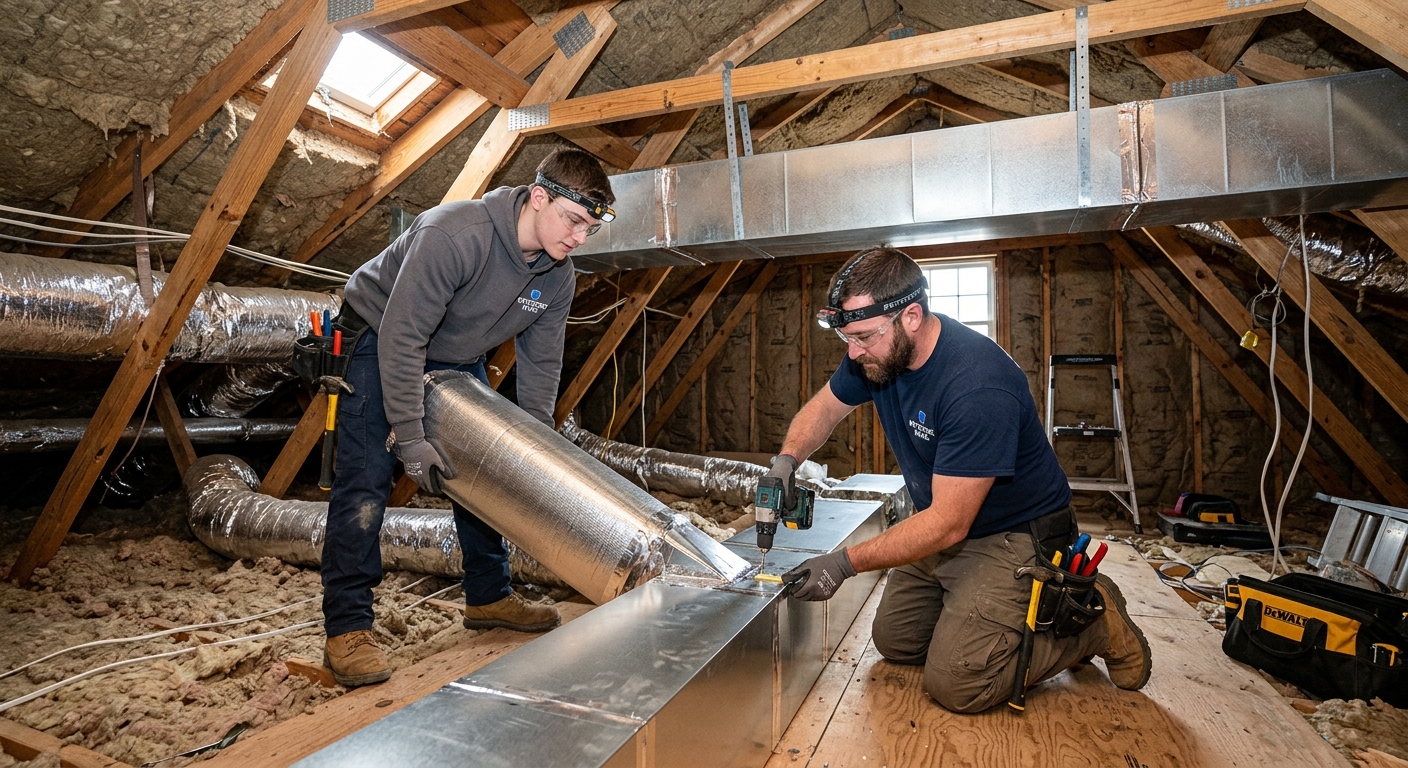
For Plumstead homes without usable ducts, a full duct system installation typically ranges from $10,500–$21,500 installed, depending on the size and layout of the home. If you’re replacing both your HVAC equipment and need brand new ducts throughout (often the case in older homes or conversions), this will be your single largest cost driver. Homes built before 1980 or with major renovations often need not just new metalwork, but also code-required insulation and sealing—both for efficiency and comfort. If your house already has solid ductwork, replacing the AC or furnace alone is usually much less: $5,900–$14,000 for central AC, for example. Always insist on a pressure test before accepting a “just reuse the old ducts” answer; hundreds of Plumstead homes lose conditioned air to leaks in attics or basements every season.
Does Pennsylvania license HVAC contractors?
Pennsylvania does not issue a statewide HVAC license for residential work. In Plumstead and elsewhere in Bucks County, HVAC contractors must be registered as Home Improvement Contractors with the Pennsylvania Office of Attorney General for jobs over $500—this is not a skill test, but a consumer protection policy you can verify at hic.attorneygeneral.gov. Local municipalities enforce permits and code requirements based on the Pennsylvania Uniform Construction Code (UCC). Contractors must also provide proof of current workers’ compensation insurance, which is mandatory in this state and can be verified on the WCAIS system. For any installation involving refrigerant, EPA Section 608 certification is required federally—even if the state itself doesn’t issue HVAC licenses. Always check these credentials before hiring for a job that might cost $5,900–$20,000 or more in Plumstead.
How cold does it get in Plumstead and does that affect heat pumps?
Plumstead sees a winter design temperature of 14 °F, with about 4,800 heating degree days—making it firmly a heating-driven market. Modern cold-climate heat pumps perform well down to and below that temperature, but all heat pumps lose some capacity as it gets colder. Backup heat can fill gaps during deep freezes, or you can opt for a dual-fuel system. If your house is tight and well-insulated, a heat pump alone might be enough; for draftier, older Plumstead homes, pairing a heat pump with a gas furnace is safer. Upshot: heat pumps truly work here, just budget for equipment tested to cold-climate specs. Installs for these systems tend to sit in the $9,500–$20,000 band, depending on ductwork and size.
What size HVAC system does my Plumstead home need?
Your system should be sized by a Manual J load calculation, not by your home’s square footage or the old unit’s label. In Plumstead, too many homes get oversized units “to be safe,” which guarantees short cycles, poor humidity control, and higher costs. The calculation includes our local winter design temperature (14 °F), insulation levels, and window count—no two homes are exactly alike, even on the same block. For reference, most single-family homes here end up with a three or four-ton HVAC system, but this can change dramatically if you have substantial upgrades, a finished basement, or additions. Insist that your contractor show you the Manual J. A properly sized system costs the same up front—$5,900–$20,000, depending on type—but saves you thousands in repairs and energy over its lifetime versus the “one size fits all” approach.
Should I repair or replace my HVAC system in Plumstead?
In Plumstead, replace your HVAC system only when it makes financial or safety sense—not because it’s simply old. If your current system is under 10 years old and repair costs are below half the price of a new system, repair is likely the best bet—think $300–$1,200. If a key component fails after 15 years (compressor, heat exchanger), or if your next repair runs above a third of a full replacement cost—say, between $5,900–$14,000—it usually makes sense to install new. For units still running but with high energy bills, start with a duct leakage and insulation test; you may solve your problem for $300–$800. Mandatory replacement is non-negotiable if you have a cracked heat exchanger (carbon monoxide risk) or a failed compressor no longer under warranty. Every case should be judged locally and with total system performance in mind.