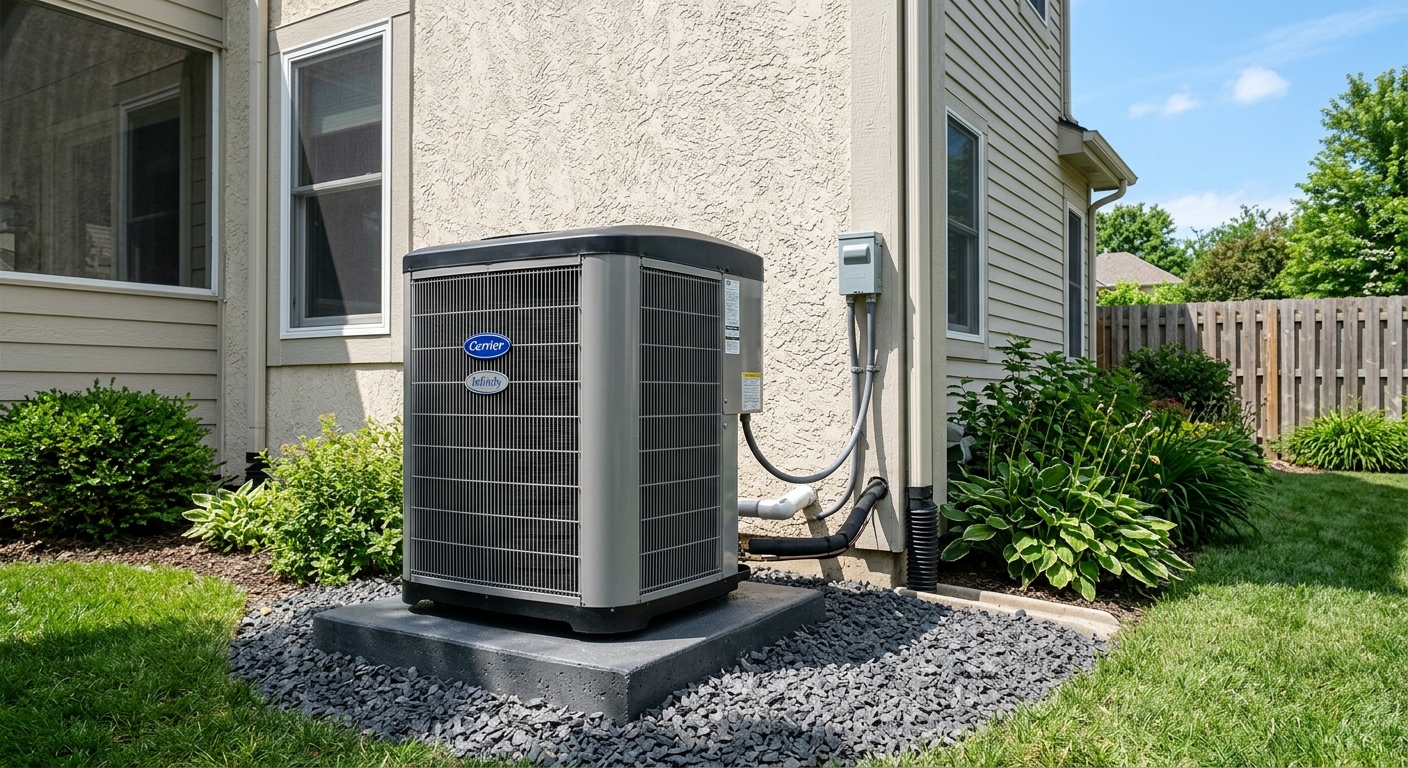
What a new HVAC system costs in Pottstown
Pottstown presents a very different HVAC market from much of the country. With a homeownership rate under 51% and nearly 9 in 10 homes built before 1980 (U.S. Census Bureau, ACS 2024), this is overwhelmingly a retrofit and replacement market, not a new-construction one. Most homes have some kind of heating system already installed, and you’re not likely to be installing brand new ductwork unless you’re adding central air to a previously ductless house, or modernizing an older hydronic/radiator system.
In the boroughs and older townships of Montgomery County, like Abington, Cheltenham, and Upper Dublin, post-war housing booms produced thousands of homes with basic ductwork—often undersized for modern high-efficiency cooling, and usually with minimal insulation. This means many projects here require duct upgrades or repairs and electrical improvements. The area’s climate is still heating-dominated, with about 4,800 heating degree days and just 1,450 cooling degree days per year. Winters hit a design low of 14 °F. That tips the math more toward better heating equipment than higher cooling efficiency, although both matter.
Here’s what you can expect to pay for a professional system installation or replacement in Pottstown:
| System |
Best for |
Efficiency |
Price range (installed) |
| Central AC replacement (existing ducts) |
homes with sound ductwork |
16–20 SEER2 |
$5,200–$12,500 |
| Air source heat pump (ducted) |
year-round heating and cooling |
8–10 HSPF2 |
$8,300–$17,500 |
| Cold-climate heat pump (ducted) |
heat pump as primary heat |
9–11 HSPF2 |
$13,500–$17,500 |
| Ductless mini-split (single zone) |
additions, rooms without ducts |
20–30 SEER2 |
$3,300–$7,300 |
| Full duct system installation |
homes with no existing ducts |
— |
$9,400–$18,500 |
Installed estimates for a typical Pottstown home. Equipment tonnage, duct condition and electrical capacity move these more than brand.
SEER2, HSPF2 and AFUE decoded
If you’ve browsed HVAC quotes in the last few years, you now see SEER2 or HSPF2 ratings where SEER or HSPF used to be. Here’s the short version:
- SEER2 is "Seasonal Energy Efficiency Ratio 2"—how efficiently an air conditioner or heat pump cools over the course of a cooling season, including more realistic system pressures and airflows than old SEER. Higher is better, but diminishing returns set in fast if you don’t use much AC.
- HSPF2 is "Heating Seasonal Performance Factor 2"—the recognized measure for heat pump heating efficiency under new test conditions. For Montgomery County’s 4,800 heating degree days, this is the important number if you’re considering a system that does your primary heating.
- AFUE ("Annual Fuel Utilization Efficiency") rates furnaces—what percentage of natural gas or oil gets turned into heat for your home. Most replacement gas furnaces in this market land between 80% and 96% AFUE.
Because this is a heating-heavy climate, maximizing HSPF2 or AFUE will pay back more than chasing a top-tier SEER2. Real-world, you won’t recoup the heavy premium for an ultra-high-SEER2 system when there are only 1,450 cooling degree days, but stepping up to a better heat pump or a 95% furnace vs. an 80% can make a noticeable difference in annual bills. That tipping point for heat pumps is usually at 9 or above for HSPF2 in this climate. For SEER2, you’ll see the best payback sweet spot at 16–18, not higher. Don’t be surprised if old online sources reference SEER or HSPF; SEER2 and HSPF2 ratings are lower for the exact same equipment, so they’re not directly comparable.
Mechanical permits for HVAC work in Pottstown
In Pennsylvania, there’s no statewide HVAC trade license for contractors working in homes, unlike some other trades. What you need to see is Home Improvement Contractor (HIC) registration from the state Attorney General if your job totals more than $500, which you can verify online. For the actual work, residential HVAC is regulated locally, meaning Pottstown and each township in Montgomery County sets and enforces its permitting rules, inspections, and code compliance. The underlying building code is the Pennsylvania Uniform Construction Code, based on the IRC.
For any work that involves handling refrigerant (the actual charging, recovery, or disposal), the individual technician must also hold federal EPA Section 608 certification—this is non-negotiable and applies regardless of local or state rules. In Norristown, and most of Montgomery County, installing or replacing HVAC equipment that involves new mechanical or electrical connections requires a permit from the local code office. Smaller tasks—thermostat batteries or filter changes—do not.
Before signing a contract, confirm the contractor is registered with the Pennsylvania Office of Attorney General and carries valid workers’ compensation insurance—this is mandatory for all employers, and can be looked up via WCAIS. If a contractor sidesteps permits or insurance, move on.
Retrofit versus replacement in Pottstown
With 89.1% of homes here built before 1980, Pottstown’s housing stock is set up for retrofits, not for plug-and-play replacements. Most of these older houses have some sort of heating already—most often hot water/steam or older forced-air systems. Central AC was rarely original equipment unless the house was built after the mid-1970s oil shock. That means ducts, if present, may only be sized for heating loads, and may not be sealed well enough to take modern cooling efficiently. Many older homes lack the insulation we’d expect today, and original windows often leak air, putting extra demand on the HVAC system.
If you’re considering an all-electric conversion (like a heat pump), your electric panel may need an upgrade, especially if it’s under 100 amps or still using fuses. For homes that still use an older gravity or gas furnace venting through a chimney, chimney liner condition should be reviewed if you’re planning to stick with gas heat—especially for high-efficiency equipment. For clients in subdivisions built during the post-war housing boom, the original builder-grade systems are now overdue for replacement, and those were often sized “large to be safe” rather than precisely to load, so double-checking sizing is essential.
Operating cost, not sticker price
What you pay to buy an HVAC system up front in Pottstown is just a piece of the real, lifetime cost. This area’s 4,800 heating degree days and 1,450 cooling degree days mean you’ll spend more each year on heating than cooling, so picking the right efficiency rating is a real money decision, not an abstract number.
To estimate operating cost, start with your utility bill. For example, Pottstown’s electric service is provided by PECO—your rate per kWh is on the bill. If your heat pump is rated at 9 HSPF2, that means it delivers 9 BTUs of heat per watt-hour of electricity consumed. Multiply your house’s annual heating load, in BTUs (which is determined by square footage, insulation, leakage, and 4,800 degree days), by the fuel efficiency to get electricity use. Suppose your heating load is 50 million BTUs per year. At HSPF2 9, you need about 14,700 kWh (since 1 kWh = 3,412 BTUs, and 50,000,000 / (9 × 3,412) ≈ 1,630* units—multiply).
Multiply your use by your actual PECO supply and delivery rate to get dollars out the door. The same logic applies for gas furnaces using AFUE: delivered heat BTUs / efficiency gives fuel needed, times your gas rate. But remember—if your existing ducts are leaky or poorly insulated, that’s a silent cost multiplier. And “up to” efficiency numbers on a sticker don’t mean much if the installation is sloppy. Most surprises on utility bills in Pottstown come from leaky houses or misconceived ductwork. Sticker price matters, but operating cost is where you actually feel it.
What a real HVAC quote contains
A real HVAC quote in Pottstown should let you compare apples to apples. That means both indoor and outdoor model numbers—not just a brand—so you know the system meets its rated efficiency when paired. The quote should show the actual system sizing, and the calculation that justifies it for your home, not just “matched to the old” equipment. Ask what’s being done about ductwork: is it being sealed, sized, or left as-is? If a system needs more power, the electrical line and panel capacity check should be spelled out, especially for homes that might need an upgrade for a heat pump.
Other essentials include: whether a new or reused line set is being installed (old ones are a known leak risk), a detailed commissioning/startup checklist with measured airflow and refrigerant, clear breakdown of labor vs. equipment warranty, permit cost included, and the specific thermostat or control. A quote that contains only a brand and a number tells you nothing about what you’ll get and can’t be compared to anything else. Here’s how to read a professional quote:
| Line item |
What to look for |
Red flag if… |
| Equipment |
model numbers, indoor and outdoor matched |
brand name only |
| Sizing |
load calculation attached |
matched to the old nameplate |
| Ductwork |
condition assessed, sealing scoped |
not mentioned |
| Electrical |
circuit and panel capacity confirmed |
assumed adequate |
| Line set |
replaced or documented as reused |
silent |
| Commissioning |
measured airflow and charge, documented |
no startup report |
| Warranty |
labour years stated separately |
manufacturer only |
| Permit |
included and priced |
'not needed' |
Refrigerant rules and your existing system
If your Pottstown home’s HVAC equipment was installed in the past 10–15 years, it probably uses R-410A refrigerant. New HVAC systems are moving to lower-GWP refrigerants such as R-32 or R-454B due to phasedown requirements, but R-410A remains legal to service and is not being “banned.” What does this mean for you? If your system runs on R‑410A and it’s working fine, there’s no emergency—existing systems can continue to be serviced and charged by any EPA Section 608-certified technician.
However, as new systems fully adopt the next generation of refrigerants, R‑410A will gradually get pricier as supply contracts. If you spring a leak or need a major refrigerant repair, this tightening market can push repair bills up, making replacement with a modern unit more sensible on older, leak-prone equipment. But so long as your system is running and leak-free, you’re not obliged to change anything—current rules don’t force retrofits. For now, just be aware of coming cost trends if your older system starts losing refrigerant. New systems are built for the new refrigerants and old ones are not retrofittable, but there’s no obligation to act before it makes economic sense.
Frequently asked questions — HVAC installation in Pottstown
Do I need a permit to replace HVAC in Pottstown?
For most HVAC replacements in Pottstown, especially those involving new electrical or mechanical connections, a permit is required. Local enforcement follows the Pennsylvania Uniform Construction Code, meaning your township or borough reviews and inspects the work. Minor maintenance like swapping filters or changing thermostat batteries does not require a permit, but installing a new heat pump, furnace, or central air unit absolutely does. Always make sure your contractor builds this into the quote and shows you the permit receipt. Skipping this step isn’t just a paperwork issue—it can make it hard to sell your house or file an insurance claim down the line. For reference, a typical central AC replacement here, including permit, runs $5,200–$12,500.
Is a heat pump a good choice for Pottstown winters?
Heat pumps have come a long way, and in Pottstown, where the winter design temperature drops to 14 °F and there are 4,800 heating degree days each year, a modern cold-climate heat pump can serve as the primary heat source—if it’s sized and installed right. Most older homes need attention to duct sealing and maybe a supplemental heat source for the coldest snaps. Cold-climate models with 9–11 HSPF2 can handle most winters here efficiently, but you’ll pay a premium up front: plan on $13,500–$17,500 installed. For those on propane or oil, the operating cost savings can be substantial. For homes on natural gas, the gap is narrower, so do the math before deciding.
Why are my Pottstown energy bills high with a new system?
High bills after a new HVAC install in Pottstown almost always trace back to something outside the unit itself—think old ductwork leaking air into crawlspaces, minimal attic insulation, or a “swap out” job where sizing or air sealing was skipped. Even the most efficient heat pump or AC won’t help much if 25% of your conditioned air leaks out before it gets where it’s intended. This is especially common in Pottstown’s older homes, many with unsealed postwar ducts. Before blaming the equipment, have your contractor check duct leakage and attic insulation. Sometimes, for less than a tenth of the cost of a new mini-split (which runs $3,300–$7,300), you can make real headway on comfort and costs by sealing what you already have.
Is a high-efficiency system worth the extra cost here?
In a heating-dominated climate like Pottstown, it’s smart to prioritize high efficiency—at least up to a point. With more days needing heat than cooling, you’ll almost always benefit from a higher HSPF2 (9 or above) heat pump, or a gas furnace at 95% AFUE, especially as older 80% units are replaced. For cooling, you hit diminishing returns quickly after SEER2 16–18, given only 1,450 cooling degree days in this area. If the quote for a top-tier SEER2 system is thousands above a solid mid-tier one, your payback may stretch far beyond the unit’s lifespan. A balanced choice, such as a ducted heat pump at $8,300–$17,500, makes economic sense here—save the extra money for ductwork sealing and home weatherization first.
Do I need to be home during installation?
For HVAC installs in Pottstown, it’s best practice for someone to be home during at least part of the job—especially at the start for a walk-through, and at the end for a commissioning demo and paperwork. Your contractor should document model numbers, test airflow and refrigerant levels, walk you through new thermostat controls, and leave you with a copy of the permit inspection. For a full system install (say, a heat pump at $8,300–$17,500), plan on a 1–2 day process for most single-family homes. Being present means you can spot issues and ask questions right away, which avoids headaches later.
What does HSPF2 measure?
HSPF2 stands for “Heating Seasonal Performance Factor 2.” It’s a standardized number telling you how efficiently a heat pump turns electricity into usable heat for your home across a typical winter—think of it as “miles per gallon,” but for heat produced per watt-hour consumed. In Pottstown’s heating-dominated climate, the HSPF2 rating actually means more to your wallet than SEER2, especially since most of your yearly HVAC use will be heating, not cooling. Modern ducted heat pumps sold here usually rate between 8–11 HSPF2. When comparing units—say, two options each at $13,500–$17,500 for a cold-climate model—look for models that crack HSPF2 9 or higher for the best annual savings in our area.
How much does a new HVAC system cost in Pottstown?
The installed price for HVAC in Pottstown varies a lot based on your home’s age, duct condition, and what system you’re after. A straightforward swap-out of an existing central air system with good ducts usually lands in the $5,200–$12,500 range. If you need a new ducted heat pump—for year-round heating and cooling in one package—think $8,300–$17,500. If your house never had ducts, adding a full system is more: $9,400–$18,500. Single-room ductless mini-splits (often for additions or previously unheated spaces) typically run $3,300–$7,300 per zone. The actual rate depends most on the work needed: equipment size, duct upgrades, and electrical work, not brand logo.
How cold does it get in Pottstown and does that affect heat pumps?
Pottstown winters aren’t the coldest in Pennsylvania but they’re chilly enough to matter: winter design temperature here is 14 °F, and the area racks up about 4,800 heating degree days each year. Old heat pumps struggled below freezing, but new “cold-climate” ducted models are built and rated to keep full output well below 20 °F, making them a viable primary heat source even in January. Expect to pay more for these upgraded models—plan on $13,500–$17,500 installed—but you’ll get solid performance even in single-digit spells. If your home is leaky or under-insulated, though, you may still need some backup for the harshest stretches.
Do I need ENERGY STAR equipment to qualify for incentives?
While many utility rebate and federal tax credit programs in Pennsylvania look for ENERGY STAR or better efficiency, you don’t always need the blue label. What counts is often the SEER2 or HSPF2 rating itself, as stated in your equipment documentation. For example, to get some federal credits, a heat pump installed in Pottstown usually has to hit specific HSPF2 and SEER2 marks—often about 9 and 15.2, respectively, but you must check current program rules. ENERGY STAR is a helpful shorthand, but not always a requirement. Either way, these higher-performing systems tend to start around $8,300–$17,500. Always have your contractor document model numbers and check program eligibility before signing the contract.